
Is one particle image always enough to establish its dimensions?
No. Orientation affects the visible projection. Multiple views can add information where the intended measurement depends on geometry that a single view may hide.
A single projection can make an elongated or defective object appear shorter or more regular than it is. Define whether length, width, thickness or a shape parameter is the relevant quality measure. Retain that definition when comparing image-analysis data with caliper or sieve observations.
Why track an extrudate through multiple views?
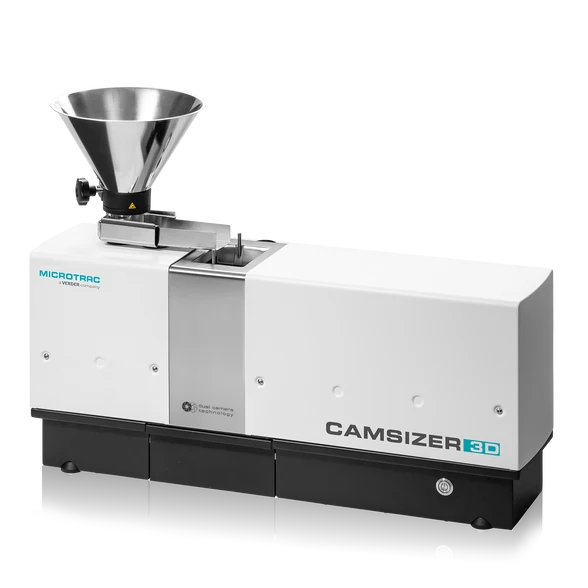
An elongated extrudate seen end-on may appear compact. Comparing projections of the same moving particle gives the CAMSIZER 3D more information about its dimensions. Choose the measured dimension according to the extrusion or pellet specification.
Method details to record
| Consideration | What to record |
|---|---|
| Particle geometry | Pellets, extrudates or irregular material |
| Required dimension | Length, width, thickness or shape |
| Comparison method | Reference definition and sample selection |
Which reference comparison is useful for pellets?
Compare like dimensions on representative material. A caliper length, a sieve opening and an image width describe distinct geometric measurements. Define the dimension used to judge a defective pellet before comparing acceptance rates.
Explore particle characterization equipment
Review the equipment details and discuss the supported configuration for your sample.