
Does grinding hair establish what substances are present?
No. Grinding supports the analytical preparation. Identification and interpretation depend on the complete validated laboratory examination.
The detection of illegal drugs and pharmaceuticals plays a role in various fields, for example in forensic science, road traffic accidents, in competitive sports or at the workplace. Chemical substances can be detected in blood, saliva, urine and in hair. Hair has the great advantage of storing the substances for a long period, which means that detection is still possible several months after consumption of the drug. In addition to the detection of drugs, hair samples are also used for DNA analysis as well as for the analysis of heavy metals and minerals.
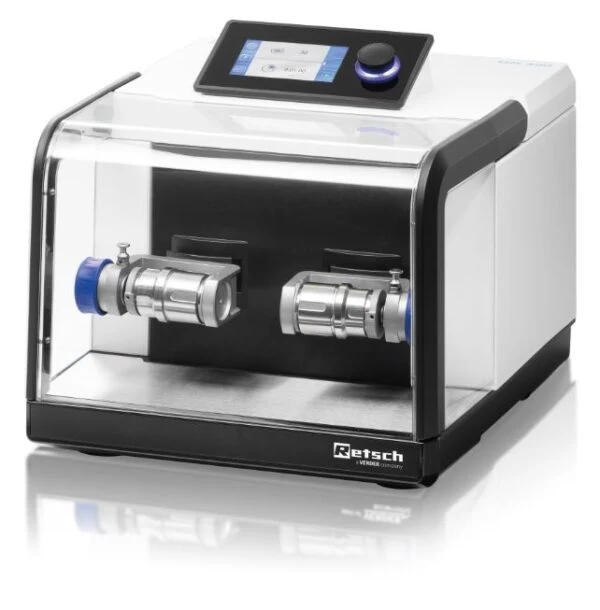
Mixer Mill MM 400
Laboratory preparation
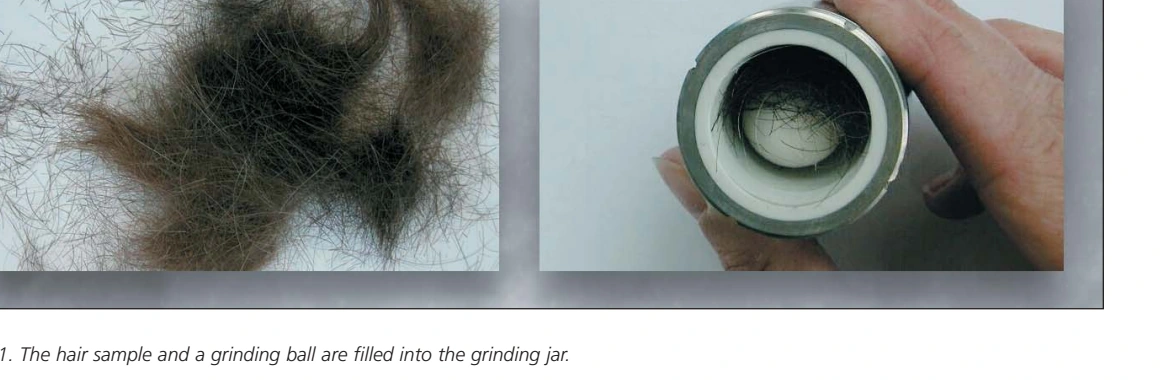
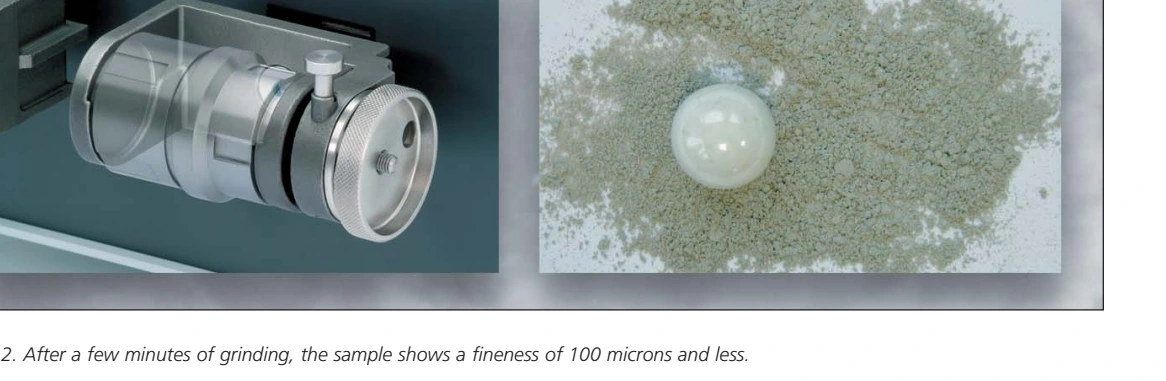
In addition to water, hair consists of 65-95% proteins,1-9% lipids and 0.1-5% of the colored pigment melanin. After drug consumption the substances reach the hair via the blood circulation system, where they ‘grow’ as the hair grows. Substance enrichment takes place primarily in the melanin. As hair growth amounts to approximately one centimeter per month, the distance of the measured sample from the hair root allows de¬termination of the period in which the detected substance entered the body. In the laboratory the hair sample (usually 0.5-1 g) is first pulverized in an appropriate mill and the metabolic products are then extracted from the sample. Various methods can be used for the actual analysis. Among the standard methods are Gas Chromatography plus Mass Spectrometry (GC-MS) and Atomic Absorption Spectrometry (AAS). The Mixer Mill MM 400 is ideally suited for the grinding of human and animal hair. Two hair samples can be processed at the same time and, thanks to grinding jar volumes of 1.5 ml to 35 ml, even very small amounts of sample present no problems for this universal mill. If due to the subsequent analysis metallic abrasion must be avoided, then the use of zirconium oxide grinding jars is recommendable. If 1g hair is pulverized at 30 Hz in the MM 400, it takes less than 5 minutes to obtain a sufficiently fine grinding result. In this way an analytical sample can be prepared in a short time, which, because of its fineness and
homogeneity, accelerates the following digestion and allows for reliable and accurate analysis results. If the hair was only cut up with laboratory scissors, this would not be the case.
Cryogenic grinding
Depending on the fat content of the hair it may be necessary to use liquid nitrogen as a grinding aid in order to prevent the material from caking or adhering to the jar walls. Steel grinding jars are suitable for this application. If metallic contamination must be avoided then Teflon grinding jars can be used. For so-called cryogenic grinding the jar is first filled with the balls and the sample material, the cover is screwed on tightly and the grinding jar is then immersed in an insulated container filled with liquid nitrogen for approximately 2-3 minutes using crucible tongs. The cooled grinding jar is then clamped in the MM 400 and grinding can be started. For this particular application Retsch offers a CryoKit consisting of two insulated containers, crucible tongs and protective goggles. Grinding with liquid nitrogen is even more convenient and safe using RETSCH CryoMill. This mill features an Autofill System that continually cools the grinding jar with LN2, thus ensuring that the sample is thoroughly cooled and embrittled. Both Mixer Mills are suitable for dry, wet and cryogenic grinding of many biological samples. In addition to hair, tissue, bones and teeth can also be processed without problems.
What handling constraints matter when only a small hair sample is available?
Define the target analysis and any relevant tool-material constraints. Hair can be available in very small quantities, so sample recovery and carryover deserve attention. Preparation should be linked to the assay's handling and interpretation requirements rather than treating finely ground hair as an analytical conclusion.
| Consideration | Information to provide |
|---|---|
| Target examination | Extraction or compositional analysis |
| Tool constraints | Relevant contamination limits |
| Sample handling | Quantity, recovery and carryover |
Discuss material testing with Glen Mills or Contact Glen Mills for information or a quote.