
YOUR MATERIAL. YOUR NEXT BREAKTHROUGH.Explore free feasibility testing →

CELL DISRUPTION

French Press.

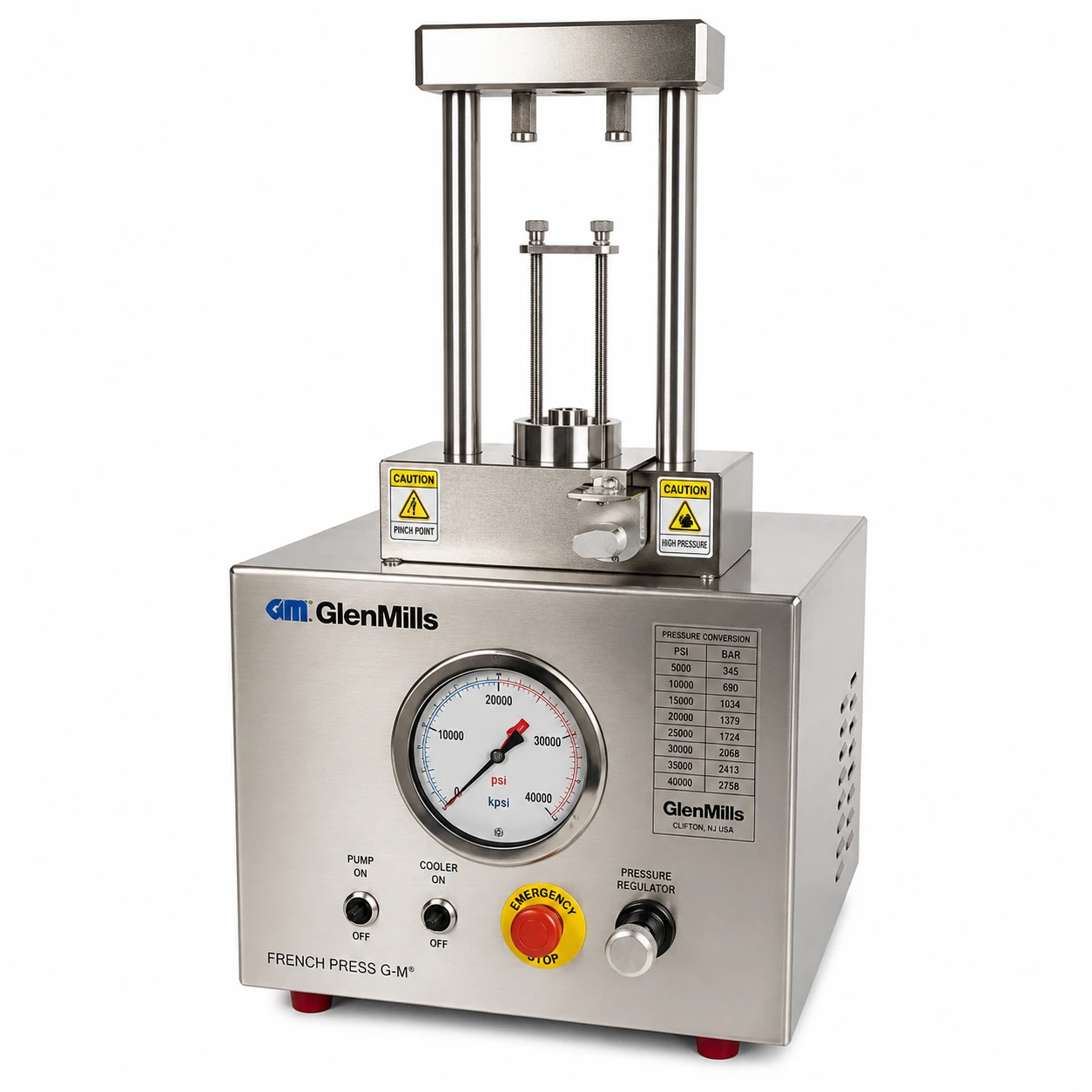
The French Press G-M® by Glen Mills is a high-pressure laboratory cell disruption system designed for controlled mechanical lysis of biological samples.

French press cell disruptor with hydraulic piston and pressure gauge

THE PRODUCT IN FOCUS

Model overview

The French Press G-M® by Glen Mills is a high-pressure laboratory cell disruption system designed for controlled mechanical lysis of biological samples.

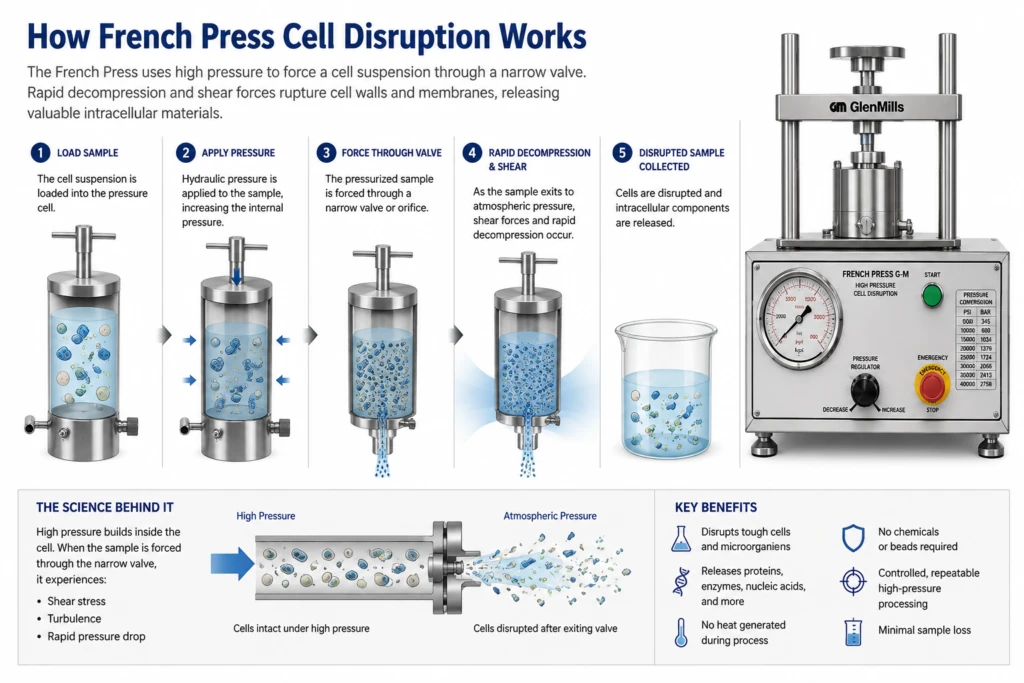
Using hydraulic pressure, the French Press forces a cell suspension through a narrow valve, creating shear forces and rapid decompression that rupture cell walls and membranes without the need for beads, harsh chemicals, or excessive heat. Ideal for bacteria, microorganisms, chloroplasts, animal tissue homogenates, and other biological particles, the system is well suited for protein extraction, enzyme recovery, membrane studies, and small-volume research applications.

With pressure capability up to 40,000 psi when used with the standard pressure cell, stainless steel construction, operator-focused safety features, and minimal sample loss, the French Press G-M® provides researchers with a reliable lab-scale solution for high-pressure cell disruption and homogenization.
PERFORMANCE & OPERATION

Features. Operation. Handling.

PRODUCT ADVANTAGES

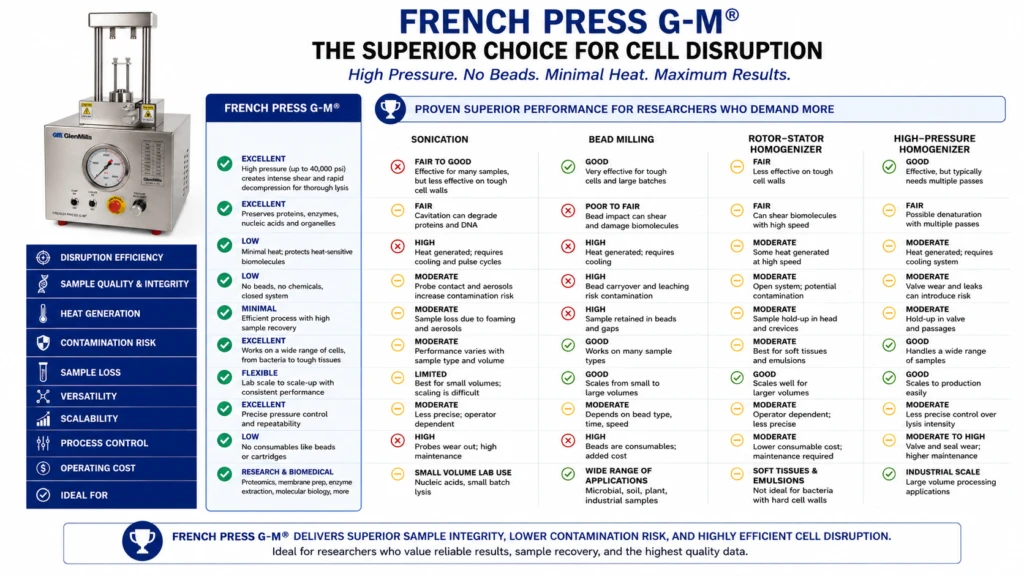
  • Provides high-pressure mechanical cell disruption for bacteria,
  • Operates without beads, harsh chemicals, or aggressive solvents
  • Capable of reaching up to 40,000 psi. 
  • Helps preserve valuable intracellular materials such as proteins, enzymes, nucleic acids, organelles, and membrane fractions.
  • Offers controlled pressure operation
  • Minimizes sample loss.
  • Useful for producing inside-out membrane vesicles for biochemical and membrane transport studies..
French Press illustration 1

APPLICATIONS & METHODS

Build the process around the sample.

Applications in Cell Biology, Microbiology, and Biochemistry

Bacterial Cell Lysis
Mechanical disruption of resilient bacterial cell walls for protein and enzyme recovery.

Microorganism Disruption
Useful for microorganisms where chemical lysis may interfere with downstream analysis.

Protein Extraction
Release intracellular proteins while avoiding bead contamination or aggressive chemical additives.

Membrane Studies
French press disruption can generate inside-out membrane vesicles, which are useful for certain in vitro biochemical assays.

Chloroplast Disruption
Suitable for plant biology and chloroplast research applications.

Animal Tissue Homogenates
Used for processing biological tissue homogenates and other suspended biological particles.

French Press illustration 1

TECHNICAL INFORMATION

Specifications & reference data

Pressure Cells and Sample Capacity

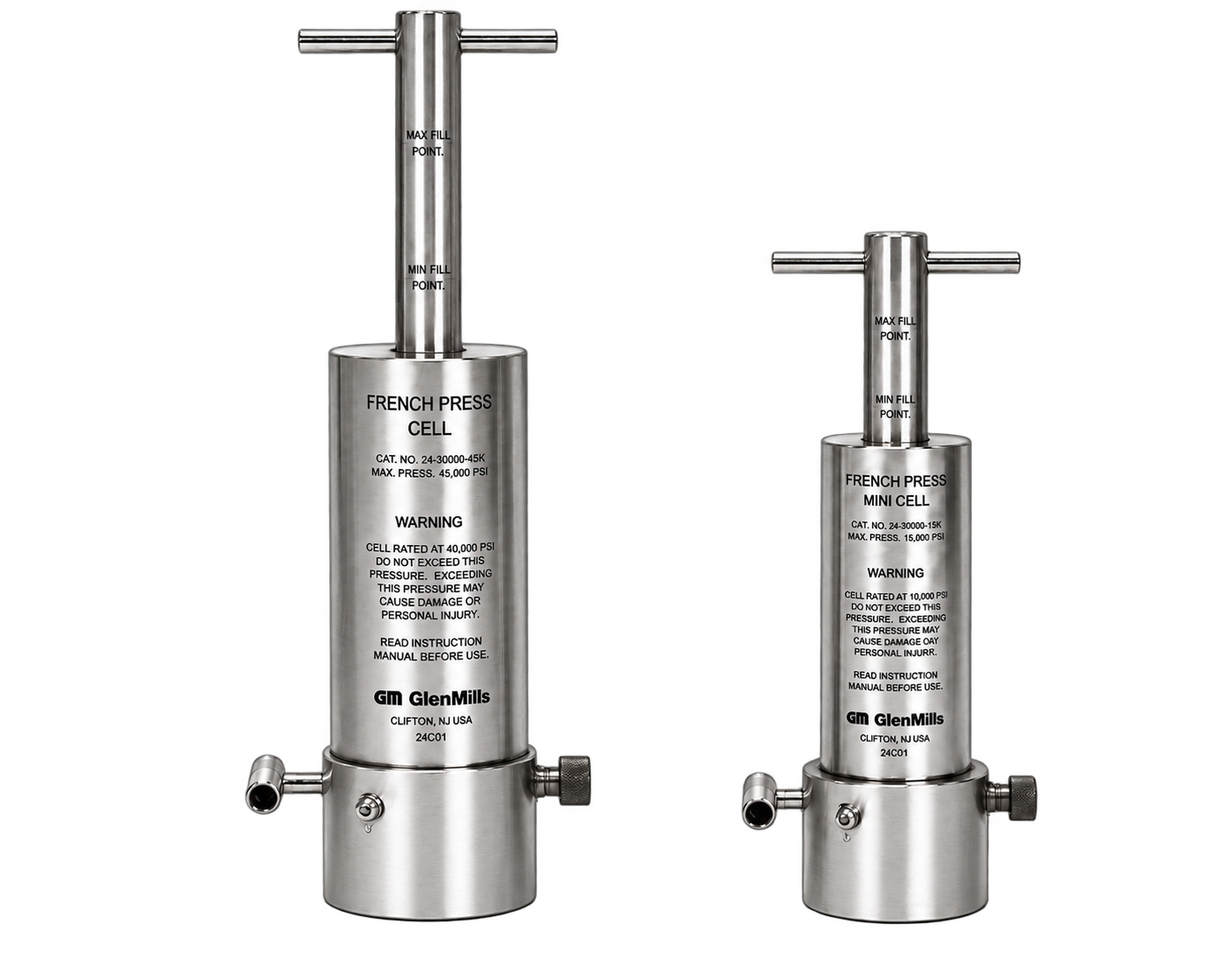
The French Press G-M® is designed for use with pressure cells, including the old-style standard 40 kpsi / 35 mL pressure cell. The standard pressure cell is sold separately, and Glen Mills also references mini cell

Pressure Cell Use Case Notes
Standard Pressure Cell General lab-scale cell disruption 40 kpsi / 35 mL
Mini Cell Small sample volumes Good for limited or valuable biological samples
Standard and mini pressure cells for the French press

Try the French Press Before You Buy

Glen Mills offers a rental program for the French Press G-M® or older French Press versions for U.S. and Canada locations. The rental program allows customers to test suitability before purchasing or to complete short-term projects without major capital expense.

Please note that rental periods have a one-month minimum and that the pressure cell must be purchased.

YOUR MATERIAL. YOUR NEXT STEP.

Put the process
to the material test.

Tell us what you’re processing and what needs to change. We’ll help define the equipment, accessories and a useful trial.

  • Material and starting particle size
  • Target fineness and required quantity
  • Temperature, purity and cleaning requirements