
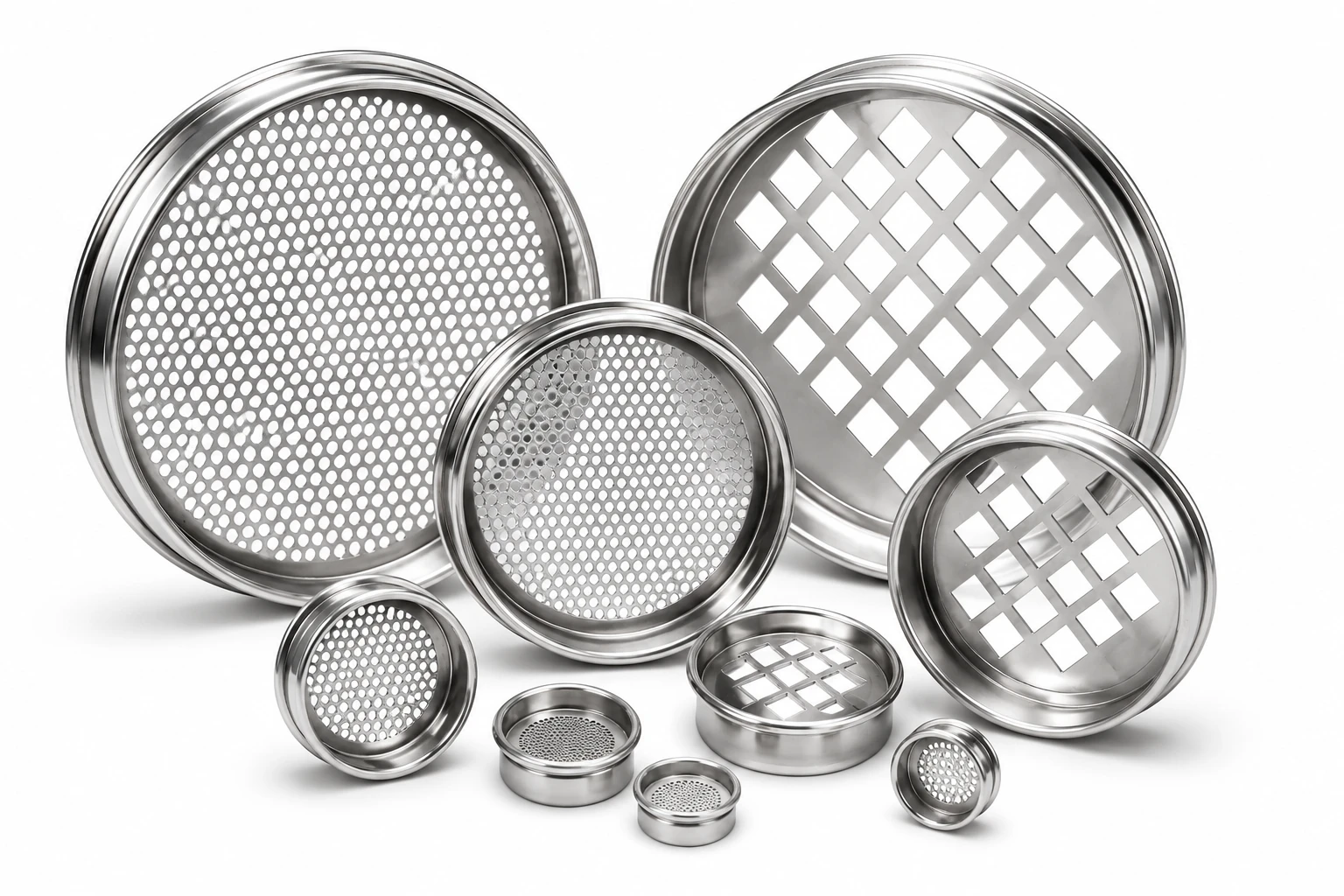
The well-proven perforated plate sieves consist of a solid stainless steel sieve frame of high stability for reliable sieving results.
The sieves can be easily combined with all other sieve brands. Each sieve that leaves our company comes with a test report.
TEST SIEVES
Perforated Plate Sieves.
The well-proven perforated plate sieves consist of a solid stainless steel sieve frame of high stability for reliable sieving results. The sieves can be easily combined with all other sieve brands. Each sieve that leaves our company comes with a test report.
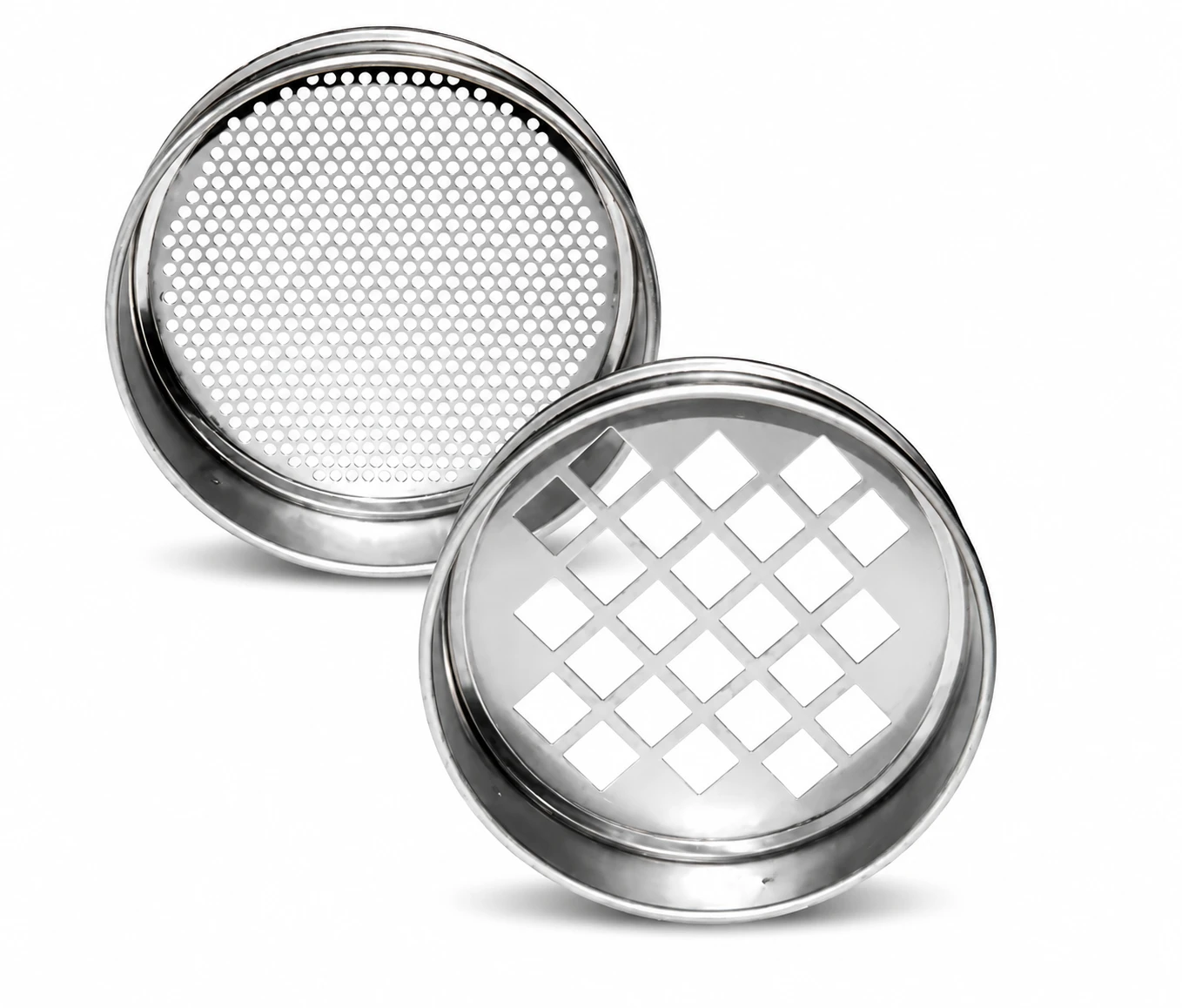
Product and configuration photographs. Select an image to enlarge.
Frame diameterø 200 mm / 305 mm / 400 mm
THE PRODUCT IN FOCUS
Model overview
PERFORMANCE & OPERATION
Features. Operation. Handling.
PRODUCT ADVANTAGES
- perforated plate, frames and labeling comply with standards
- tested 5 times, with quality certificate
- according to DIN ISO
- stainless steel sieves, 1 mm to 125 mm
APPLICATIONS & METHODS
Build the process around the sample.
APPLICATION EXAMPLES
woven wire mesh sieves are ideally suited for separation, fractioning and particle size determination of cement clinker, chemicals, coffee, construction materials, fertilizers, fillers, flours, grains, metals powders, minerals, nuts, plastics, sand, seeds, soils and washing powder.
TECHNICAL INFORMATION
Specifications & reference data
TECHNICAL DATA
| Applications | separation, fractioning, particle size determination |
| Field of application | agriculture, biology, chemistry / plastics, construction materials, engineering / electronics, environment / recycling, food, geology / metallurgy, glass / ceramics, medicine / pharmaceuticals |
| Feed material | powders, bulk materials, suspensions |
| Frame diameter | ø 200 mm / 305 mm / 400 mm |
| Surface type | perforated plate |
| Aperture sizes | 125 mm – 1 mm |
| Standards | ISO 3310-2 / ISO 5223 |
YOUR MATERIAL. YOUR NEXT STEP.
Put the process
to the material test.
Tell us what you’re processing and what needs to change. We’ll help define the equipment, accessories and a useful trial.
- Material and starting particle size
- Target fineness and required quantity
- Temperature, purity and cleaning requirements