
YOUR MATERIAL. YOUR NEXT BREAKTHROUGH.Explore free feasibility testing →

MORTAR GRINDERS

RM 200.
Electric Mortar Grinder.

The RM 200 electric mortar grinder replaces the hand mortar and pestle with a motor-driven, reproducible grinding process. It grinds, mixes and triturates powders, suspensions and pastes, including high-viscosity samples, down to an analytical fineness below 10 µm. Labs in pharmaceuticals, food, chemistry, geology and construction materials use it when every sample must be prepared the same way.

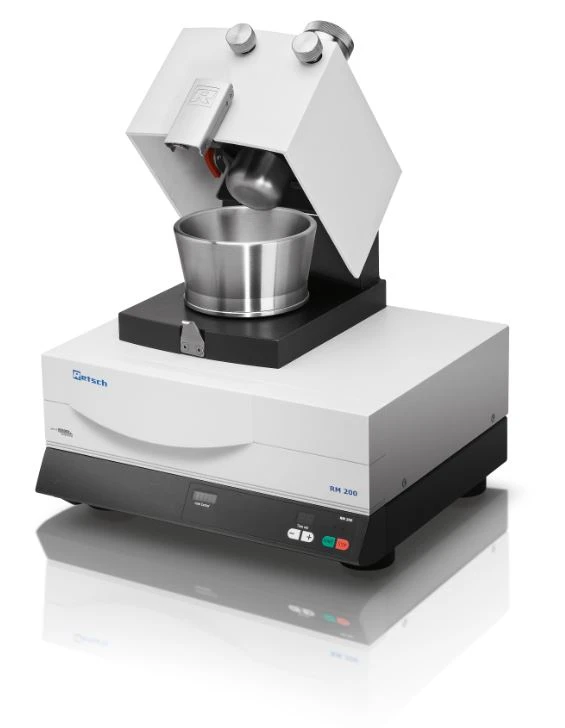
RM 200 electric mortar grinder open to show the mortar
Material feed size< 8 mm
Final fineness< 10 µm
Batch size / feed quantity10 – 190 ml
Grinding chamber volume700 ml

THE PRODUCT IN FOCUS

Model overview

The RM 200 electric mortar grinder replaces the hand mortar and pestle with a motor-driven, reproducible grinding process. It grinds, mixes and triturates powders, suspensions and pastes, including high-viscosity samples, down to an analytical fineness below 10 µm. Labs in pharmaceuticals, food, chemistry, geology and construction materials use it when every sample must be prepared the same way.

Grinding by hand is slow, tiring and hard to repeat from one operator to the next. The RM 200 mortar grinder sets pestle and scraper pressure with adjusting knobs, so you get the same result every run. The grinding set can be cooled or heated, swapped without tools, and is easy to clean.

PERFORMANCE & OPERATION

Features. Operation. Handling.

Why Choose the RM 200 Electric Mortar Grinder

  • Dry, wet and cryogenic grinding in one instrument
  • Reproducible results from adjustable pestle and scraper pressure
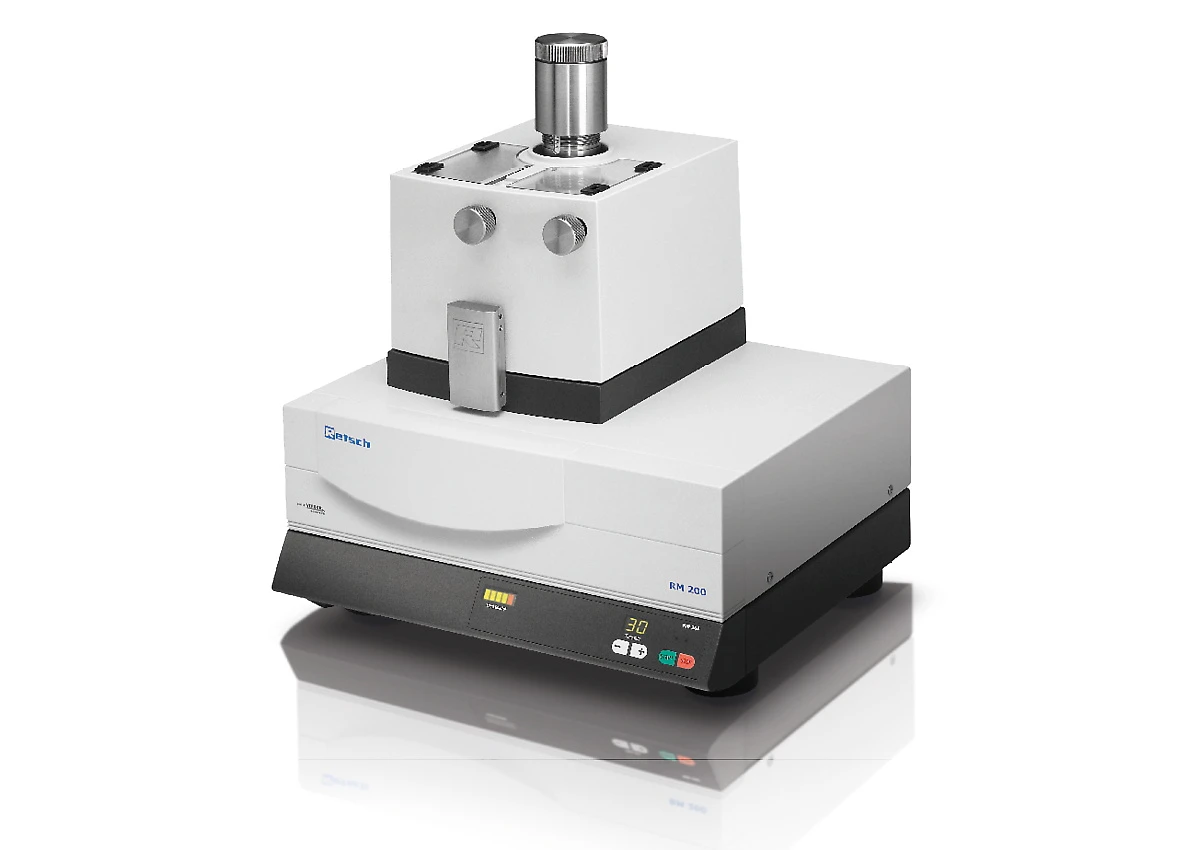
  • Closed, dust-tight grinding chamber with viewing windows
  • Tool-free exchange of mortar and pestle
  • Performance display for load control
  • Contamination-free grinding with seven grinding set materials
  • Three scraper materials: polyurethane, beech wood and PTFE
  • Digital timer from 1 to 99 minutes, or continuous operation

How an Electric Mortar Grinder Works

The RM 200 reduces sample size by pressure and friction. The mortar rotates at 100 rpm while the pestle sits off-center and turns on its own through contact with the mortar and the sample.

A scraper continuously feeds material into the gap between mortar and pestle. This forced feed keeps the whole sample in the grinding zone, so it is ground and mixed evenly. Grinding pressure comes from the pestle’s own weight plus an adjustable spring acting on its axis.

PRINCIPLE

The automatic mortar and pestle comminutes, mixes, and triturates by pressure and friction. The function of the scraper is to feed the sample material into the area between the mortar and pestle. This forced feed ensures that the whole of the sample is continuously subjected to the grinding and trituration process and is also intensively mixed.

The grinder pestle is not located in the center of the mortar but is offset; contact with the rotating mortar and the sample causes it to rotate automatically. The necessary grinding pressure is achieved by the weight of the pestle itself combined with the adjustable spring pressure acting on its axis.

APPLICATIONS & METHODS

Build the process around the sample.

An Automatic Mortar and Pestle for Reproducible Sample Preparation

A manual mortar and pestle depends on the operator’s arm, patience and technique. An electric mortar grinder removes that variable. Pressure settings, grinding time and speed stay fixed, so results can be documented and repeated across shifts, operators and labs. That matters for quality control, method validation and regulated work.

Applications

The RM 200 handles soft, hard, brittle and pasty feed material up to 8 mm. Typical samples include:

  • Pharmaceuticals and medicine: drugs, pharmaceutical materials, homeopathic preparations (trituration)
  • Food and agriculture: cocoa nibs, nuts, oil seeds, spices, plant materials, yeast cells
  • Chemistry and plastics: chemical products, salts
  • Geology and metallurgy: soils, slag, silicates
  • Construction materials, glass and ceramics: cement clinker, tiles, ashes
  • Energy: coal, coke

APPLICATION EXAMPLES

Ashes, cement clinker, chemical products, coal, cocoa nibs, coke, drugs, food, homeopathic materials, nuts, pharmaceutical materials, plant materials, salts, oil seeds, silicates, slag, soils, spices, tiles, yeast cells

TOOLS & CONFIGURATION

The right tools for the task.

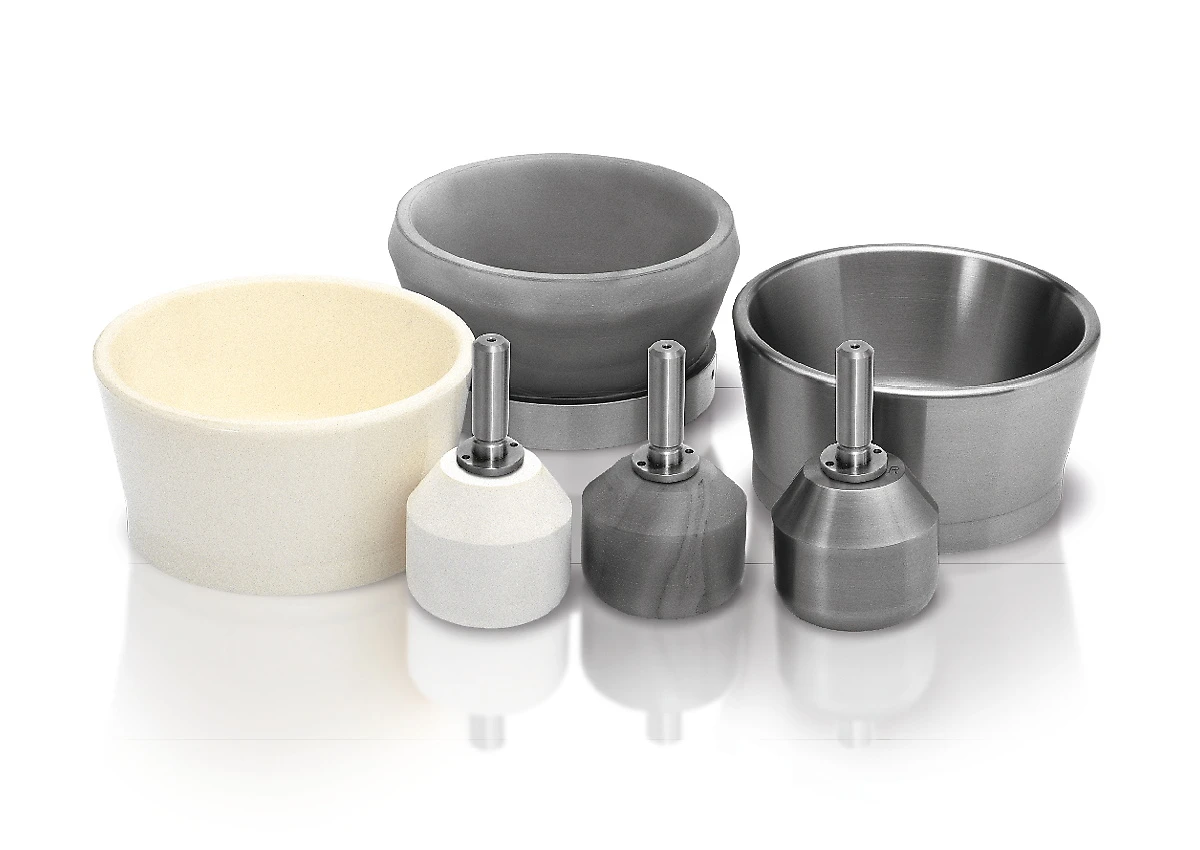
Grinding Sets for the Electric Mortar Grinder

Choose the mortar and pestle material to match your sample’s hardness and to avoid contaminating your analysis. Seven materials are available:

  • Hardened steel
  • Stainless steel
  • Tungsten carbide
  • Agate
  • Sintered aluminum oxide
  • Zirconium oxide
  • Hard porcelain

Agate is a common choice for trace analysis, where metal abrasion would skew results. Sets exchange in seconds without tools, so one electric mortar grinder can cover many grinding tasks.

TECHNICAL INFORMATION

Specifications & reference data

TECHNICAL DATA

Applications grinding, mixing and triturating, dry and wet
Field of application agriculture, biology, chemistry / plastics, construction materials, food, geology / metallurgy, glass / ceramics, medicine / pharmaceuticals
Feed material soft, hard, brittle, pasty
Size reduction principle pressure, friction
Material feed size* < 8 mm
Final fineness* < 10 µm
Batch size / feed quantity* 10 – 190 ml
Grinding chamber volume 700 ml
Speed at 50 Hz (60 Hz) 100 min-1
Speed setting no
Setting of pestle pressure vertical by adjusting knob + scale, horizontal by adjusting knob + visual/acoustic control
Setting of scraper pressure by adjusting knob + visual control
Material of grinding tools hardened steel, stainless steel, tungsten carbide, agate, sintered aluminum oxide, zirconium oxide, hard porcelain
Setting of grinding time digital, 1 – 99 min / continuous operation
Drive 1-phase motor with auxiliary capacitor
Electrical supply data different voltages
Power connection 1-phase
Protection code IP 53
Power consumption 250 W (230 V, 50 Hz) / 290 W (120 V, 60 Hz)
W x H x D closed 400 x 480 x 370 mm (opened 400 x 550 x 510 mm )
Net weight ~ 24.2 kg
Standards CE

*depending on feed material and instrument configuration/settings

YOUR MATERIAL. YOUR NEXT STEP.

Put the process
to the material test.

Tell us what you’re processing and what needs to change. We’ll help define the equipment, accessories and a useful trial.

  • Material and starting particle size
  • Target fineness and required quantity
  • Temperature, purity and cleaning requirements