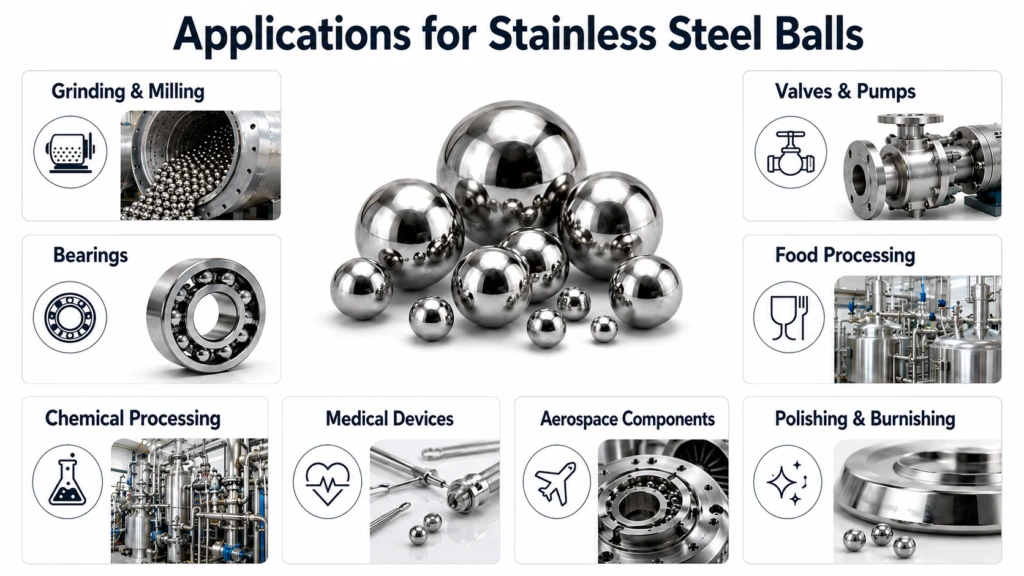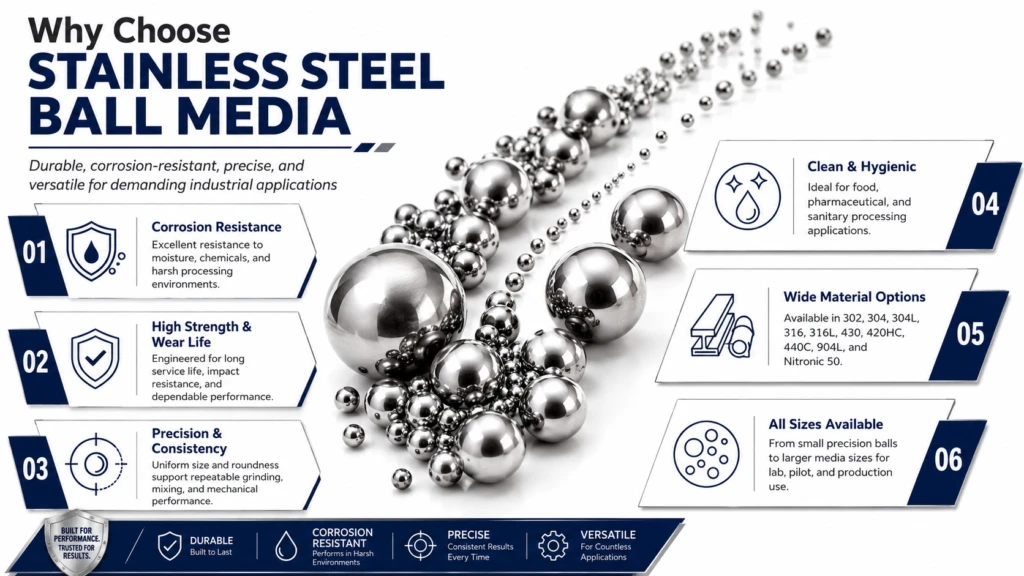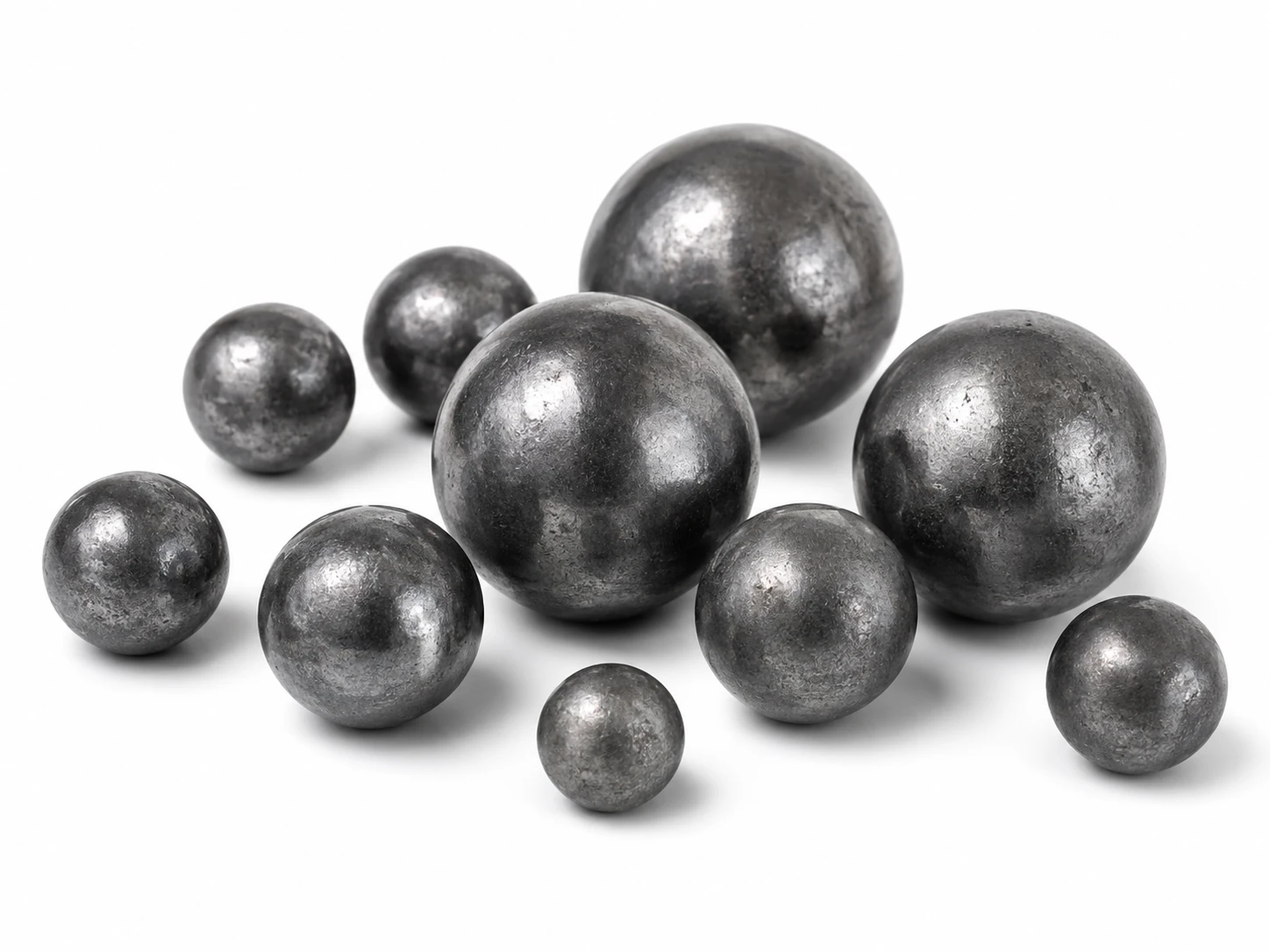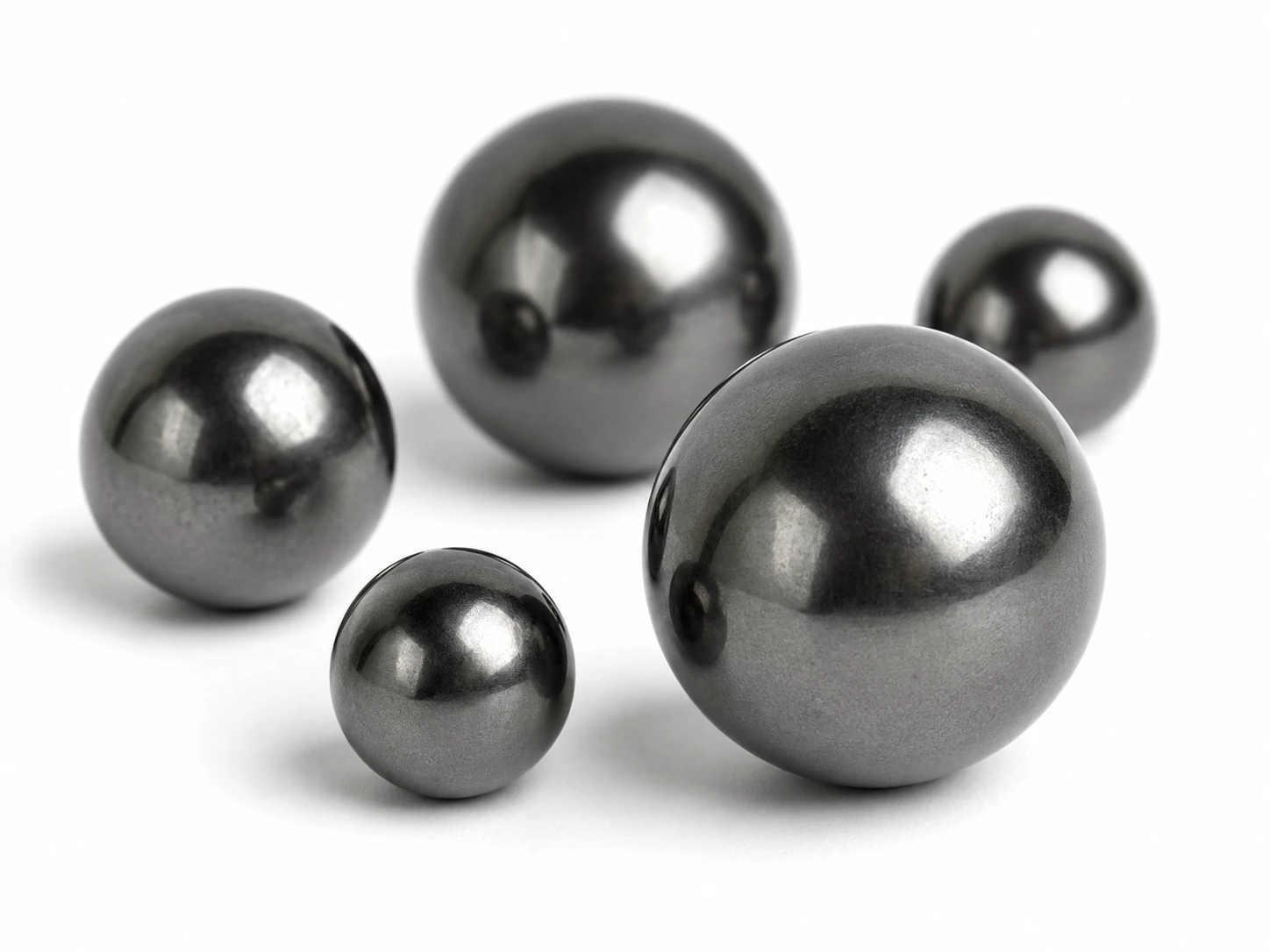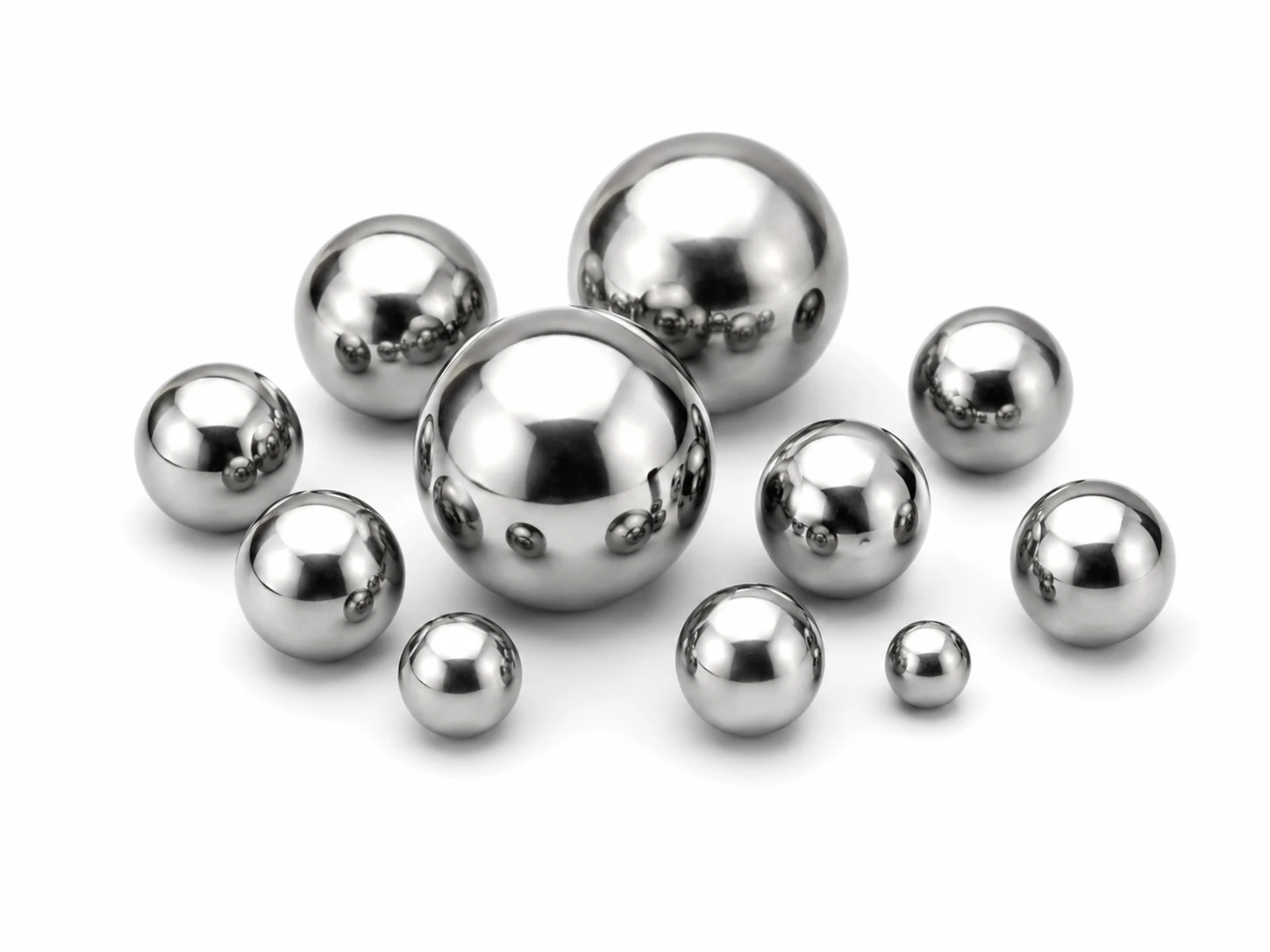
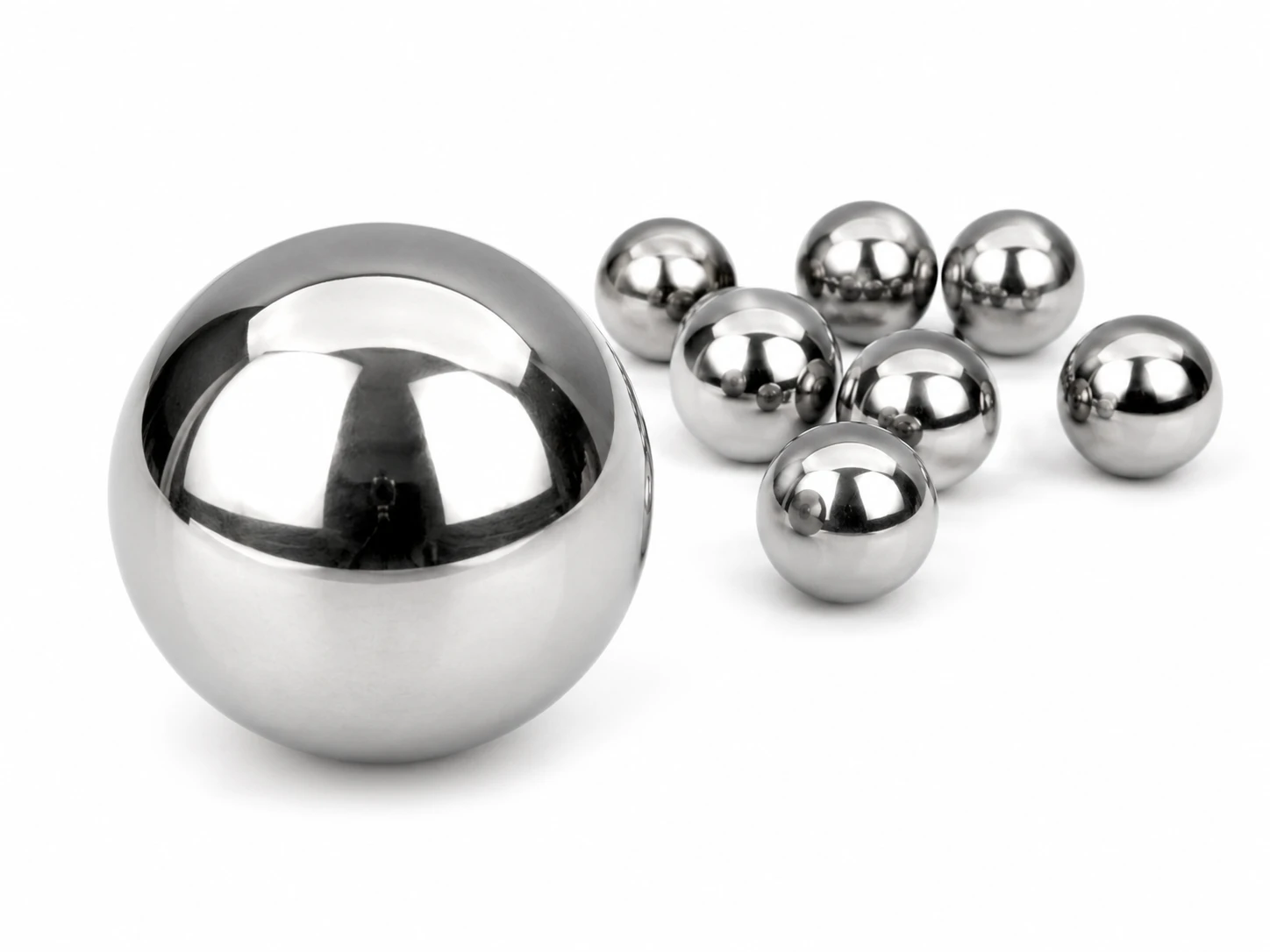
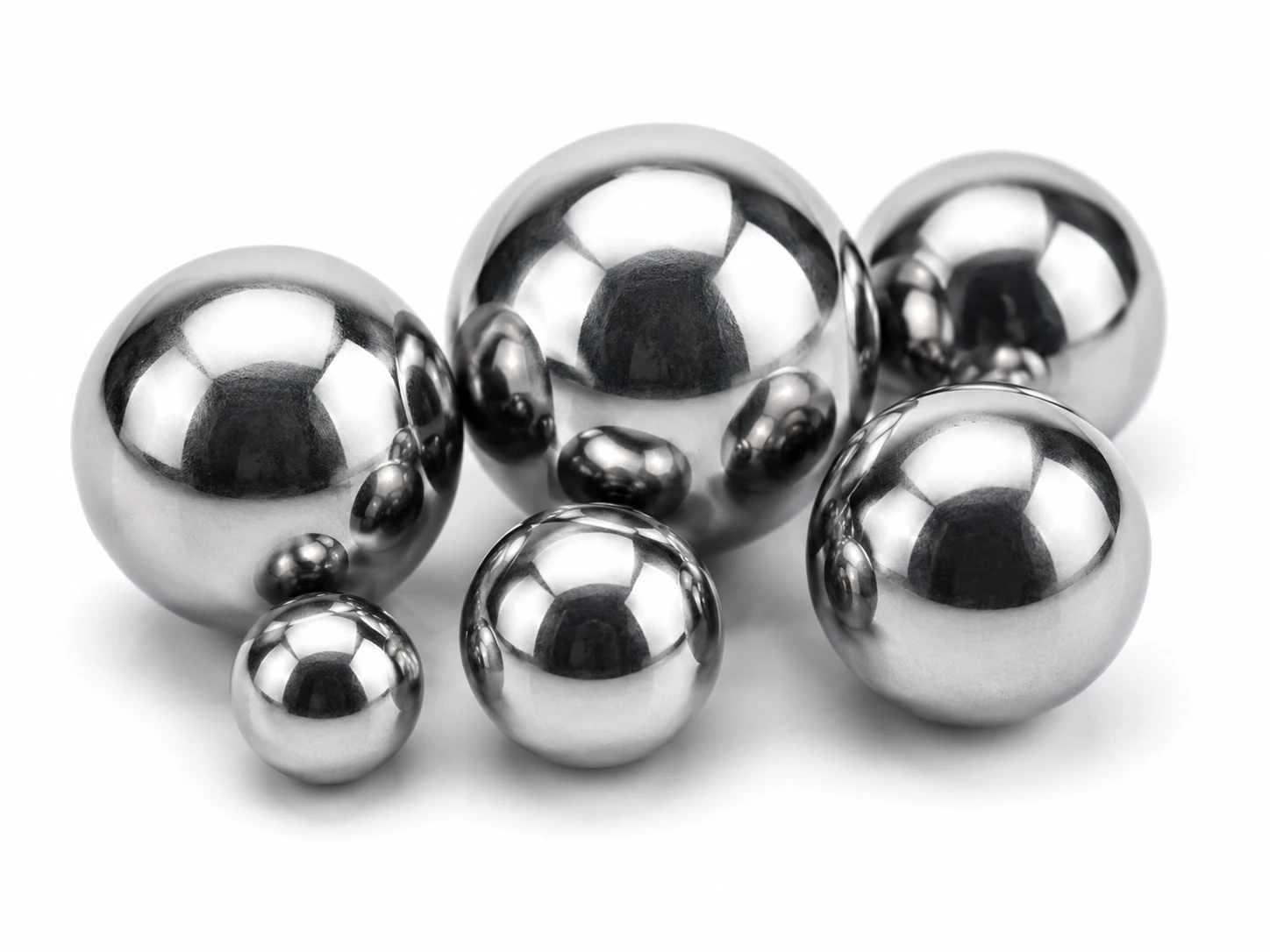
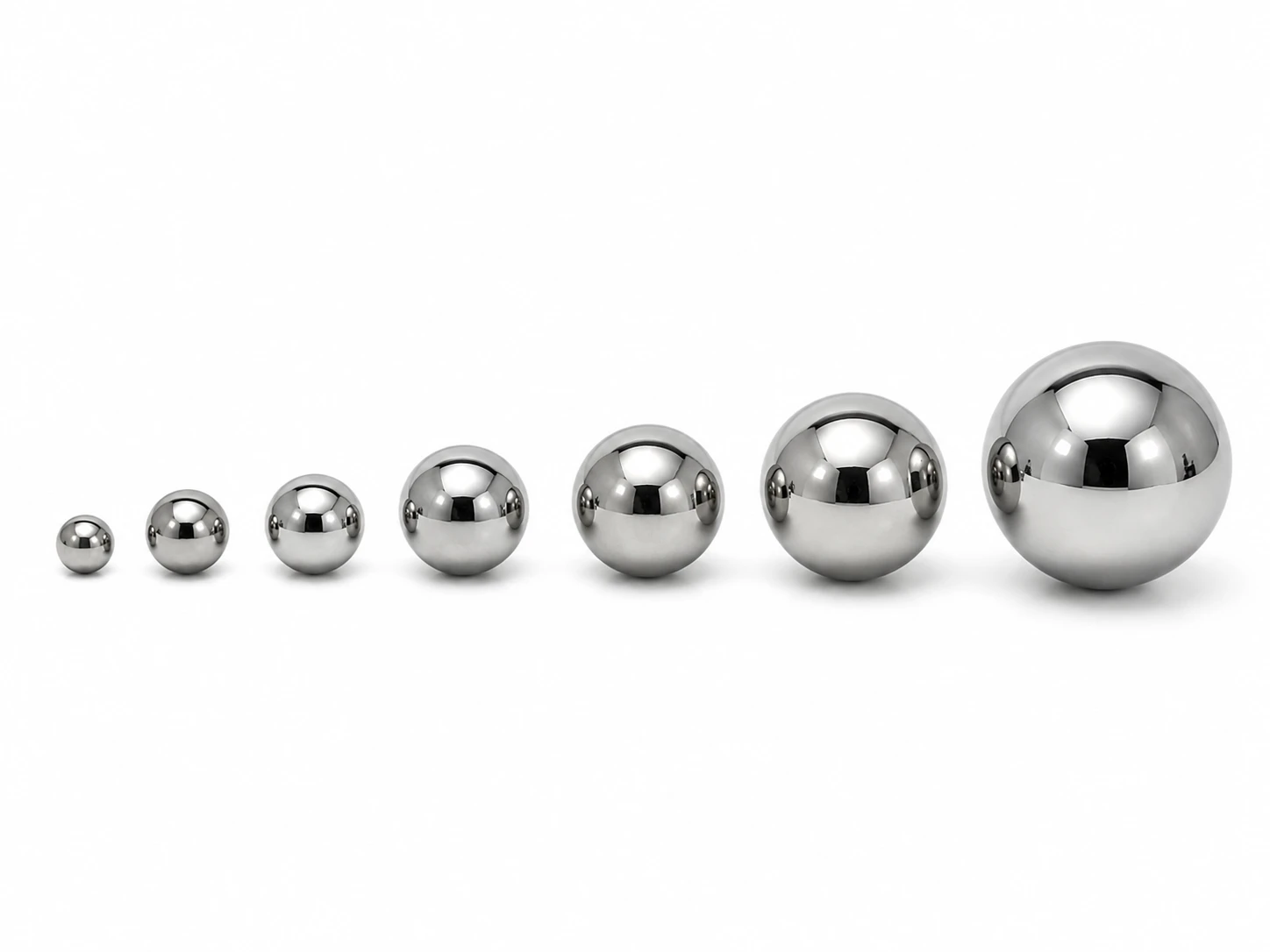
Stainless steel balls are a versatile, corrosion-resistant media used across a wide range of precision, industrial, laboratory, and processing applications. They are commonly selected for grinding, milling, mixing, blending, bearings, valves, pumps, check valves, flow control, polishing, burnishing, food processing, chemical processing, medical devices, aerospace components, and general industrial use. Their combination of strength, durability, cleanability, and resistance to wear and corrosion makes them ideal for applications where performance and material compatibility are critical.
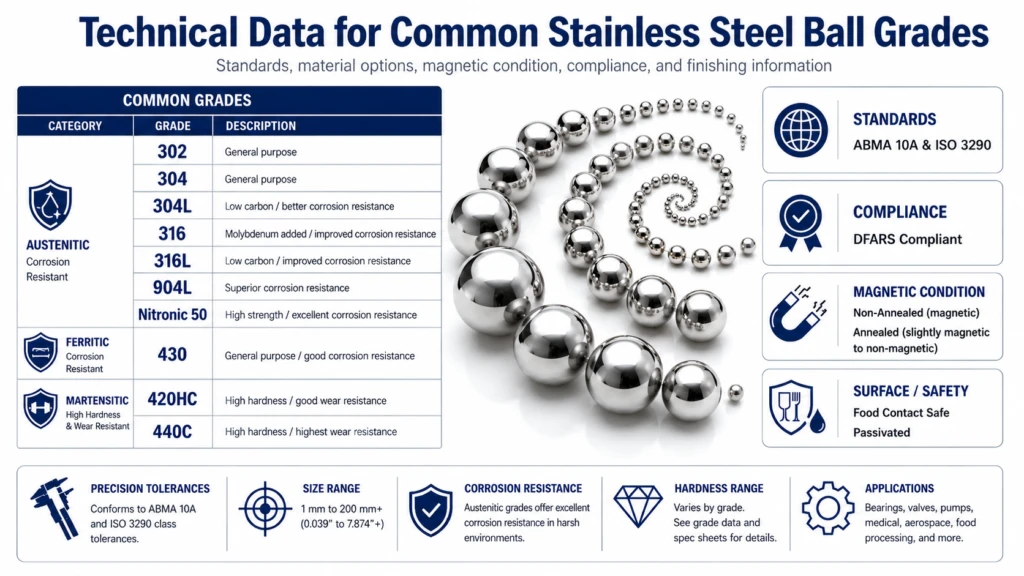
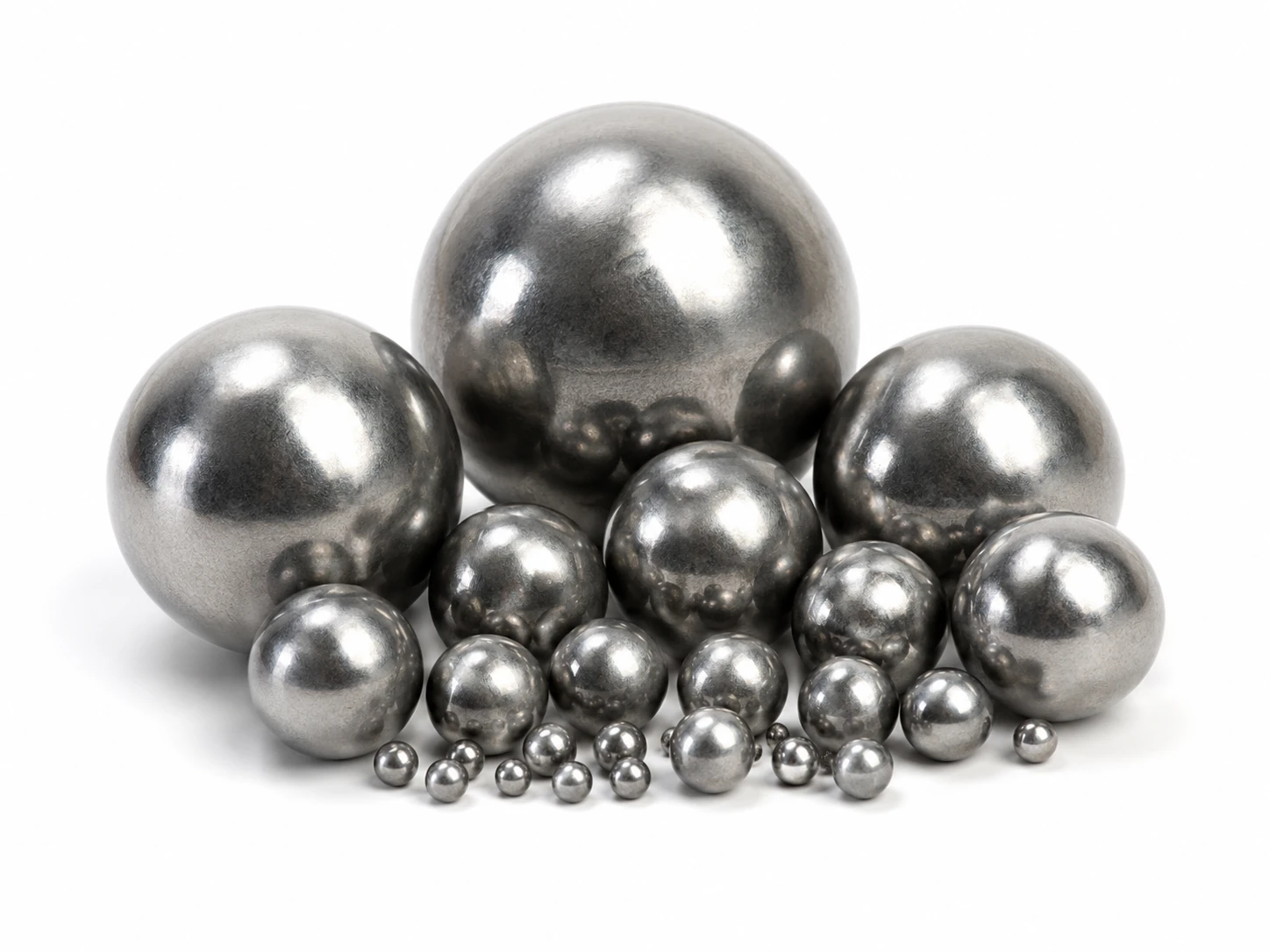
We carry stainless steel balls in a wide range of grades, including 302, 304, 304L, 316, 316L, 430, 420HC, 440C, 904L, and Nitronic 50. Each grade offers different advantages depending on the application, from general-purpose corrosion resistance to high hardness, improved chemical resistance, magnetic properties, or enhanced performance in demanding environments. All sizes are available to support laboratory testing, precision manufacturing, grinding media requirements, and full-scale production needs.