YOUR MATERIAL. YOUR NEXT BREAKTHROUGH.Explore free feasibility testing →

SMALL SAMPLES. USEFUL PROCESS DATA.

Lab-scale jet mills.
Start with your material.

Develop the process with small quantities. Compare Model 00 and Model 02 systems, then configure feeding, collection and containment around your material.

Lab Scale Jet Mills

TWO LABORATORY STARTING POINTS

Small samples.
Clearer decisions.

Use material trials to establish feed behavior, particle-size distribution and recovery before planning scale-up.

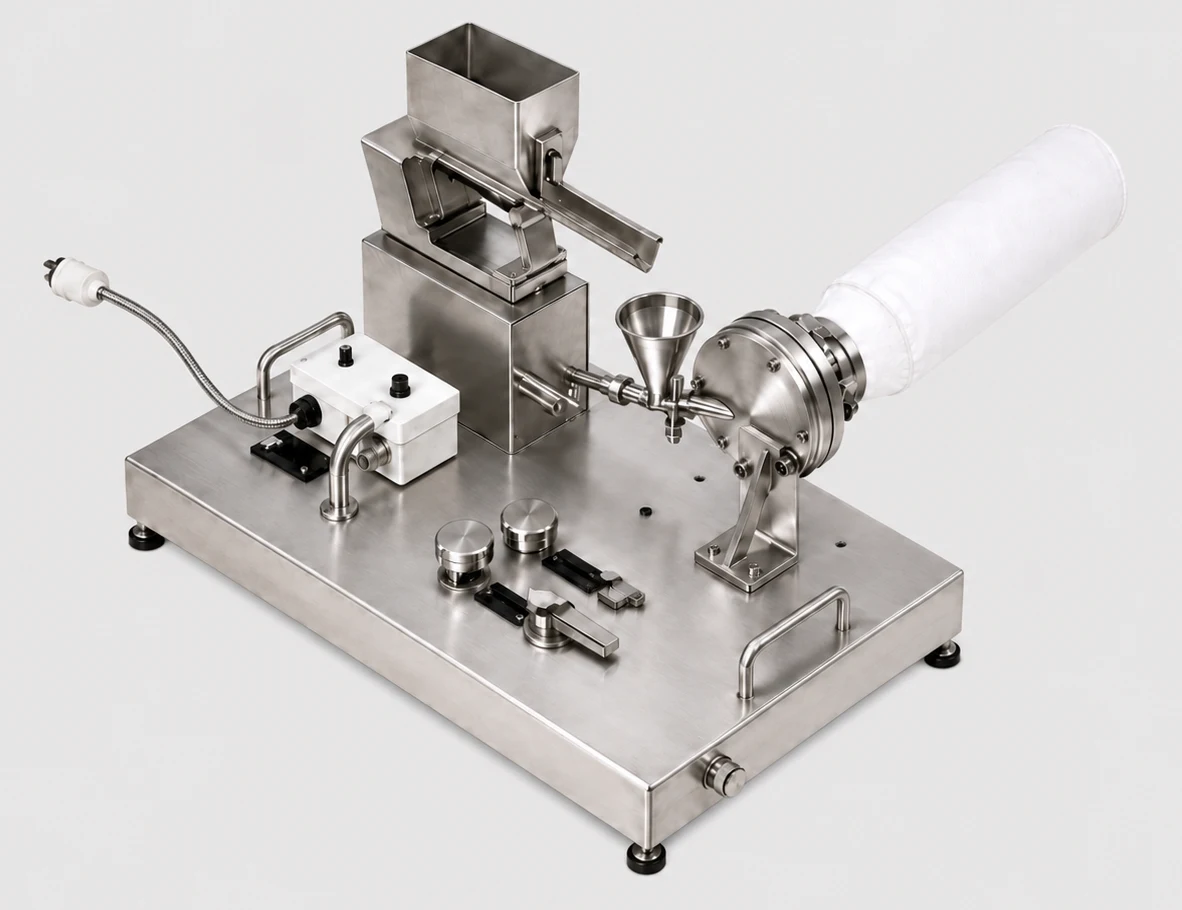
Model 00

Model 00

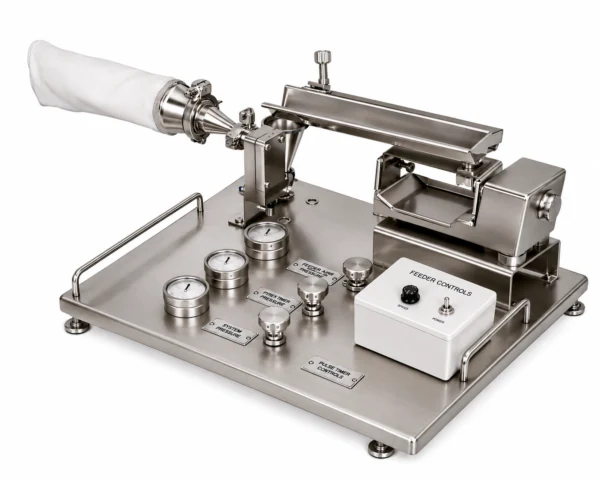
A compact 5 CFM tray system for small quantities. Published throughput: 1–500 g/h; particle-size range: 0.5–20 µm, depending on material and settings. Integrated pressure and feeder controls, a vibratory feeder and standard 2 × 9 inch filter sleeve form the benchtop setup.
Model 02

Model 02

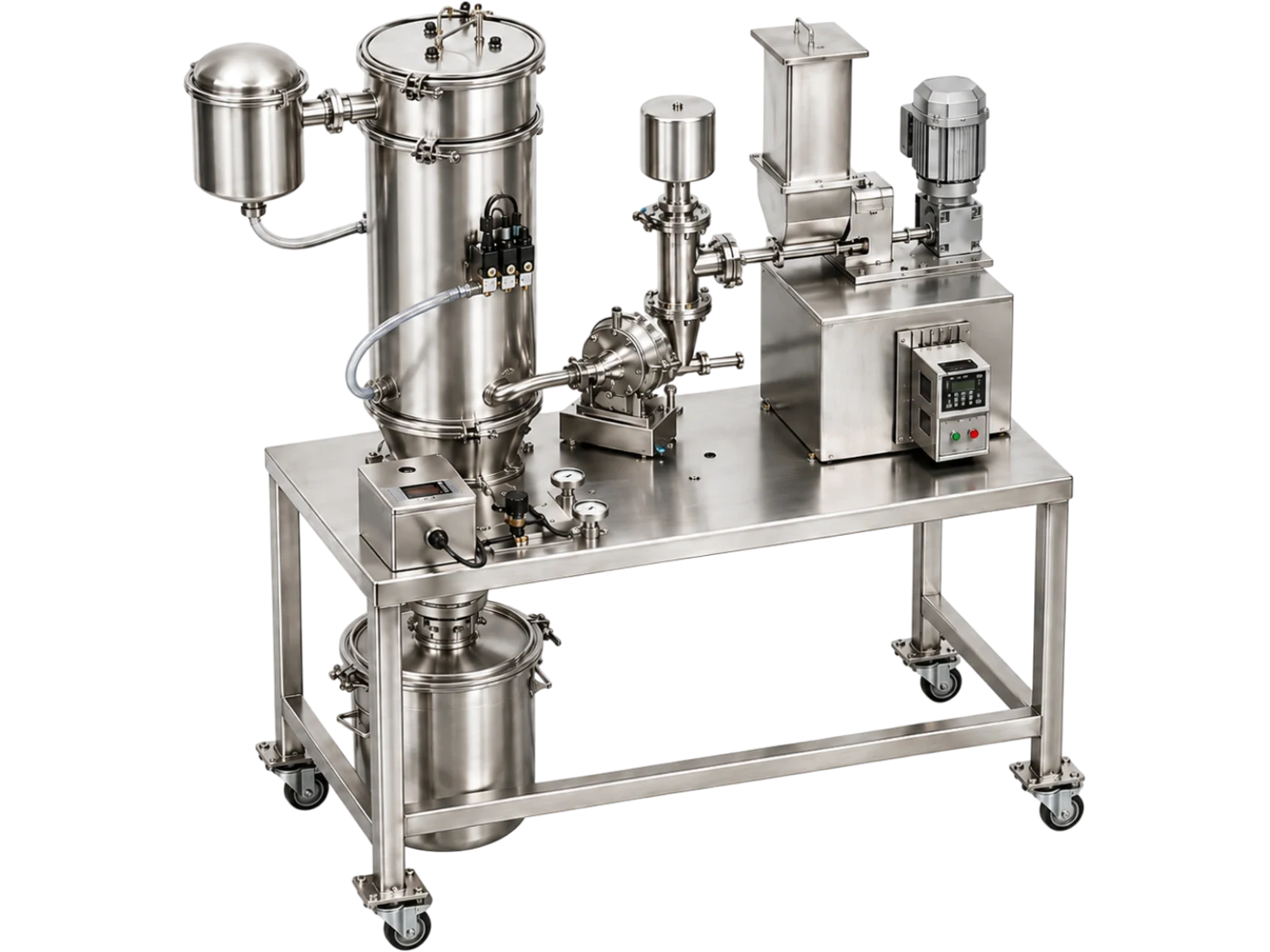
A larger laboratory system with published throughput of 0.5–5 kg/h. Replaceable liners and flexible feeding and collection configurations support method development and larger trial quantities. Discuss the required gas supply and fineness with your sample.

Throughput, fineness and recovery are material-dependent. Compressed-gas supply and a complete collection arrangement are required; confirm utilities and scope of supply.

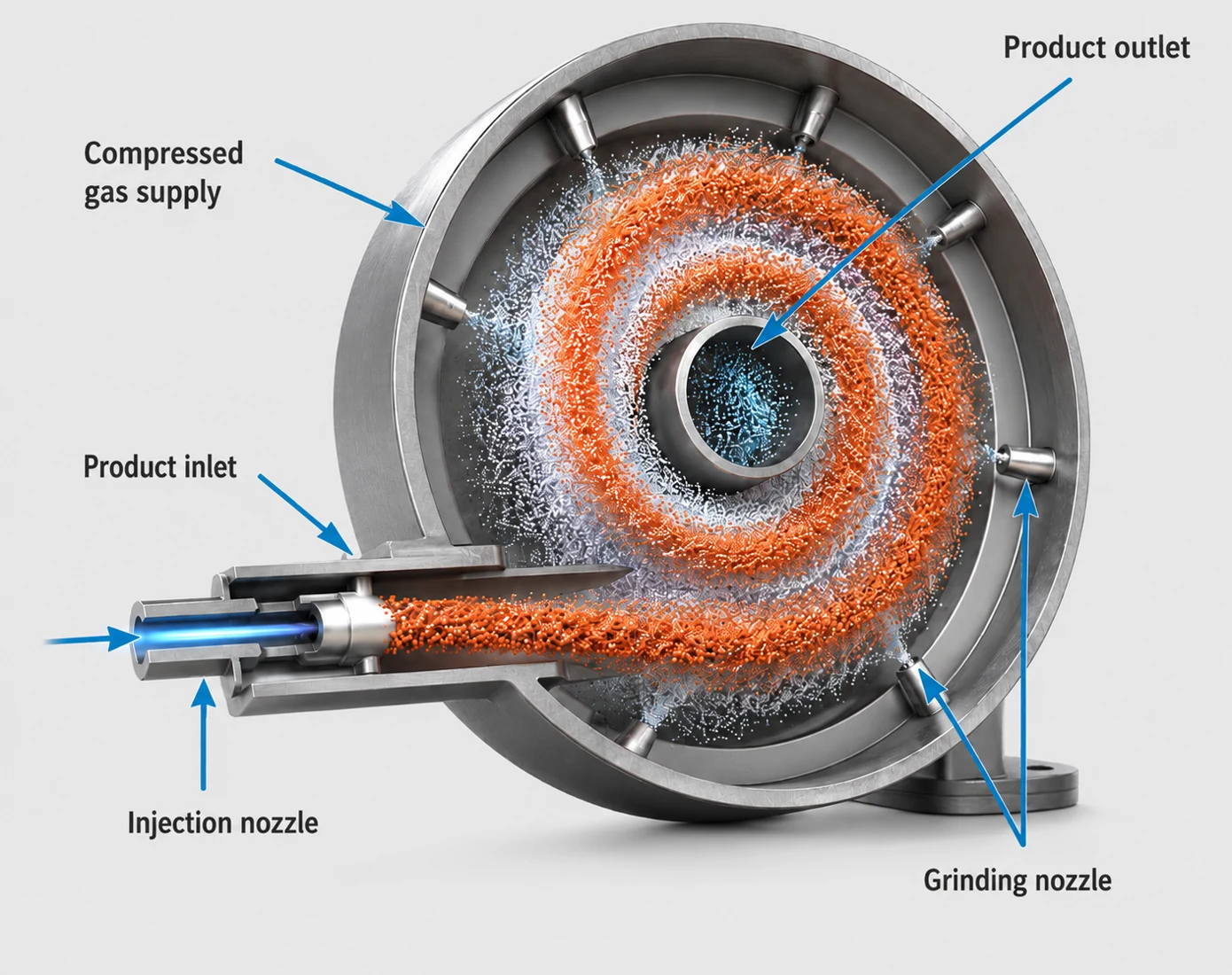
Static jet milling principle

HOW JET MILLING WORKS

Let the particles
do the grinding.

  1. Feed the material. A controlled feeder introduces dry powder into the grinding zone.
  2. Accelerate with gas. Compressed air or inert gas expands through nozzles, creating high-velocity particle collisions.
  3. Separate and collect. Fine particles leave with the gas stream; larger particles remain for further reduction. A suitable collector and filter recover the product.

No grinding balls are required. Gas expansion can help limit temperature rise, but the process temperature and wear contribution still need to be evaluated with the material.

OPTIONAL ACCESSORIES

Recover more of what matters.

Select the collection approach around sample size, powder behavior and required containment.

Model 00 HEPA filtration

Model 00 HEPA filtration

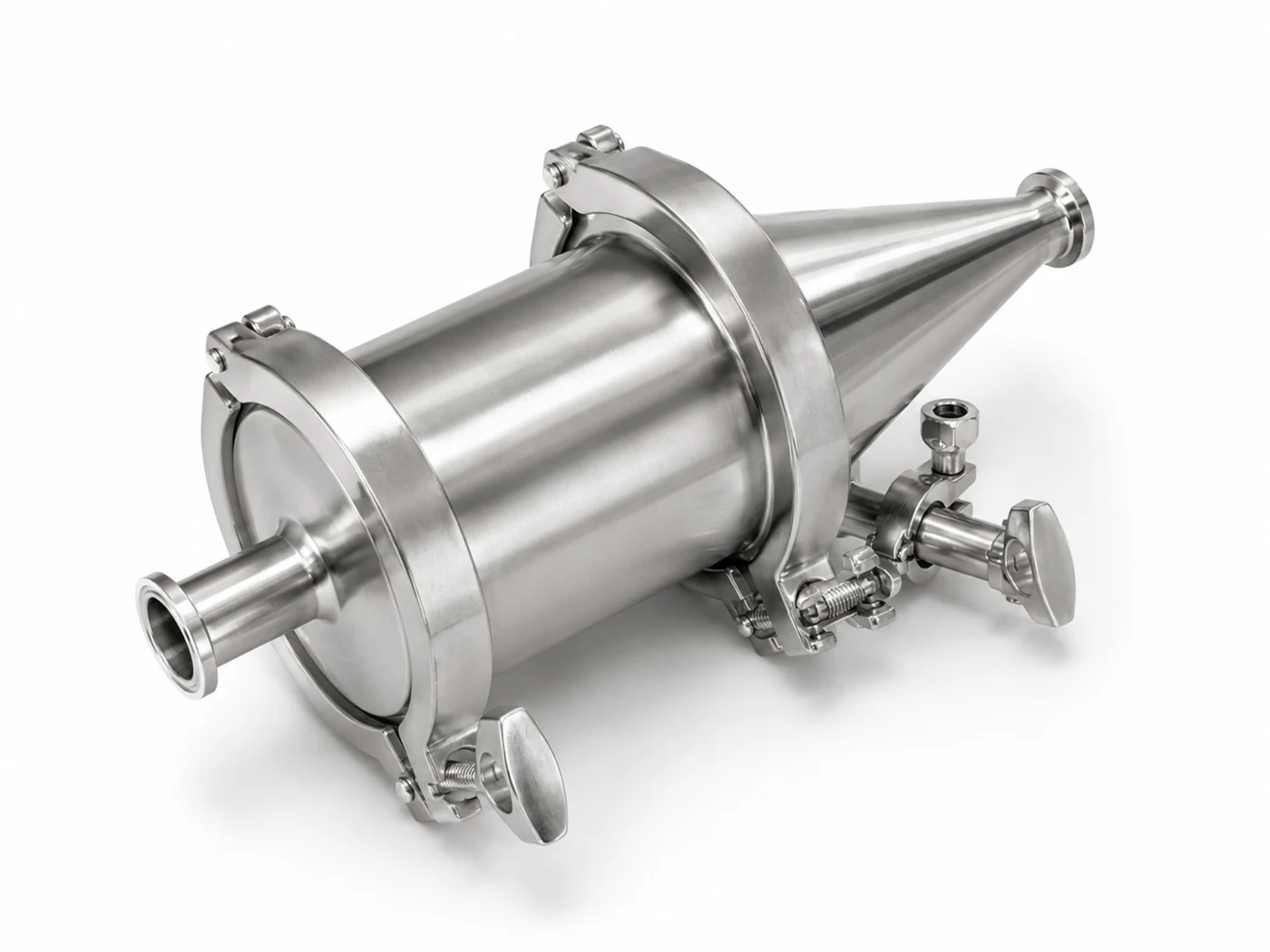
An optional downstream filtration module captures fine airborne particles before the exhaust leaves the system. Confirm the complete filter and containment arrangement.

Model 00 high-yield collector

Model 00 high-yield collector

A compact mini-baghouse module designed to improve powder recovery in laboratory trials. Evaluate recovery with your material.

Model 00 one-gram collector

Model 00 one-gram collector

A small-sample collection module for research where only limited or high-value material is available.

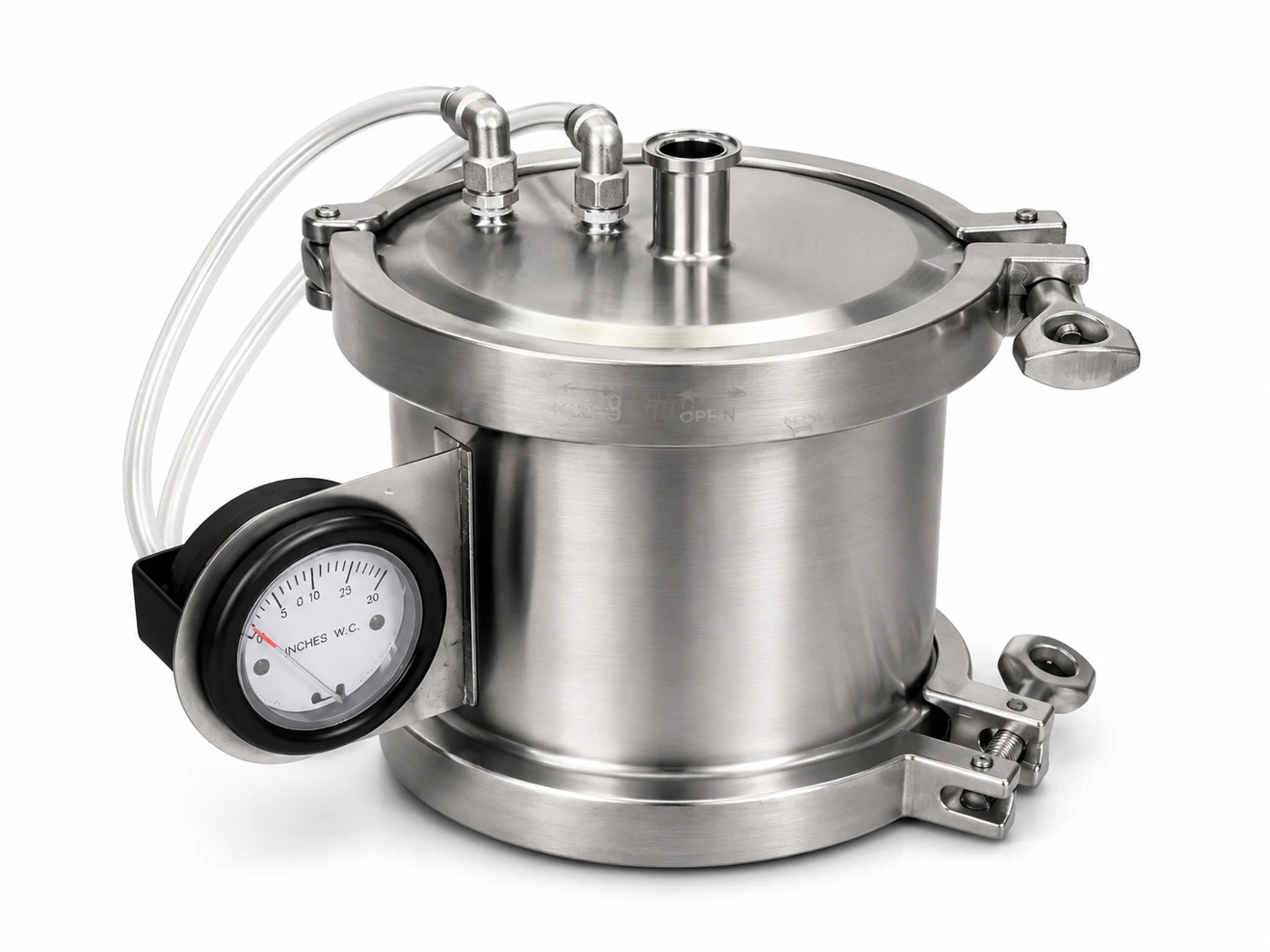
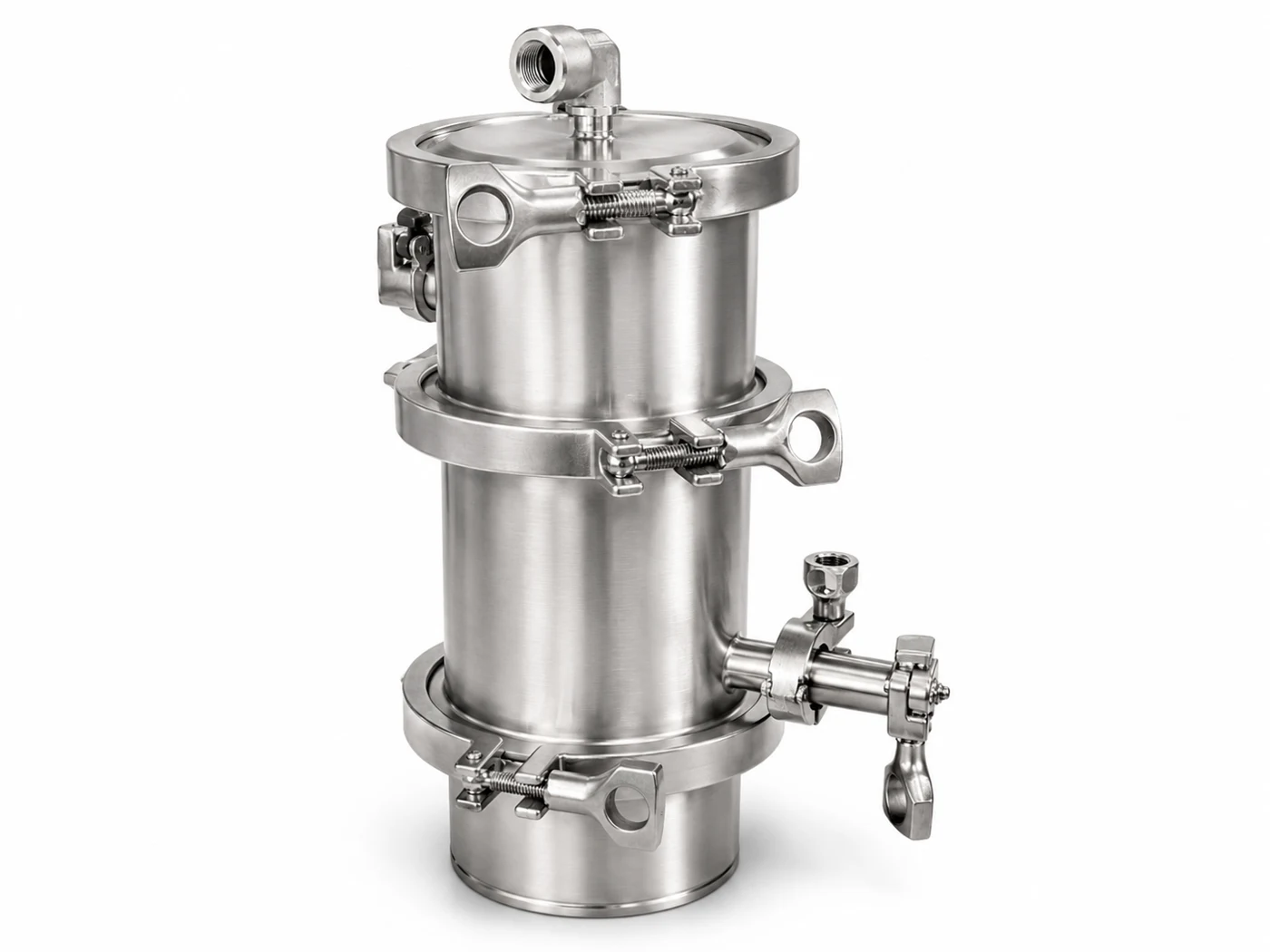
Model 02 sleeve + HEPA

Model 02 sleeve + HEPA

A benchtop collection option with a stainless-steel filter housing connected to the mill outlet and HEPA module.

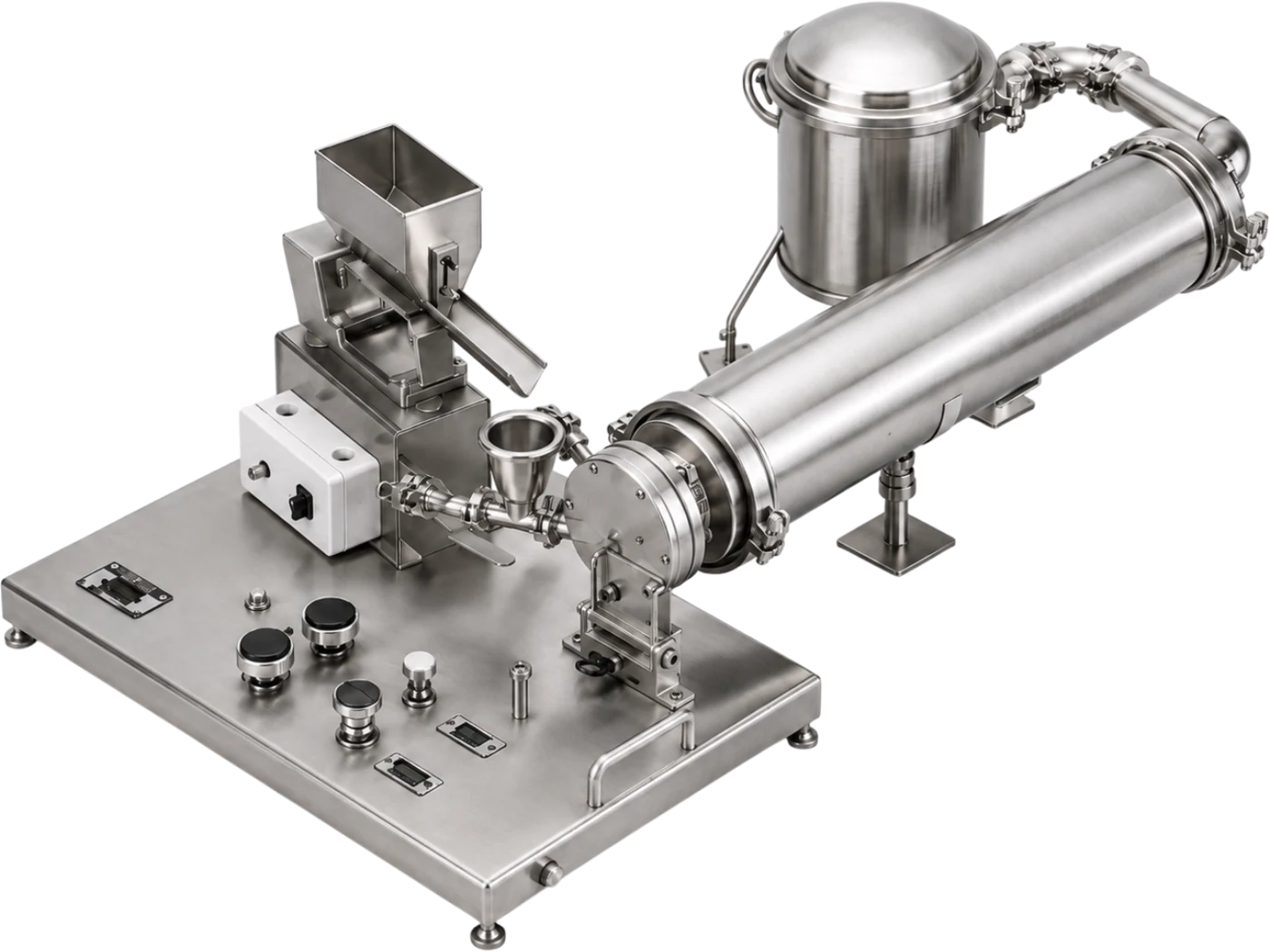
Model 02 table system

Model 02 table system

A table-mounted arrangement combines the mill, high-yield collection and HEPA filtration. Collection configurations up to 20 liters are available.

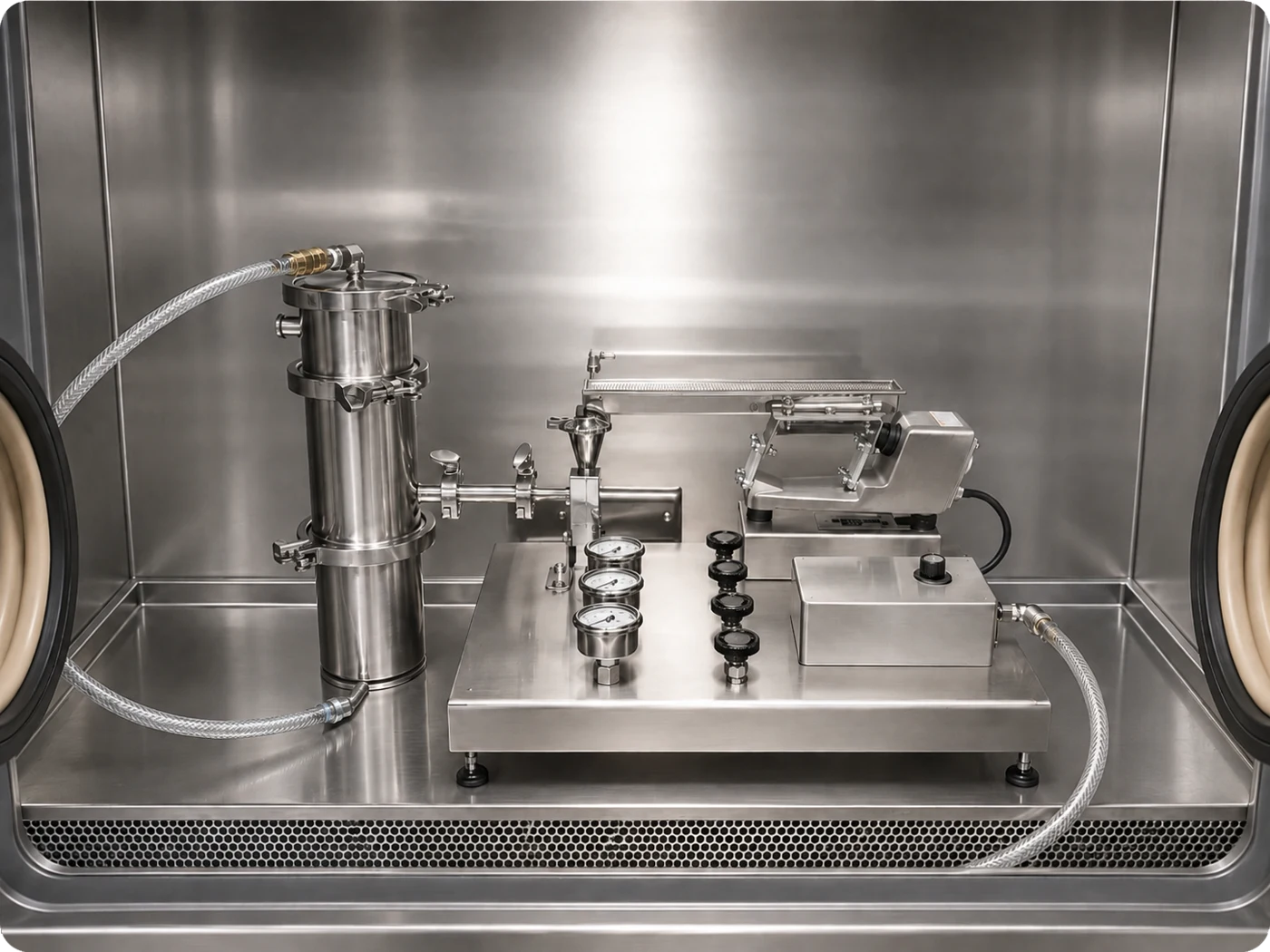
Model 00 jet mill integrated into a glove box

CONTROLLED ATMOSPHERE

Bring the mill
into your environment.

Glove-box integration can support inert-gas, low-humidity or contained handling for sensitive, reactive or high-value powders. Plan feeding, milling, collection and cleaning as one workflow.

  • Review product sensitivity and operator exposure requirements
  • Specify gas compatibility, moisture limits and powder handling
  • Coordinate the enclosure, exhaust, filtration and maintenance access
Discuss a contained configuration
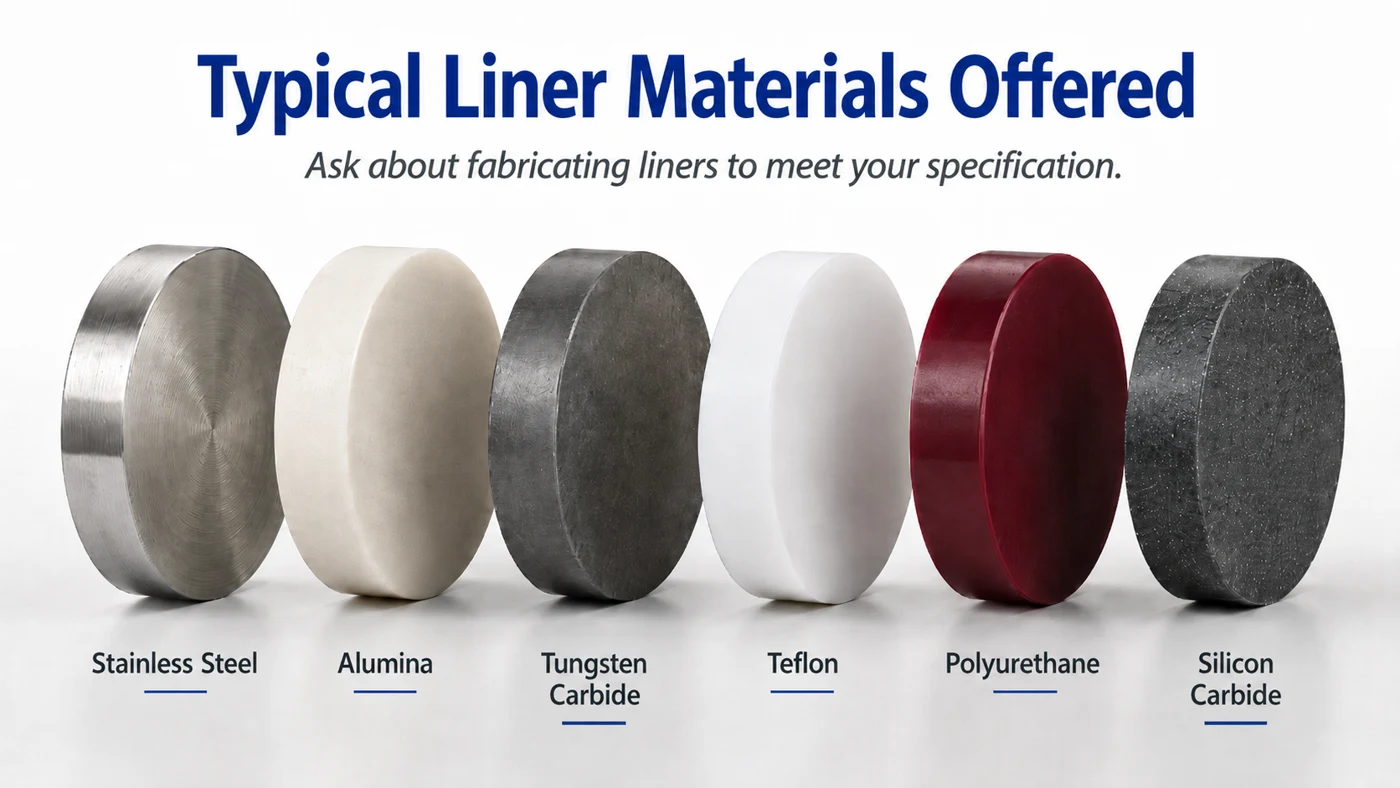
Stainless steel, alumina, tungsten carbide, PTFE, polyurethane and silicon carbide liner examples

MATERIALS OF CONSTRUCTION

Protect the process.
Match the liner.

A liner is selected for wear resistance, product compatibility and cleaning. Specialized options can help manage abrasive powders, sticking or contamination limits.

  • Stainless steel
  • Alumina ceramic
  • Tungsten carbide
  • Silicon carbide
  • Zirconia
  • PTFE
  • Polyurethane

Availability varies by mill and application. Review abrasion, chemistry, temperature, cleanability and acceptable wear elements before specifying a liner.

TEST. LEARN. SCALE.

Make the next step
with evidence.

Develop useful scale-up data.

Record feed rate, gas conditions, particle-size distribution, product temperature, wear and recovery. Pilot trials connect a promising laboratory result to utilities, cleaning and production requirements.

Explore pilot & production systems

Test or rent before committing.

Discuss free feasibility testing, in-house rental availability or contract processing. Review the sample, timing and complete configuration with Glen Mills.

Explore equipment rentals

YOUR MATERIAL. YOUR NEXT STEP.

Put the process
to the material test.

Tell us what you’re processing and what needs to change. We’ll help define the equipment, accessories and a useful trial.

  • Material and starting particle size
  • Target fineness and required quantity
  • Temperature, purity and cleaning requirements