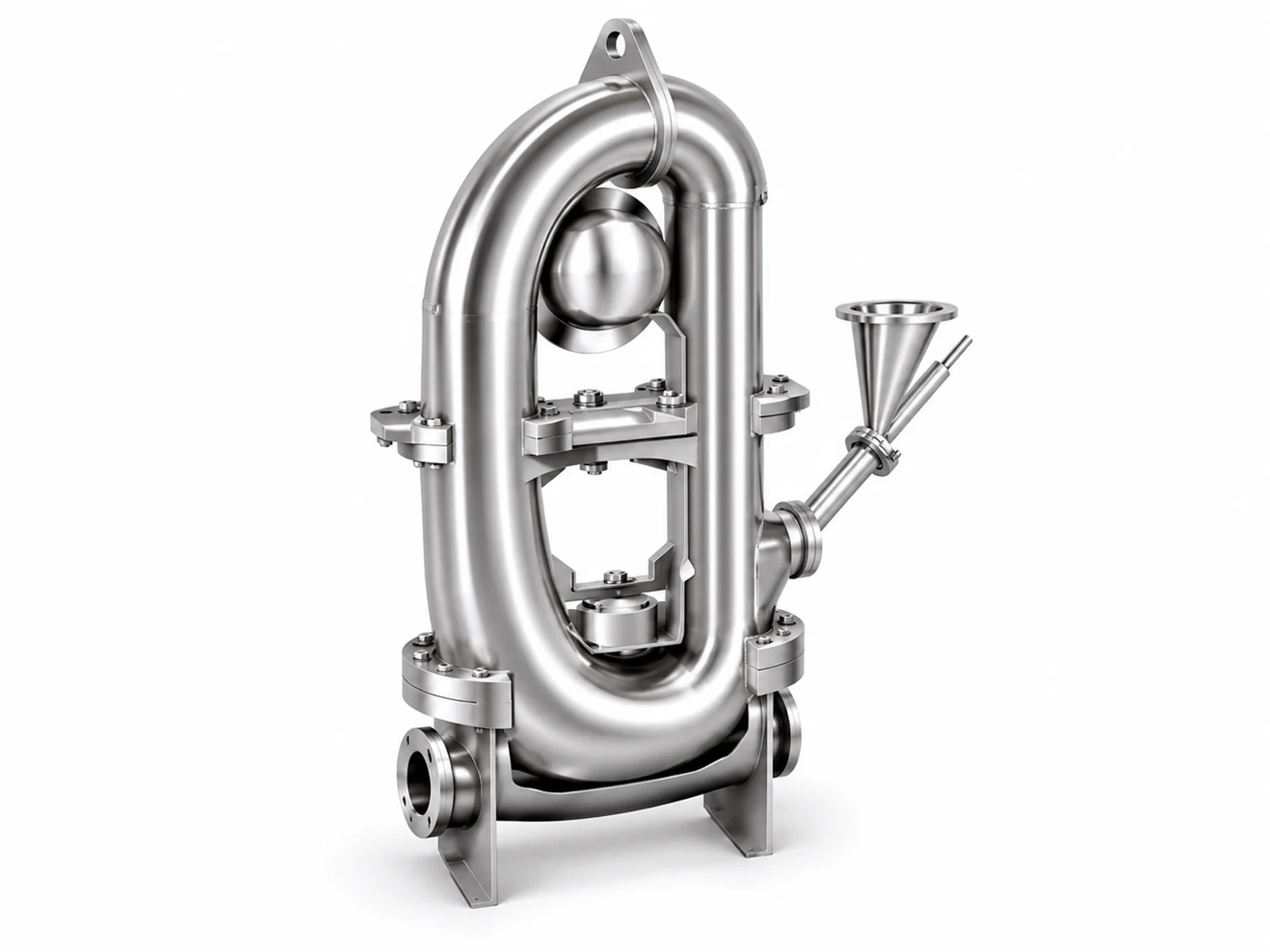
Jet-O-Mizer · static classification
A loop-style jet mill with separate grinding and classification regions. Gas velocity, feed rate and geometry determine the operating point. Suited to fine-powder processing with no rotating classifier.

FROM SCALE-UP TO CONTINUOUS PROCESSING
Scale fine-powder processing with static or active classification, application-specific liners and a complete feed-to-collection system.
FOUR PROCESSING APPROACHES
Choose the grinding and classification principle first, then size the system around real process data.
A loop-style jet mill with separate grinding and classification regions. Gas velocity, feed rate and geometry determine the operating point. Suited to fine-powder processing with no rotating classifier.
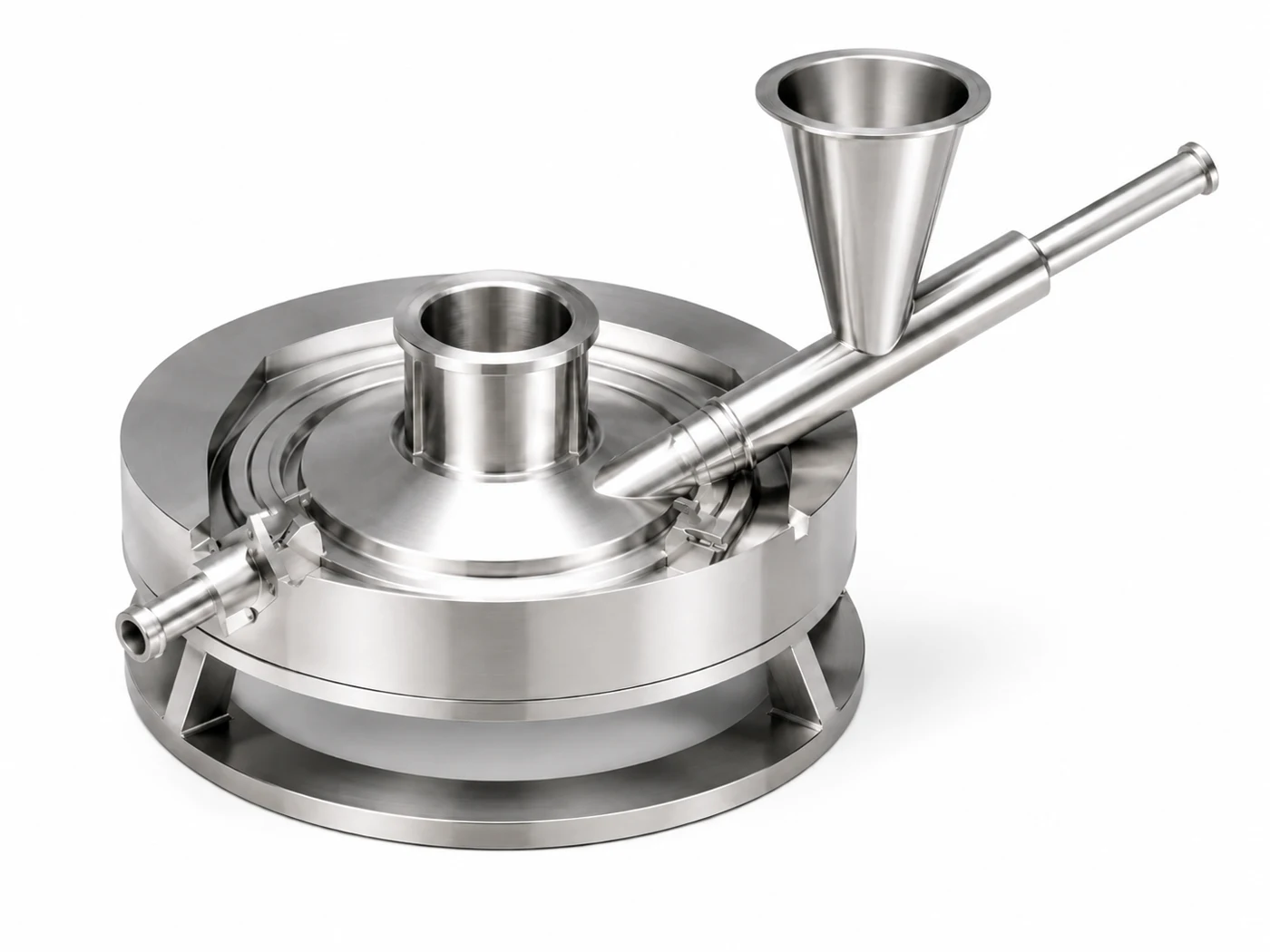
A horizontal pancake-style mill with tangential nozzles. Grinding and aerodynamic classification take place in one cylindrical chamber. Interchangeable nozzles and liners help tailor the process.
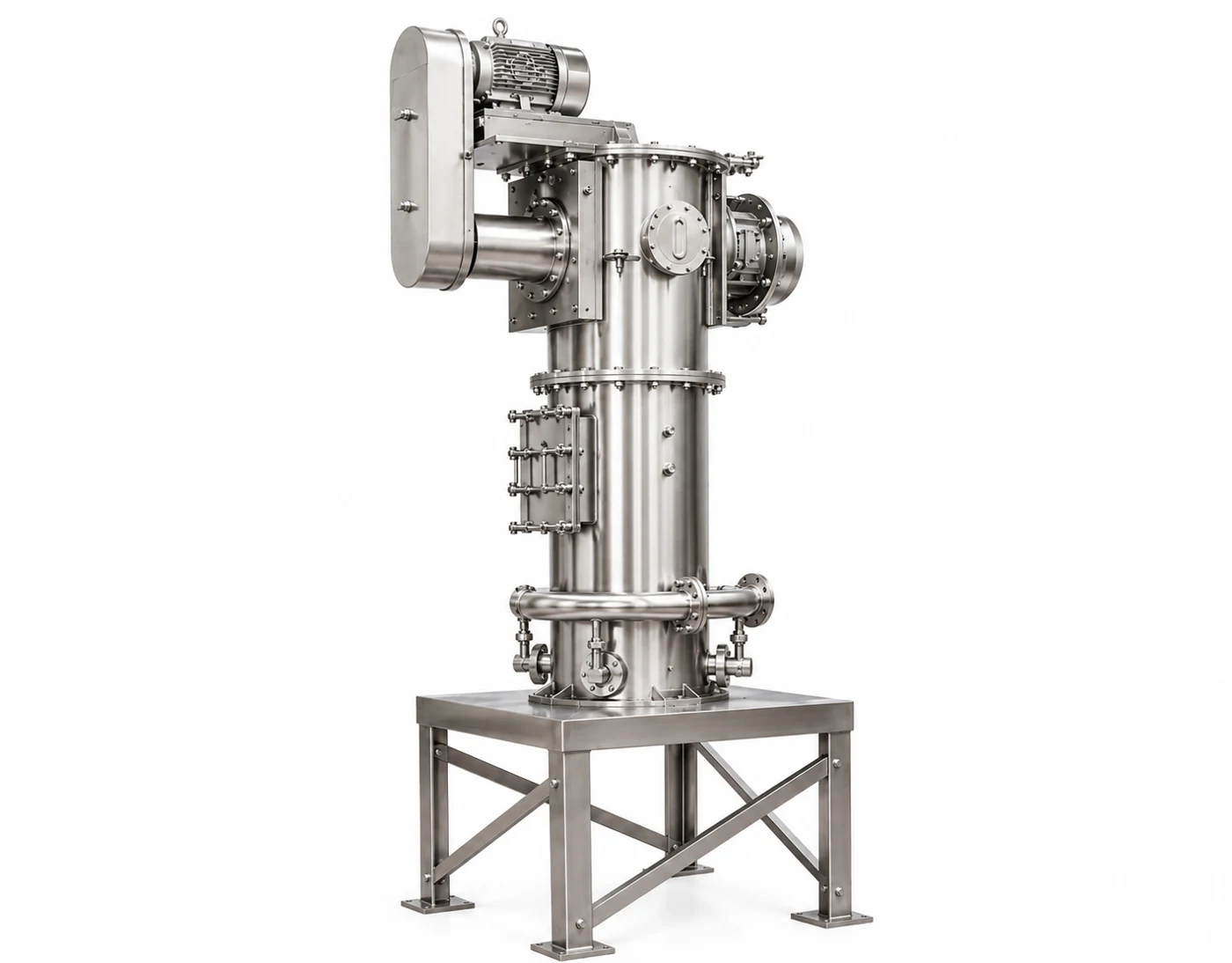
An opposed-jet fluid-bed mill with a variable-speed classifier wheel. Fines pass through the wheel while oversize particles return to the grinding zone. Choose it when adjustable classification is central to the task.
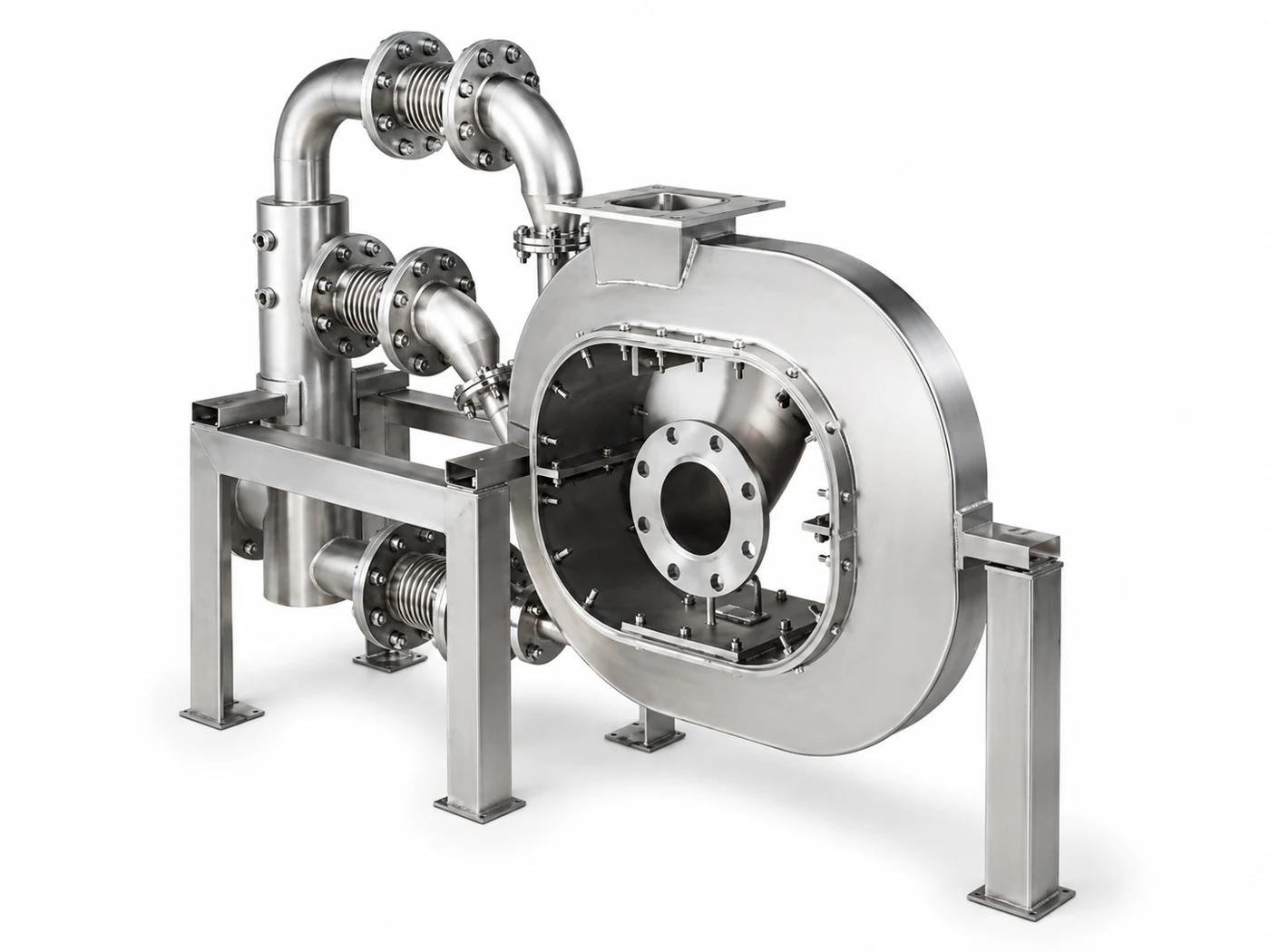
A flash-drying system that combines heat transfer with deagglomeration. It processes suitable wet powders, slurries and filter cakes into discrete dry particles. It is a drying route rather than a direct substitute for every dry micronizing application.
STATIC VS ACTIVE CLASSIFICATION
In both systems, process gas carries fine particles toward the outlet while coarse material receives more grinding. The difference is how that separation is controlled.
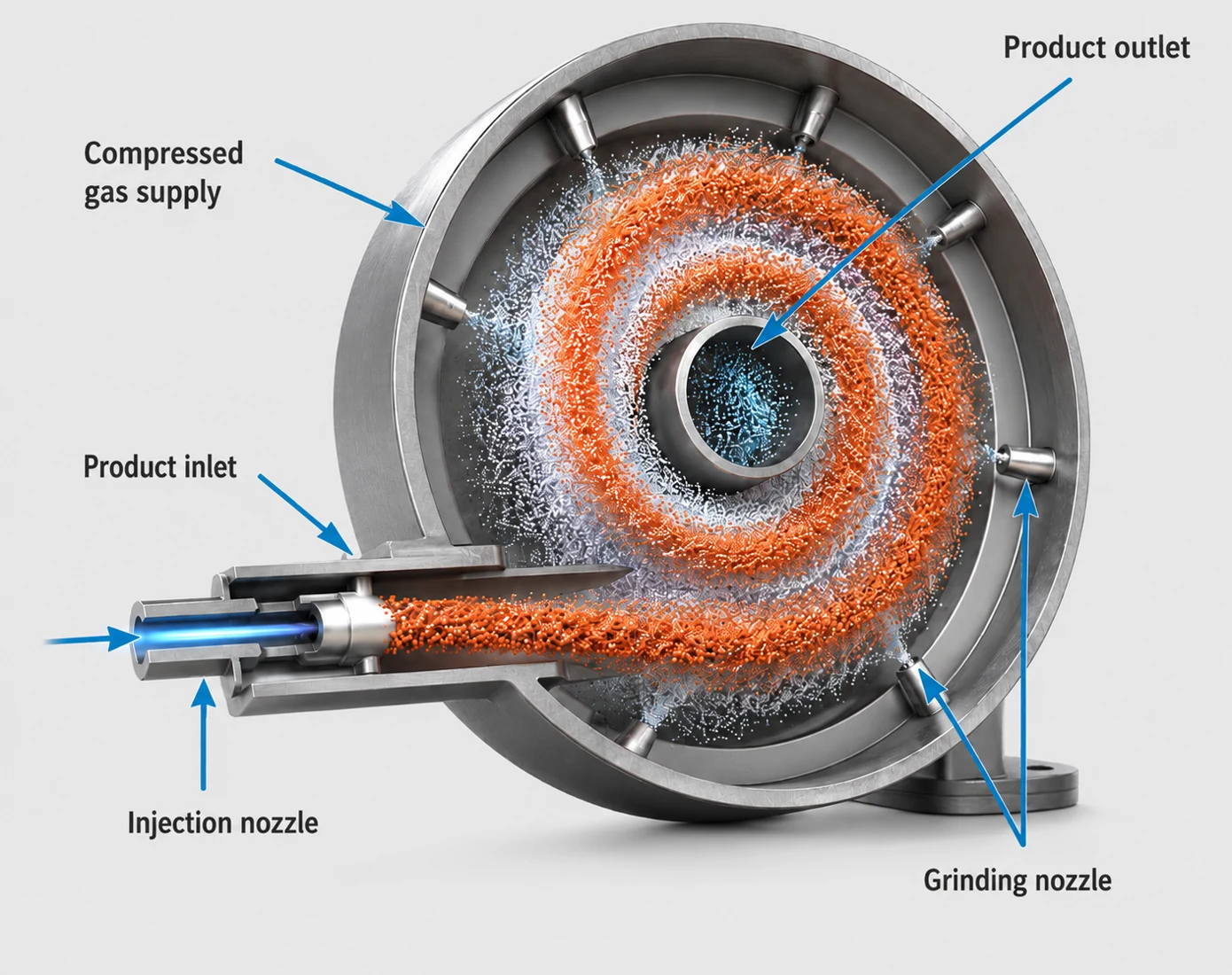
Gas flow and fixed geometry separate the particles. Aerodynamic drag carries finer material out while particle inertia keeps coarser material in circulation. There is no rotating classifier wheel.
Change feed rate, gas pressure and flow within the system’s operating limits. Choose this route for a simpler classification arrangement when trials demonstrate the required distribution.
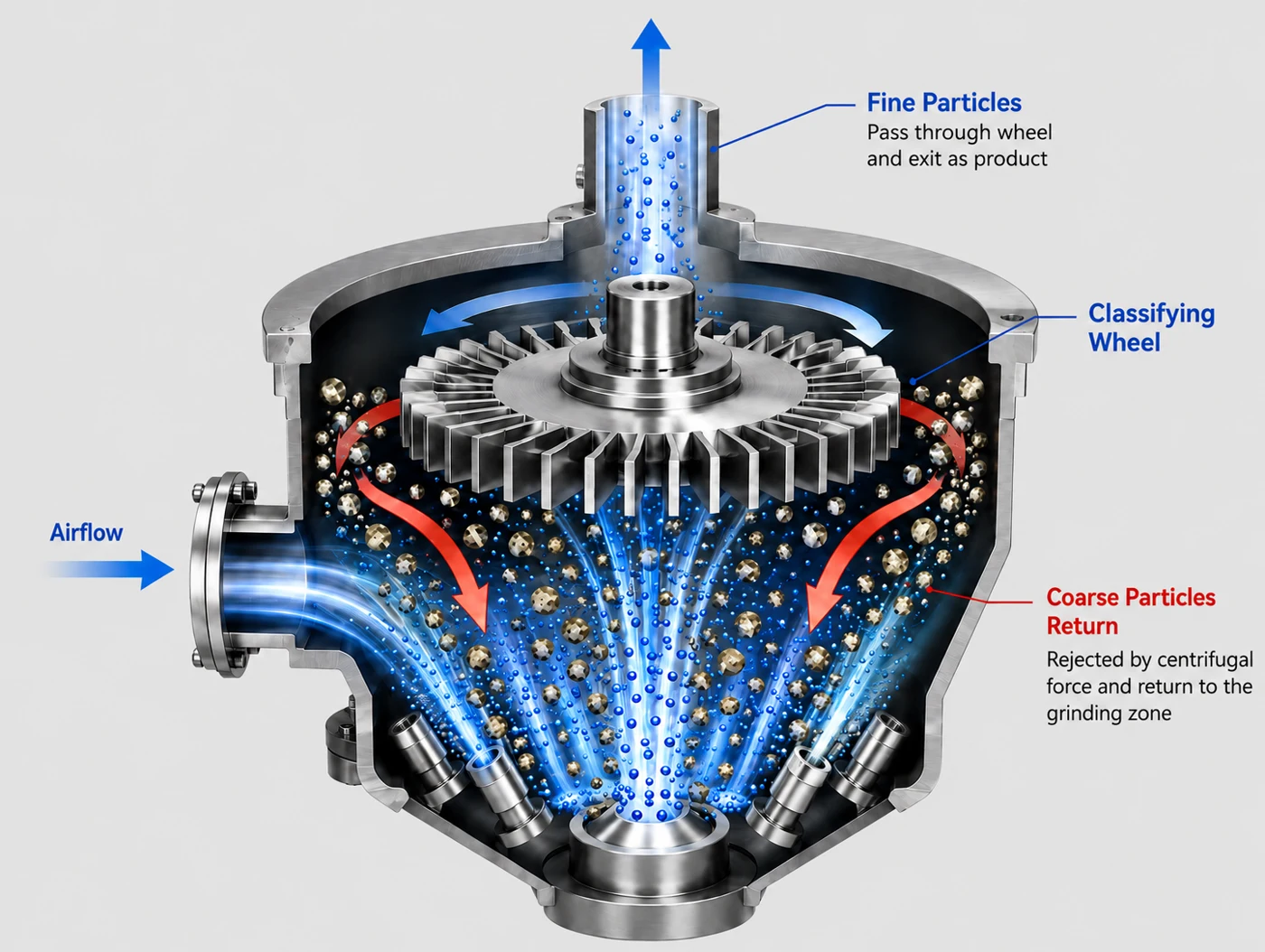
A motor-driven classifier wheel creates an adjustable centrifugal barrier. Fines pass through the wheel; rejected oversize material returns to the grinding zone.
Wheel speed adds a control variable for the cut point and distribution. Increasing speed generally produces a finer cut under comparable conditions, with capacity and energy tradeoffs.
Active classification adds a moving component. Distribution width and cut size still depend on the material, gas conditions, feed and classifier configuration; validate them with a trial.
ENGINEER THE COMPLETE CIRCUIT
Mill size is one part of a working powder process. Review utilities, feeding, collection and controls together.
Match the feeder, compressed-air or inert-gas quality, pressure, flow and drying requirements to the powder and required production rate.
Consider cyclones, product receivers, filters, HEPA options and contained transfer. Recovery, dust handling and cleaning requirements shape the arrangement.
Define feed interlocks, pressure monitoring, classifier speed where fitted, process automation and upstream or downstream connections.
Production capacity and achievable particle size depend on feed characteristics, gas conditions and the selected system. Use a representative material trial to establish an operating range.
WHEN THE FEED IS WET
Flash drying exposes dispersed material to a high rate of heat transfer while breaking down agglomerates. The process can be configured for suitable wet powders, slurries, centrifuge cake or filter cake.
Discuss direct or indirect heating, residence time, moisture targets and closed-loop solvent recovery where required. Inlet gas temperature is not the same as product temperature; heat-sensitive materials need a validated operating window.
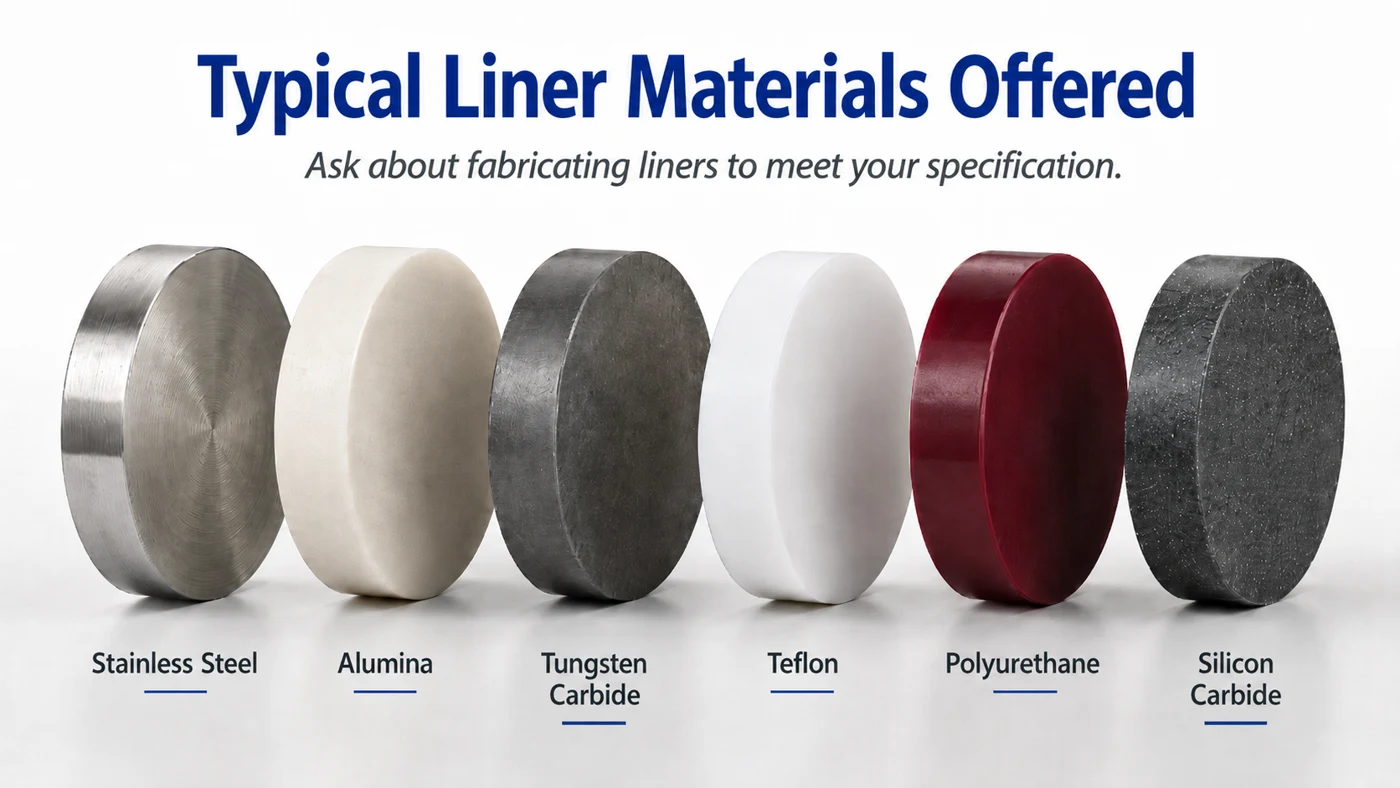
MATERIALS OF CONSTRUCTION
A liner is selected for wear resistance, product compatibility and cleaning. Specialized options can help manage abrasive powders, sticking or contamination limits.
Availability varies by mill and application. Review abrasion, chemistry, temperature, cleanability and acceptable wear elements before specifying a liner.
TEST. LEARN. SCALE.
Record feed rate, gas conditions, particle-size distribution, product temperature, wear and recovery. Pilot trials connect a promising laboratory result to utilities, cleaning and production requirements.
Explore laboratory systemsDiscuss free feasibility testing, in-house rental availability or contract processing. Review the sample, timing and complete configuration with Glen Mills.
Explore equipment rentalsYOUR MATERIAL. YOUR NEXT STEP.
Tell us what you’re processing and what needs to change. We’ll help define the equipment, accessories and a useful trial.