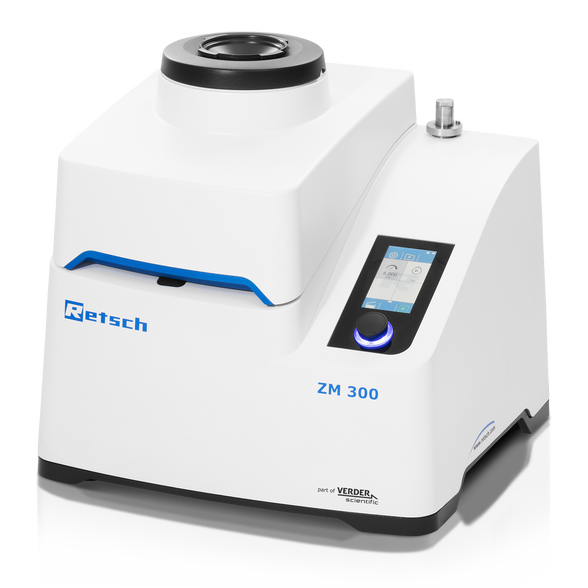
Ultra centrifugal mill
ZM 300
Fine analytical preparation and temperature-sensitive sample methods.
- Feed size*
- < 10 mm
- Final fineness*
- < 40 µm
- Collection / quantity
- 300 / 600 mL useful cassette volume

ROTOR MILLING SYSTEMS
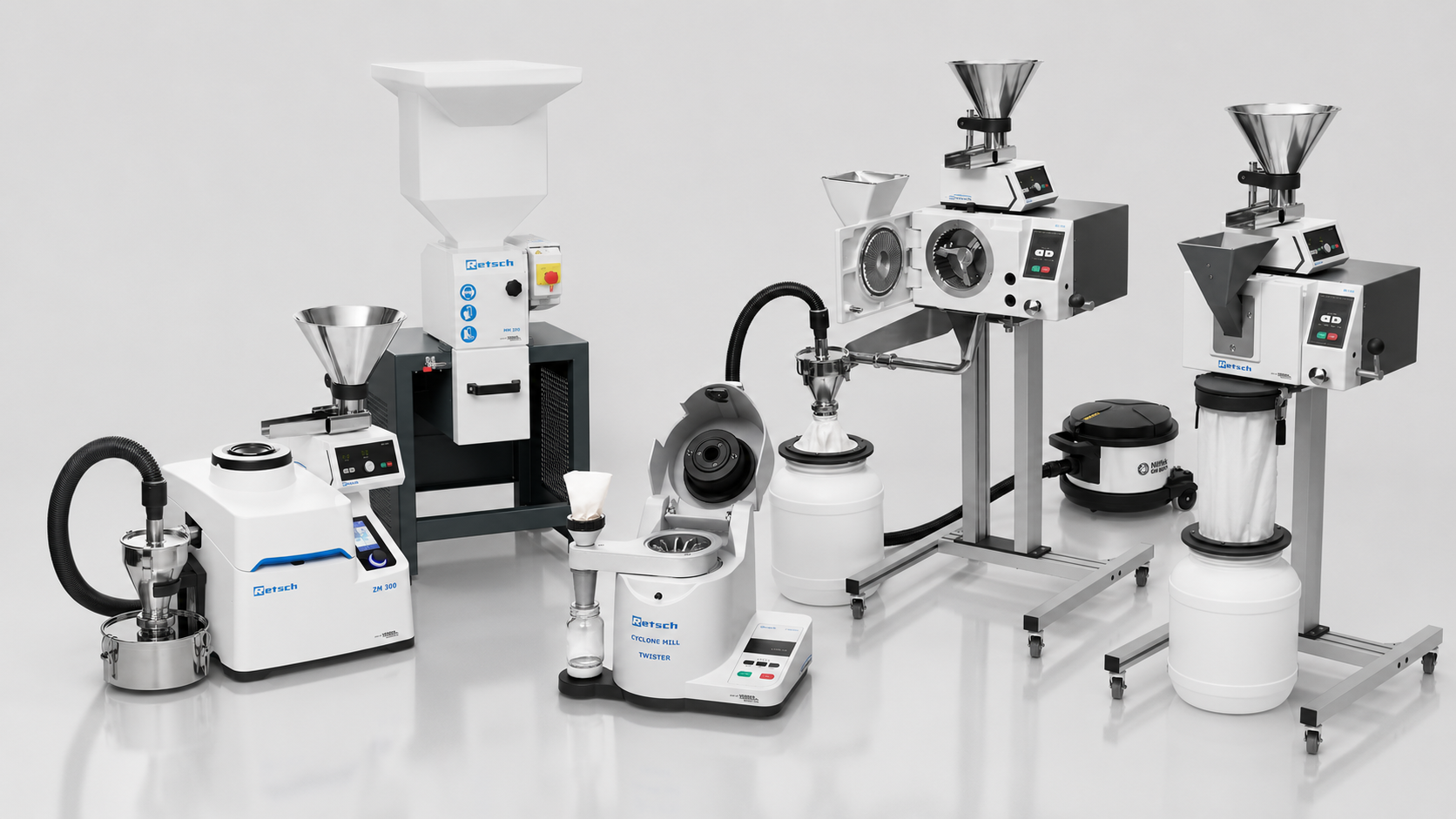
Compare six dry-milling approaches for laboratory preparation, larger batches and higher-throughput work. Match material behavior, feed size, final fineness and collection to the process you need.
START WITH THE TASK
Particle reduction, a more consistent distribution, deagglomeration or representative preparation: begin with the outcome.
Compare rotor speed, sieve and collection for repeatable laboratory samples.
Explore the approachExplore PX-MFC 90 D for suitable dry, brittle samples and tube collection.
Explore the approachStart with a preparation method that supports the downstream analysis.
Explore the approachCompare batch collection and continuous feeding before choosing a capacity.
Explore the approachReview temperature, residence time, airflow and conditioning together.
Explore the approachROTOR MILL SELECTION ASSISTANT
Start with the material and the result. Compare a preliminary recommendation with the closest alternatives, then validate it with your sample.
SUGGESTED STARTING POINT
A flexible laboratory starting point for fine preparation of suitable soft, medium-hard and fibrous samples.
This is preliminary guidance, not a performance guarantee.
Final selection requires a representative material trial and review of the complete configuration.
EXPLORE THE RANGE
Choose a model to review its applications, operating principle, collection options and complete technical data.
Ultra centrifugal mill
Fine analytical preparation and temperature-sensitive sample methods.
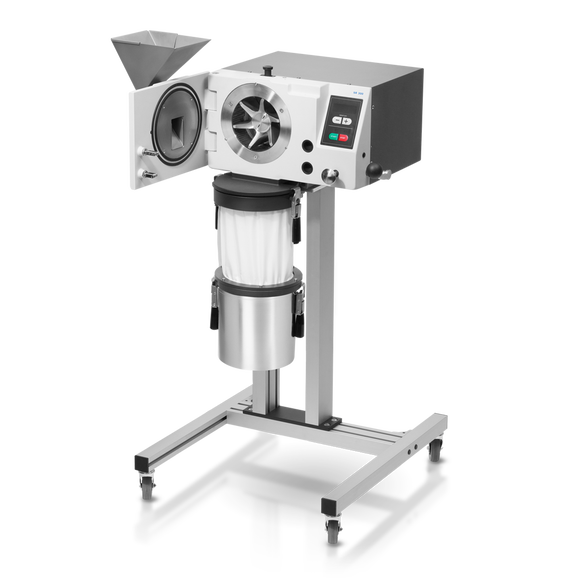
Rotor beater mill
Versatile dry grinding and deagglomeration with flexible collection.
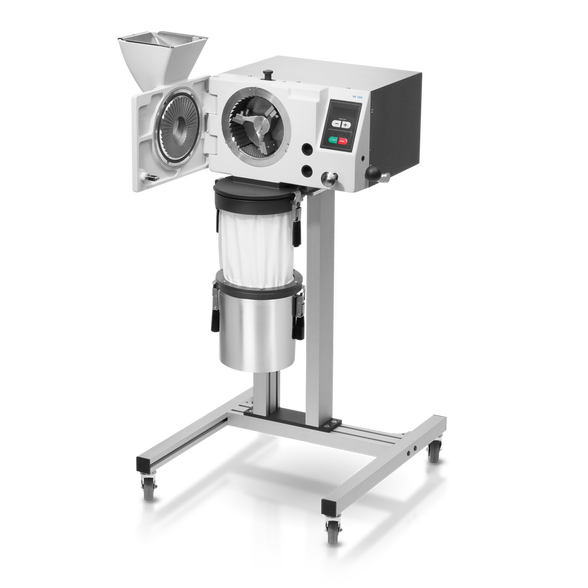
Cross beater mill
Medium-hard, brittle mineral, glass and ceramic sample preparation.
Hammer mill
Large feed, coarse reduction and higher-throughput dry preparation.
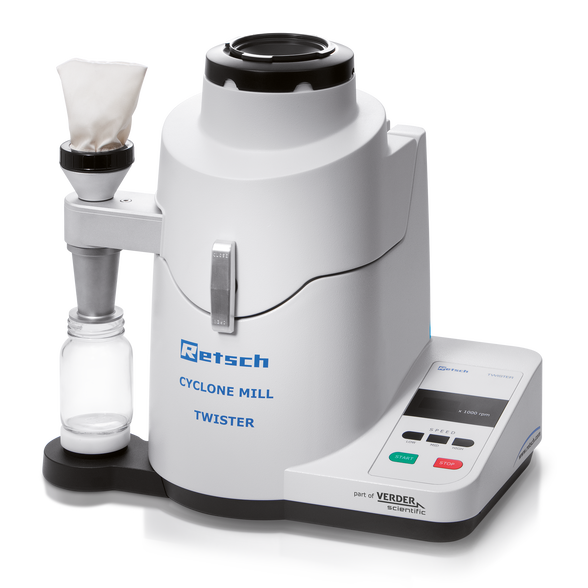
Cyclone mill
Food, feed and agricultural samples for NIR analysis.
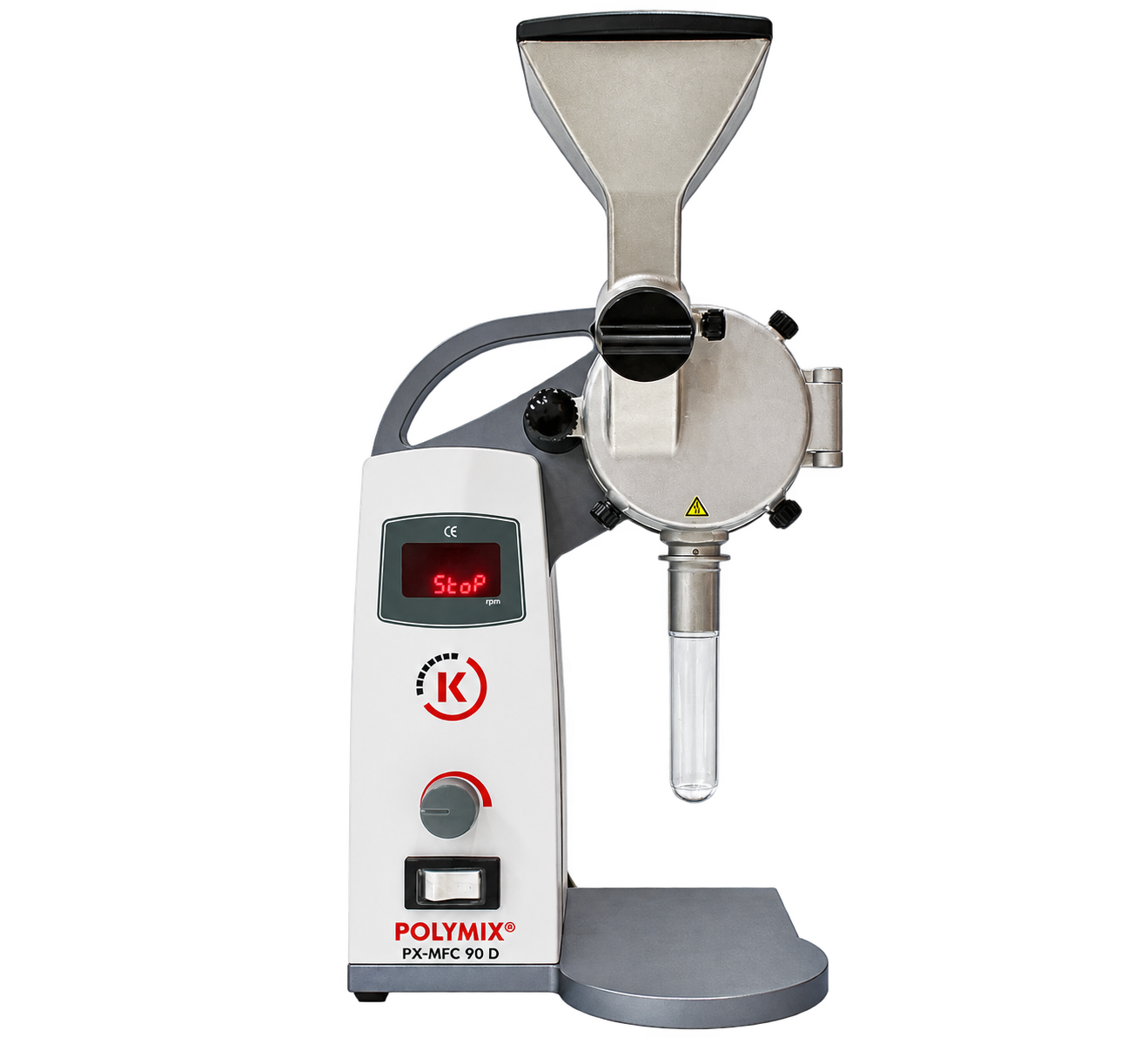
Compact hammer mill
Compact dry, brittle sample preparation with a three-arm hammer rotor and grooved stator.
*Published feed limits, fineness and throughput depend on the material, sieve, speed and configuration. Sieve aperture is not the final particle size, and maximum throughput and finest output are not simultaneous guarantees.
SIDE BY SIDE
| Model | Material focus | Feed size* | Final fineness* | Speed | Capacity / collection |
|---|---|---|---|---|---|
| ZM 300 ↗ | Fine analytical preparation and temperature-sensitive sample methods. | < 10 mm | < 40 µm | 6,000–23,000 rpm | 300 / 600 mL useful cassette volume |
| SR 300 ↗ | Versatile dry grinding and deagglomeration with flexible collection. | < 25 mm | < 50 µm | 3,000–10,000 rpm | 5 L / optional 30 L collector |
| SK 300 ↗ | Medium-hard, brittle mineral, glass and ceramic sample preparation. | < 25 mm | < 100 µm | 2,000–4,000 rpm | 5 L / optional 30 L collector |
| HM 200 ↗ | Large feed, coarse reduction and higher-throughput dry preparation. | < 100 mm | < 0.8 mm | 3,000 / 3,500 rpm at 50 / 60 Hz | Up to 1,500 kg/h* |
| TWISTER ↗ | Food, feed and agricultural samples for NIR analysis. | < 10 mm | < 250 µm | 10,000 / 12,000 / 14,000 rpm | < 250 mL feed quantity |
| PX-MFC 90 D ↗ | Compact dry, brittle sample preparation with a three-arm hammer rotor and grooved stator. | Confirm for the sample and attachment | Below 40 µm reported; product-dependent | 50–6,000 rpm | 300 mL funnel; confirm useful quantity |
*Published feed limits, fineness and throughput depend on the material, sieve, speed and configuration. Sieve aperture is not the final particle size, and maximum throughput and finest output are not simultaneous guarantees. Collector capacity and useful feed quantity are different values; review each product’s technical data.
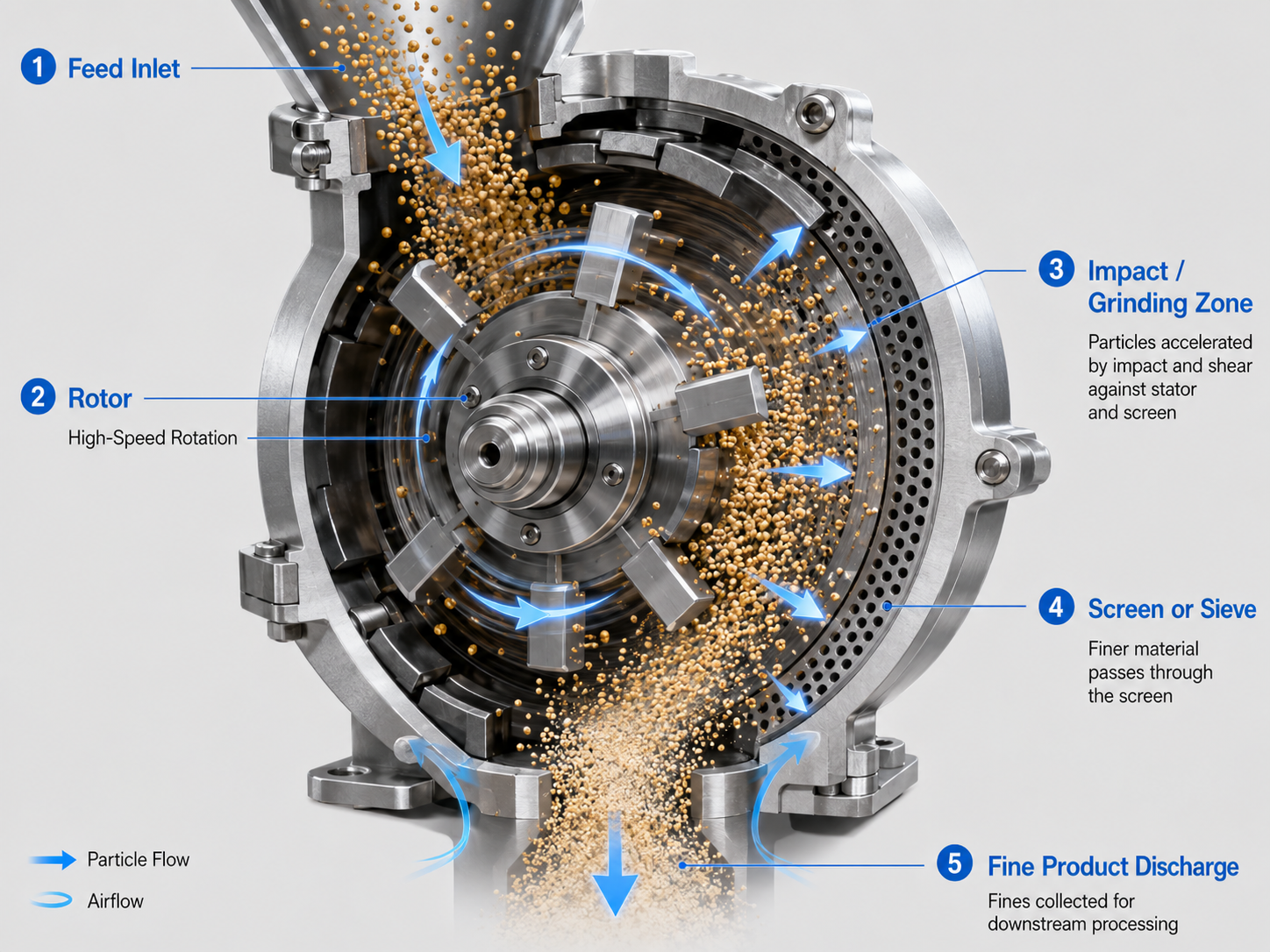
HOW ROTOR MILLS WORK
A rotor accelerates material against tools, inserts or a screen. Impact, shearing or friction reduces it until the selected outlet and sieve allow discharge.
Define the largest piece, hardness, brittleness, fibers and elasticity.
Choose rotor design, speed and sieve for the sample and target result.
Review collection, dust handling, size distribution and sample integrity.
COLLECTION & PROCESS CONTROL
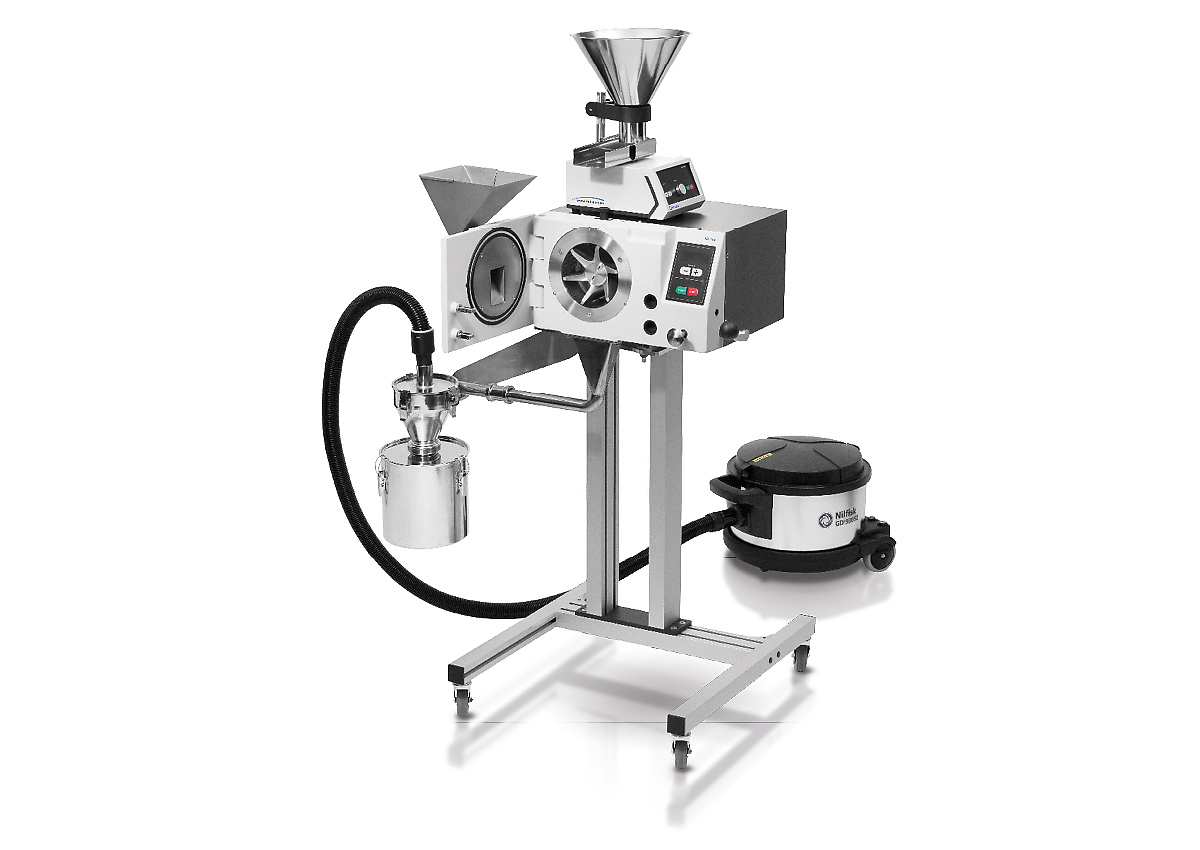
Compatible cyclone collection assists airflow and discharge, can reduce heat buildup and helps recover fines. Review the suction source, filters, vessel and complete installation for the selected mill.
Cyclone collection does not make every process dust-free or suitable for hazardous powders. TWISTER includes a cyclone; options and cold-grinding compatibility vary on the other models.
MATERIALS & APPLICATIONS
Grinding can prepare representative material, improve downstream mixing and support quality control. The sample and analysis determine whether a rotor mill is appropriate.
Compare impact, shearing and friction across different rotor designs.
Record speed, sieve, tool material and feeding for reproducible methods.
Review access, removable components and cleaning between runs.
TEST BEFORE YOU SELECT
Discuss a representative sample trial and useful data before deciding.
Explore material testingReview recovery, fineness, temperature and contamination with your material.
Explore prototyping & samplesDiscuss rental or contract-processing availability and the required output.
Explore equipment rentalsGET YOUR GRINDING RECOMMENDATION
Share the starting size, desired fineness and quantity to process. We’ll review the milling route, tools, collection and opportunities for a material trial.
Discuss rental, prototyping or contract-processing availability for your application.
973 777 0777 ↗