YOUR MATERIAL. YOUR NEXT BREAKTHROUGH.Explore free feasibility testing →

RETSCH / CROSS BEATER MILL

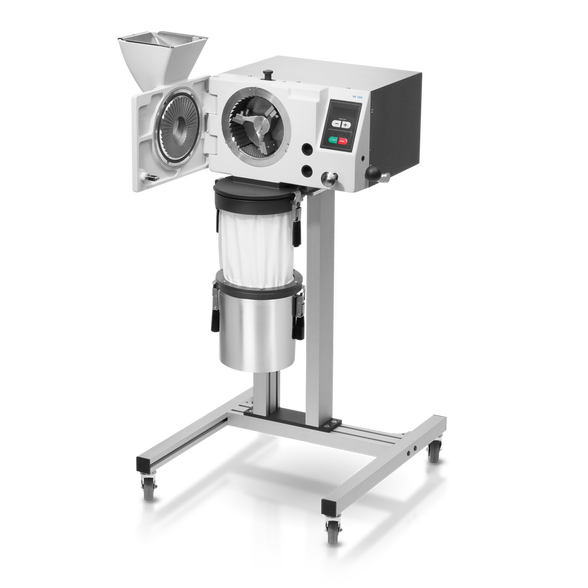
SK 300.
Brittle materials. A defined preparation route.

Cross-beater impact grinding for medium-hard, brittle samples. Explore mineral, glass and ceramic preparation with adjustable speed, interchangeable bottom sieves and tool-material options.

SK 300 Cross Beater Mill
FEED SIZE*< 25 mm
FINAL FINENESS*< 100 µm
SPEED2,000–4,000 rpm

THE MODEL IN FOCUS

Medium-hard, brittle mineral, glass and ceramic sample preparation.

Use cross-beater impact

Material is reduced between the cross beater and toothed grinding insert, with discharge governed by the bottom sieve.

Adjust the operating point

Speed is selectable in 200 rpm steps. Bottom sieve openings range from 0.12 to 10 mm.

Match the wear material

Review stainless, hardened steel, cast iron or the specified heavy-metal-free grade against wear and analytical limits.

Choose collection and access

Push-fit components support cleaning. Gravity collection and optional cyclone systems provide different discharge arrangements.

*Published feed limits, fineness and throughput depend on the material, sieve, speed and configuration. Sieve aperture is not the final particle size, and maximum throughput and finest output are not simultaneous guarantees.

FUNCTIONAL PRINCIPLE

How SK 300
works.

Feed reaches the center of the chamber and is struck by the cross beater, then reduced against the toothed insert. Particles pass through the bottom sieve when sufficiently small and leave through the outlet. Airflow and an optional cyclone help transport and collect the material.
  • Match sample behavior and feed dimensions
  • Choose the actual sieve, speed and contact materials
  • Validate the output with a representative trial
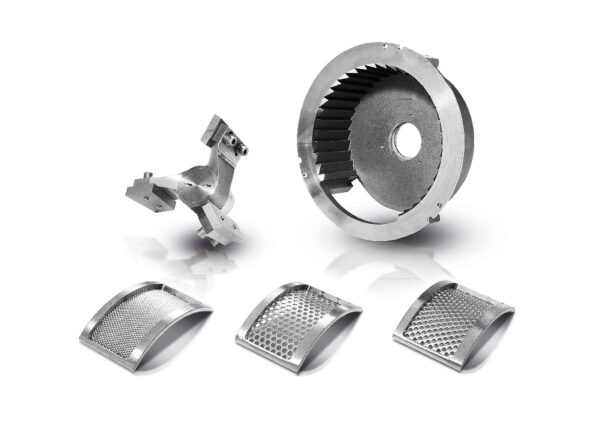
SK 300 operating components or configuration example
Configuration example; confirm the accessories and arrangement.

PUBLISHED TECHNICAL DATA

The technical
picture.

SK 300: cross beater mill for medium-hard, brittle samples.

Published feed limits, fineness and throughput depend on the material, sieve, speed and configuration. Sieve aperture is not the final particle size, and maximum throughput and finest output are not simultaneous guarantees. Confirm current electrical and installation requirements before ordering.

Maximum feed size*
< 25 mm
Final fineness*
< 100 µm
Speed at 50 Hz (60 Hz)
2000 - 4000 min-1 (in steps of 200 min-1)
Speed setting
yes
Collector capacity
5 l / optional: 30 l
Drive power
1.1 kW
Power consumption
1.5 kW
W x H x D closed
600 x 1200 x 700 mm (with base frame)
Net weight
~ 60 kg (with base frame)
All other specifications
Applications
size reduction
Field of application
agriculture, chemistry / plastics, construction materials, environment / recycling, geology / metallurgy, glass / ceramics
Feed material
medium-hard, brittle
Rotor peripheral speed
15.5 m/s .. 31 m/s
Types of rotors
stainless steel / cast iron
Material of grinding tools
hardened steel, stainless steel, cast iron, steel 1.1740 (for heavy-metal free grinding)
Sieve sizes
trapezoid holes 0.12 / 0.20 / 0.25 / 0.35 / 0.50 / 0.75 / 1.00 / 1.50 / 2.00 mm round holes 3.00 / 4.00 / 5.00 / 6.00 / 8.00 / 10.00 mm
Dust extraction unit
optional cyclone
Drive
3-phase motor with frequency converter
Electrical supply data
200-240 V, 50/60 Hz
Power connection
1-phase
Protection code
IP 41
Remark weight (without hopper etc.)
~ 50 kg (without base frame)
Standards
CE

CONFIGURE THE WORKFLOW

The options shape
the result.

Grinding tools & sieve selection

Choose the rotor and insert material for the sample. The published list includes hardened steel, stainless steel, cast iron and steel 1.1740. A named heavy-metal-free grade does not remove every contamination pathway.

Collection, feeding & cyclone

The technical specification lists a 5 L collector with an optional 30 L vessel. Discuss feeding and cyclone options for the complete installation; cassette volumes quoted for ZM 300 are not SK 300 capacities.

Cleaning & repeatability

The grinding insert, cross beater and sieve can be exchanged for cleaning and application changes. Document the actual speed, sieve, tool material and sample-feeding method.

TYPICAL MATERIALS

Start with your sample.

Examples guide the discussion; they do not guarantee a result for every material or formulation.

Explore materials & applications

MODEL APPLICATION REVIEW

Put SK 300
to the material test.

Share the starting size, desired fineness and quantity to process. We’ll review the milling route, tools, collection and opportunities for a material trial.

  • Material and current form
  • Starting and target particle size
  • Batch size or required throughput
  • Temperature, purity, dust and cleaning constraints
Explore free feasibility testing

Discuss rental, prototyping or contract-processing availability for your application.

973 777 0777 ↗

Request an application review.

Send your enquiry directly to the Glen Mills team.

KEEP THE RANGE IN VIEW

Compare another route.

Different feed, fineness and collection needs can point to another mill.
Return to the selection assistant
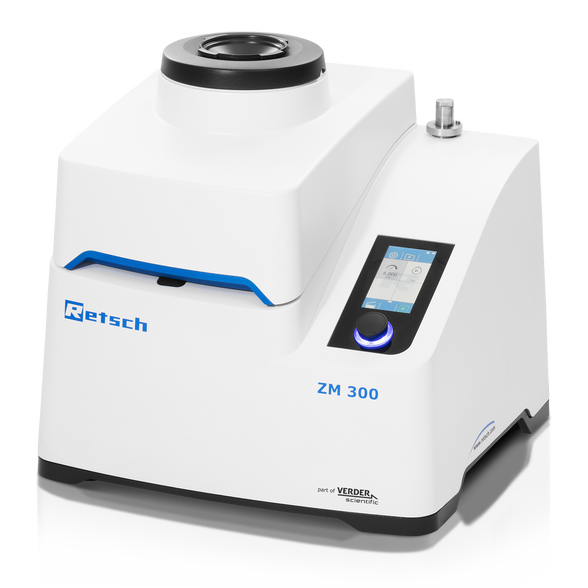
ZM 300 Ultra Centrifugal Mill

Ultra centrifugal mill

ZM 300

Fine analytical preparation and temperature-sensitive sample methods.
Feed size*
< 10 mm
Final fineness*
< 40 µm
Collection / quantity
300 / 600 mL useful cassette volume
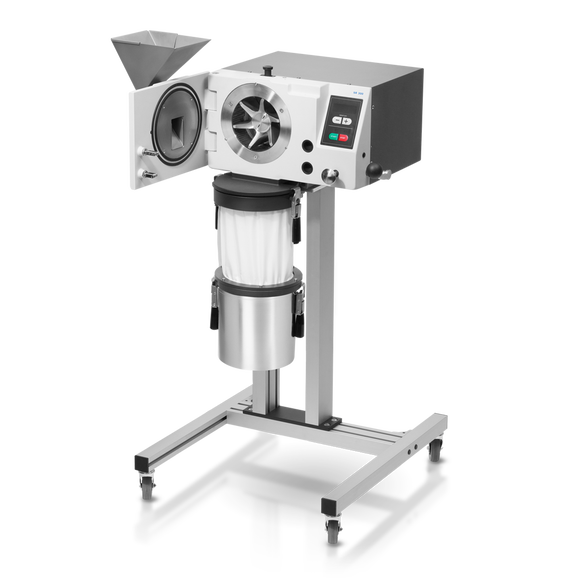
SR 300 Rotor Beater Mill

Rotor beater mill

SR 300

Versatile dry grinding and deagglomeration with flexible collection.
Feed size*
< 25 mm
Final fineness*
< 50 µm
Collection / quantity
5 L / optional 30 L collector
HM 200 Hammer Mill

Hammer mill

HM 200

Large feed, coarse reduction and higher-throughput dry preparation.

Feed size*
< 100 mm
Final fineness*
< 0.8 mm
Throughput*
Up to 1,500 kg/h*