YOUR MATERIAL. YOUR NEXT BREAKTHROUGH.Explore free feasibility testing →

REPRESENTATIVE SAMPLE DIVISION

Sample dividers.
Start with the right method.

Choose how to divide a bulk sample before choosing the machine. Compare equal portions, sample extraction with reject, and larger-batch preparation for laboratory analysis.

START WITH THE PURPOSE

Reduce the quantity.
Preserve what you need to measure.

A bulk material can contain particles of different sizes, densities and compositions. A small scoop from one location may not reflect that variation. Controlled sample division takes repeated portions from the material stream to help prepare a more representative laboratory sample.

A divider reduces sample quantity; a sieve separates by particle size, and a mill reduces particle size. They solve different preparation tasks and can be used in sequence.

Division cannot correct a biased original sample. The incoming sample, material flow, equipment configuration and handling method all matter.

THREE WAYS TO START

What do you want to keep?

“Mode” describes what happens to the sample. The model and fitted dividing module determine which modes are available.

01

Several equal portions

Divide the whole sample into comparable fractions for different tests, laboratories or retained references. Choose the dividing head and receiving vessels around the number and size of portions.

Compare PT 100 for laboratory batches and PT 300 for larger quantities.

Find an equal-portion setup ↗
02

A sample plus the remainder

Take a controlled fraction for analysis and collect the rest separately. The “reject” is simply the remainder of this dividing step; it can be retained if the method requires it.

Compare PT 200 adjustable extraction and PT 300 with an extraction module.

Find an extraction setup ↗
03

A larger batch, in stages

Start with more material, then choose batch fractions or one sample with reject. If a single division still leaves too much sample, plan a documented second division using compatible equipment.

Explore PT 300 and its 30 L / 60 L configurations. Confirm the complete reduction sequence.

Review a bulk-sample task ↗

A PRACTICAL SELECTION HELPER

Tell us about the sample.

Start with what you know. Leave quantities blank if you are unsure. The result suggests a preparation route and models to compare, rather than a final equipment specification.

Use bulk volume, not container capacity.

Use the largest expected particles.

THE MODELS AT A GLANCE

Compare the workflow.
Then choose the configuration.

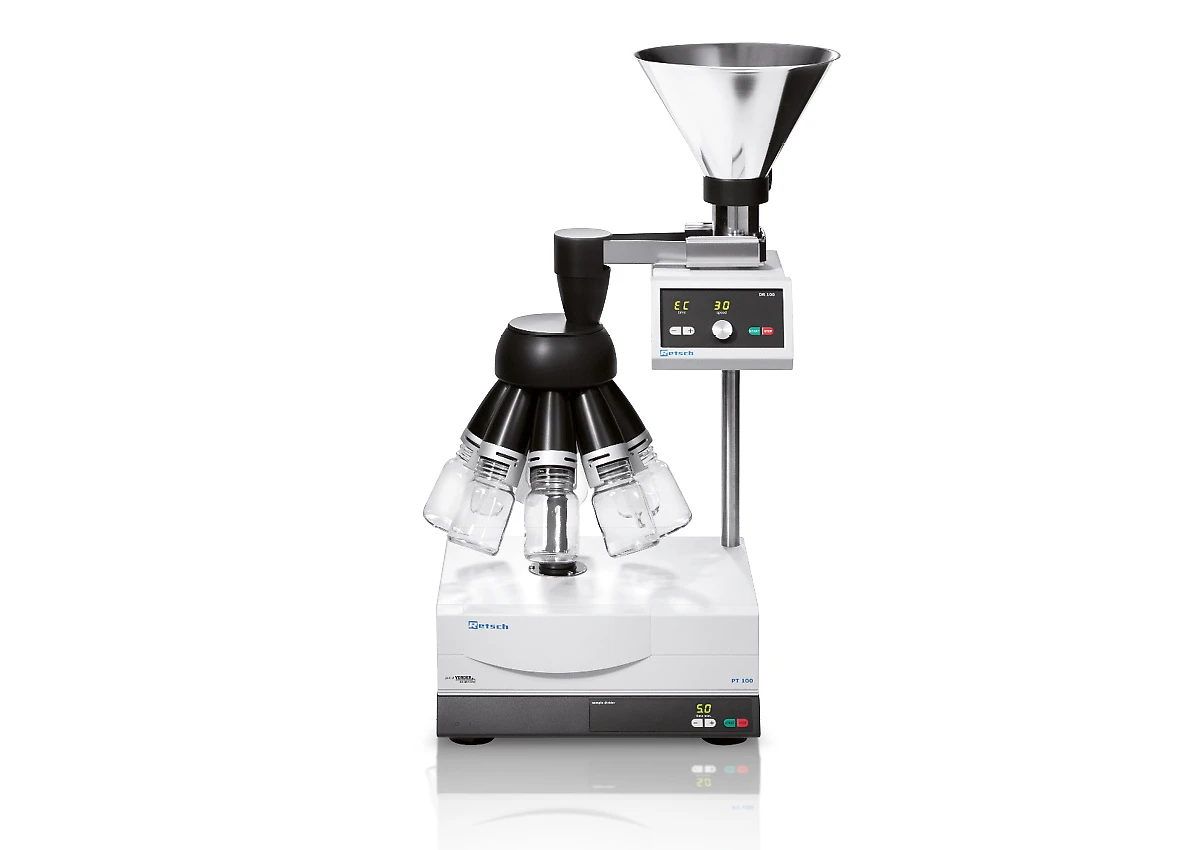
PT 100 sample divider

PT 100

Equal-portion division

Several comparable portions

A rotating dividing head distributes the feed among 6, 8 or 10 receiving positions. A practical starting point for laboratory subsamples, repeat analyses and retained reference portions.

  • Batch feed up to 5 L
  • 6 / 8 / 10 divisions
  • 30–500 mL receiving bottles
Explore PT 100 specifications ↗
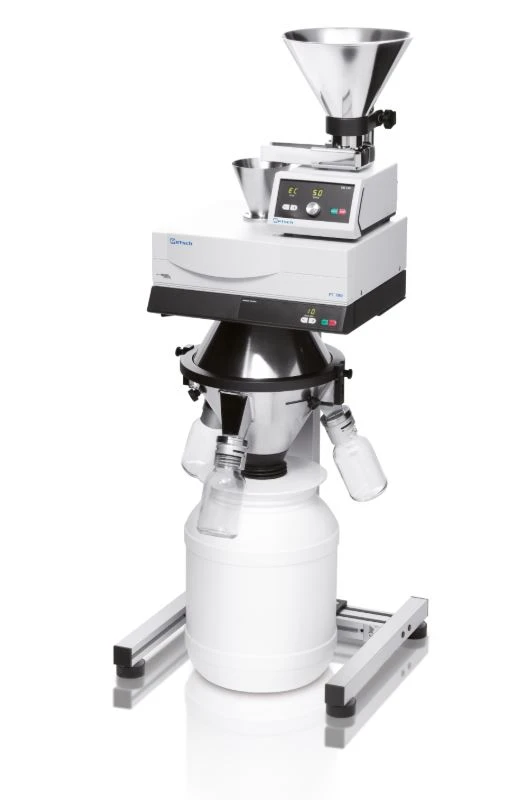
PT 200 sample divider

PT 200

Sample extraction with reject

Keep a fraction. Collect the rest.

A rotating tube feeds a cone with adjustable sample slots. Retain one to three sample streams while the remaining material passes to a separate reject collector.

  • 1 / 2 / 3 sample outlets
  • Adjustable dividing ratio
  • Batch or continuous feeding
Explore PT 200 specifications ↗
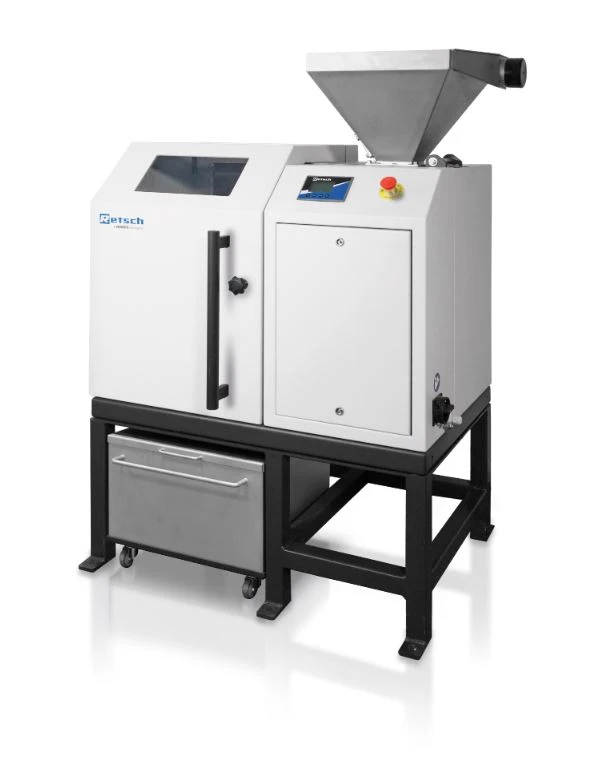
PT 300 sample divider

PT 300

Large-batch division or extraction

Divide a larger bulk sample

Choose a dividing module for multiple batch fractions or for one retained sample with reject. Larger feed and 30 L or 60 L configurations support bulk-sample preparation.

  • 30 L / 60 L configurations
  • Batch: 4 / 6 / 8 / 10 fractions
  • Extraction: one sample plus reject
Explore PT 300 specifications ↗
Sample divider selection reference
ConsiderationPT 100PT 200PT 300
Primary dividing taskSeveral comparable laboratory fractionsExtract sample streams with adjustable slots; collect remainder separatelyMultiple batch fractions or one sample with reject
Starting quantity / configurationUp to 5 L batch feedReview feed duration, sample bottles and 26 L reject collector; not a 5 L batch-capacity rating30 L or 60 L configuration
Largest feed particle*Up to 10 mmUp to 10 mmUp to 30 mm
Division arrangement6 / 8 / 10 fractions1 / 2 / 3 sample outlets, by bottom coneBatch: 4 / 6 / 8 / 10; extraction: one sample plus reject
What to specifyDividing head, receiving bottles and feederBottom cone, slot ratio, sample vessels, reject collection and feeder30/60 L setup, dividing module, collection and feeding

*Published limits depend on material and configuration. Receiving volume is different from starting batch volume. Match fraction volume and material mass to the actual vessels; do not assume every maximum applies together.

BUILD A USEFUL PREPARATION METHOD

The sample matters as much as the divider.

01

Define the final portion

List the tests, number of portions and amount required for each. Include retained samples and allowance for repeat analysis.

02

Check the material flow

Moisture, static, agglomeration and particle shape can change feeding. Sticky material or slurry needs a preparation review before a dry-bulk divider is selected.

03

Feed consistently

Review hopper, chute and feeder with the sample. The DR 100 vibratory feeder is an option for compatible setups; confirm the complete arrangement.

04

Record and check the method

Document the initial sample, feed conditions, dividing configuration, fraction masses and cleanout. Check that important components remain represented in the retained sample.

COMMON QUESTIONS

Not sure where
your task fits?

Does equal division mean every bottle has exactly the same mass?

It is the intended division arrangement, not a guarantee of identical masses or composition for every material. Assess the method using your sample, feed conditions and analytical requirements.

What if I need a very small final sample?

A staged reduction may be appropriate. Choose the retained fraction at each step and keep handling losses, segregation and minimum useful sample size in view. Do not assume a single pass will produce every required final quantity.

Should I divide before or after grinding?

It depends on the initial particle size, required analysis and acceptable preparation changes. Review the sequence together: coarse division, size reduction and further division may each have a role.

Can I use the starting mass instead of volume?

Share both when possible. Bulk density connects mass and volume, and vessel fit depends on volume as well as load. The helper uses liters for initial screening; Glen Mills can review a mass-based task with you.

FROM A SAMPLE TO A WORKING METHOD

Bring the material.
We’ll help narrow the route.

Share starting volume or mass, largest particle, flow behavior, number of portions and the final amount each test needs.