
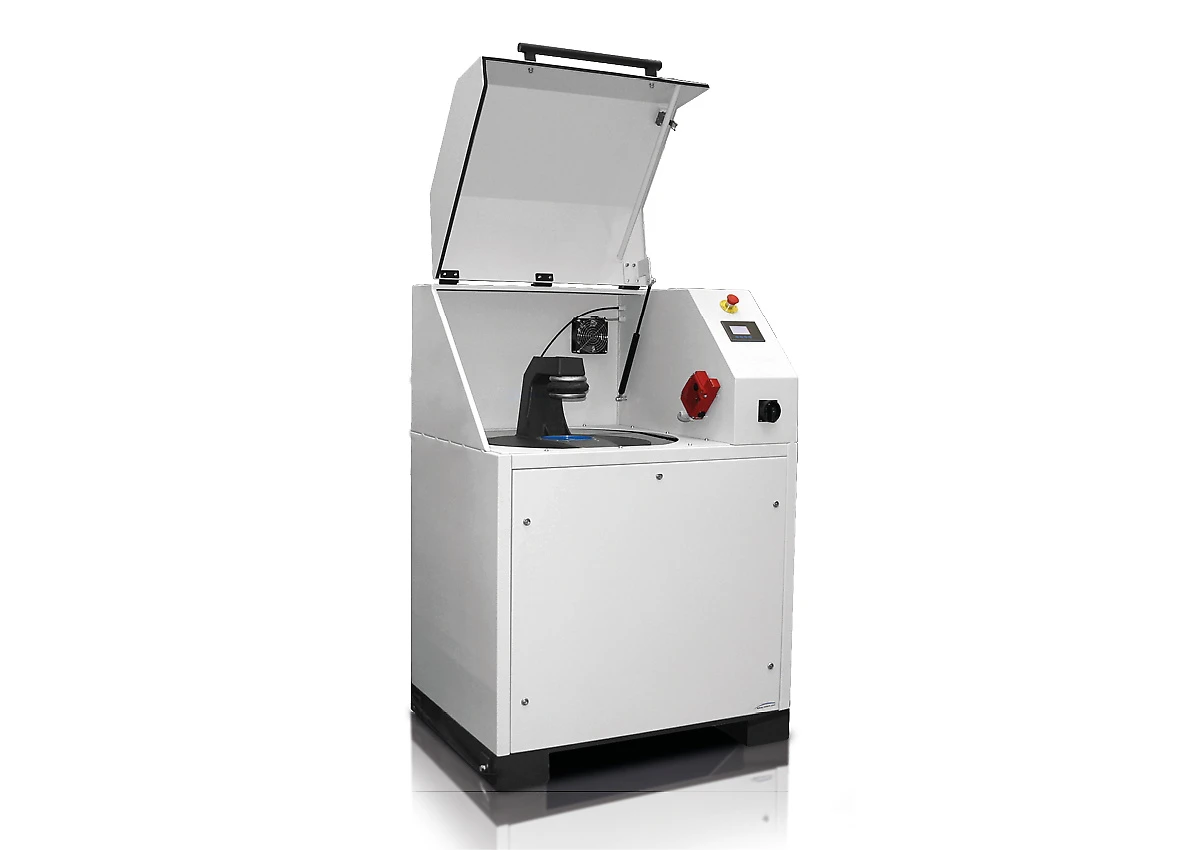
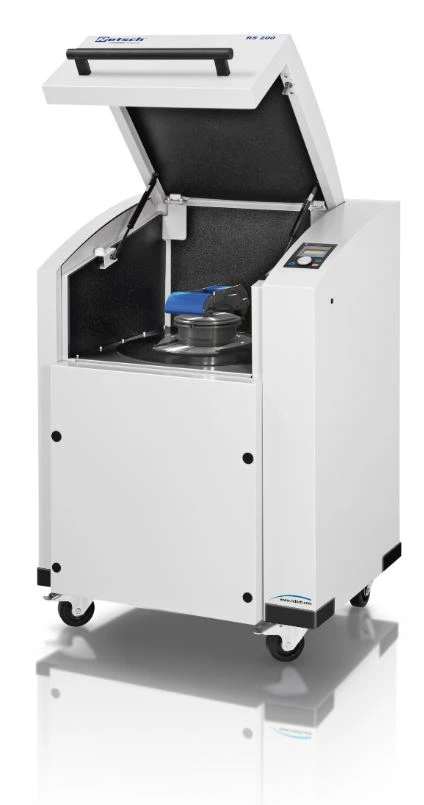
Thanks to its robust design, the Disc Mill DM 200 can be used under rough conditions in laboratories and pilot plants, as well as online for the quality control of raw materials. The powerful DM 200 requires only a few minutes to achieve the desired grind size.
DISC MILLS
DM 200.
Disc Mill.
Thanks to its robust design, the Disc Mill DM 200 can be used under rough conditions in laboratories and pilot plants, as well as online for the quality control of raw materials. The powerful DM 200 requires only a few minutes to achieve the desired grind size.
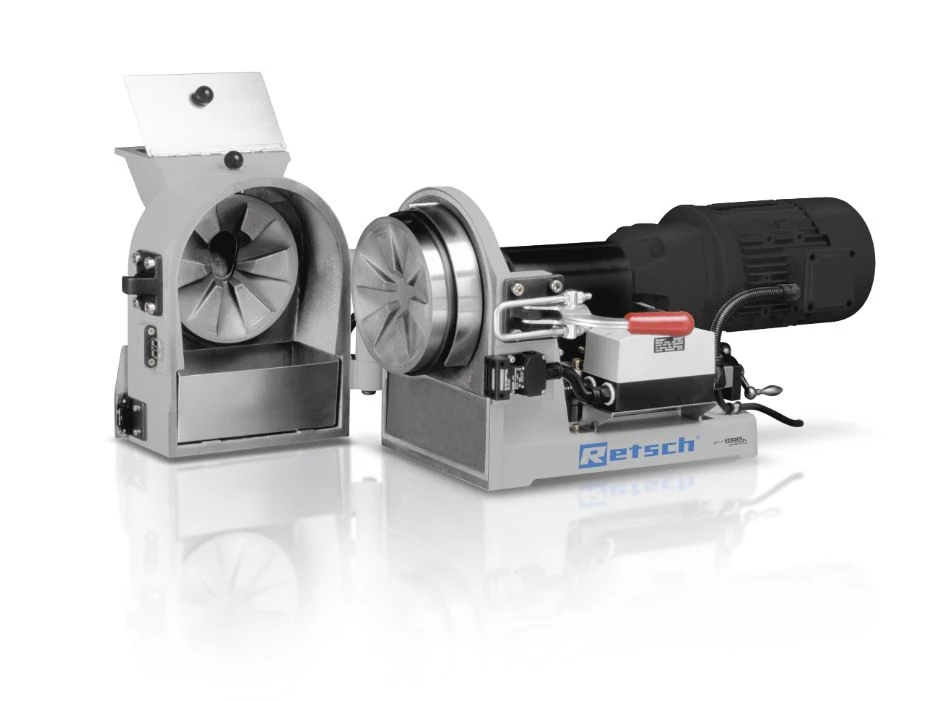
Product and configuration photographs. Select an image to enlarge.
Material feed size< 20 mm
Final fineness50 µm for hardened steel discs 100 µm for tungsten carbide or zirconium oxide discs
Speed at 50 Hz (60 Hz)440 min-1 (528 min-1)
Collector capacity2.5 l
THE PRODUCT IN FOCUS
Model overview
PERFORMANCE & OPERATION
Features. Operation. Handling.
Product Advantages
- excellent crushing performance
- reproducible results due to accurate gap setting
- hinged grinding chamber for easy cleaning
- grinding discs with long working life
- wide range of materials for contamination free grinding
- connector for dust extraction
- can be operated together with Jaw Crusher BB 200
TWO-STAGE SAMPLE PREPARATION IN ONE STEP
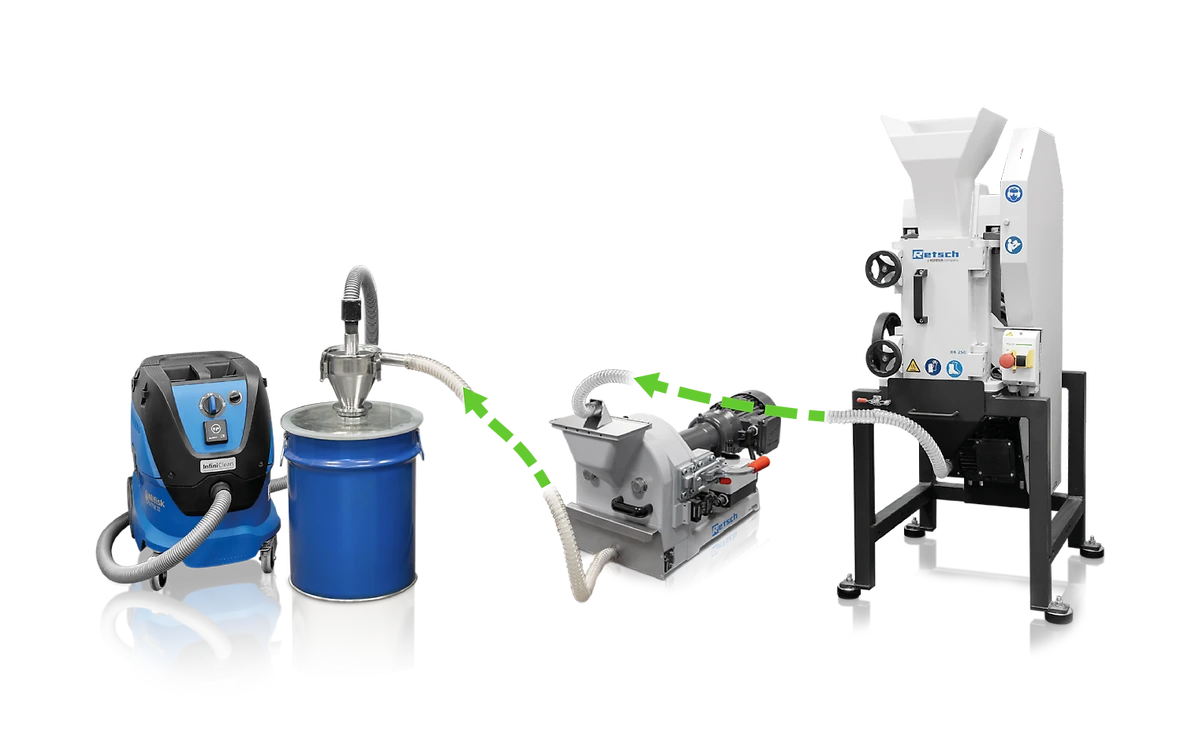
The combi unit, featuring the Jaw Crusher BB 250 and the Disc Mill DM 200 connected via a cyclone separator, enables automated, continuous sample preparation. Material is directly transported from the jaw crusher to the disk mill, allowing large feed sizes to be processed in one step to a defined final fineness of small particles. This two-step grinding process is necessary for hard or brittle materials that require initial coarse reduction followed by fine grinding. The combi unit streamlines workflows, eliminates manual sample transfer, and significantly reduces processing time. It minimizes dust emissions and ensures efficient, reproducible results, making it an ideal solution for applications in agriculture, cement production, mining, precious metal analysis, materials research, and environmental analysis.
FUNCTIONAL PRINCIPLE
In the DM 200 the feed material enters the dustproof chamber from the filling hopper and is fed centrally between two vertical grinding discs. A moving grinding disc rotates against a fixed one and draws in the feed material. The necessary comminution effects are generated by pressure and frictional forces. The progressively arranged grinding disc meshing first subjects the sample to preliminary crushing; centrifugal force then moves it to the outer regions of the grinding discs where fine comminution takes place. The processed sample exits through the grinding gap and is collected in a receiver. The gap width between the grinding discs is continuously adjustable and can be adjusted during operation in the range between 0.1 and 5 mm; an additional observation window is provided for checking the gap setting.
APPLICATIONS & METHODS
Build the process around the sample.
Application example of the combi unit
- Gap setting jaw crusher: 2 mm
- Gap setting disc mill: 0.2 mm
- Feed size: 60 mm
- Final fineness: 200 μm
- Sample amount: 1 kg
- Process time: 10 min
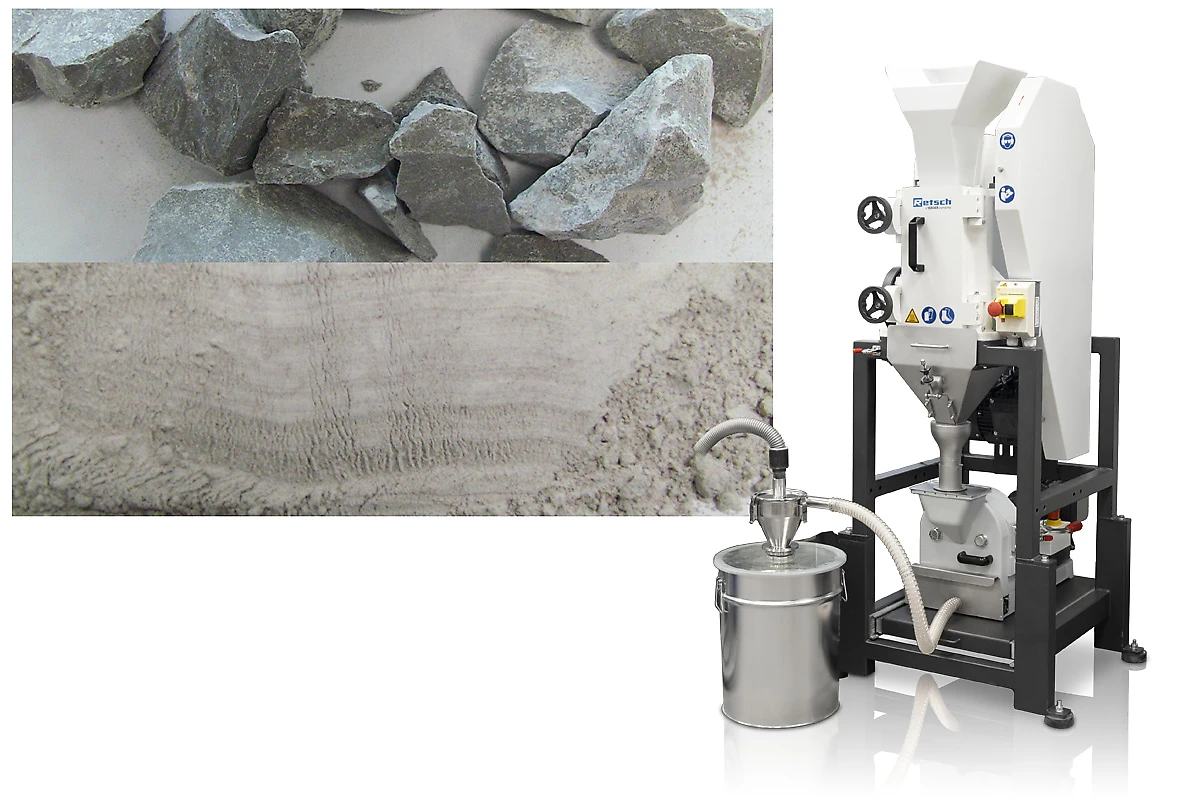
REPRODUCIBLE AND SAFE - Cyclone System - Bye-bye Dust and Sample Loss
Why should you choose the Cyclone System?
- Total Sample Recovery
Eliminate sample loss during crushing with our cyclone, ensuring accurate and reproducible results for every analysis! - Enhanced Operator Safety
Our cyclone significantly reduces dust exposure, creating a safer and cleaner working environment for your team!
Plus: Existing instruments can be retrofitted with the cyclone system
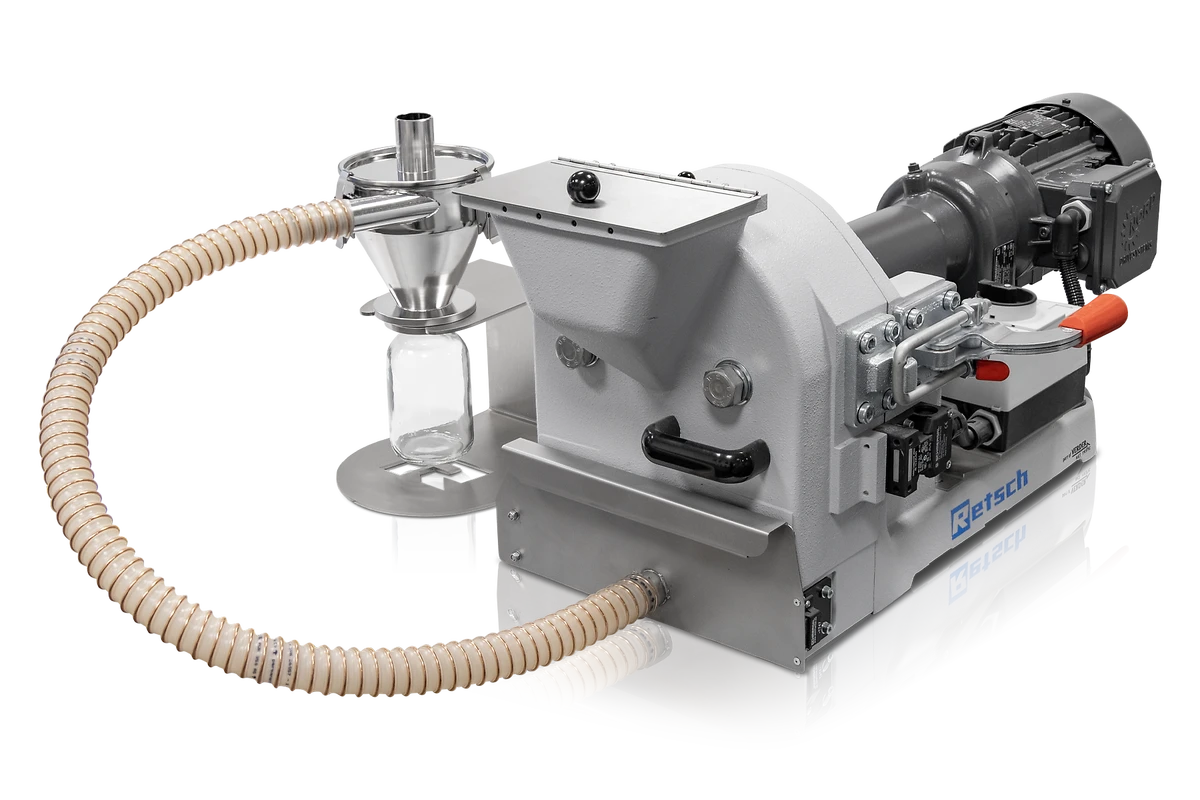
Using the cyclone set with a combination of two machines
Beyond the general advantages of a cyclone, this combination enables pre-crushing and fine grinding in a single pass, resulting in increased process efficiency.
Existing machines BB 250 and DM 200 can be combined with a retrofitting system.
APPLICATION EXAMPLES
Bauxit, cement clinker, chalk, chamotte, coal, coke, concrete, construction waste, dental ceramics, dried soil samples, drilling cores, electrotechnical porcelain, ferro alloys, glass, granite, gypsum, hydroxyapatite, ores, quartz, sewage sludge, sintered ceramics, slag, soils, steatite, …
TECHNICAL INFORMATION
Specifications & reference data
TECHNICAL DATA
| Applications | preliminary and fine grinding |
| Field of application | chemistry / plastics, construction materials, engineering / electronics, geology / metallurgy, glass / ceramics |
| Feed material | medium-hard, hard, brittle |
| Size reduction principle | pressure, friction |
| Material feed size* | < 20 mm |
| Final fineness* | 50 µm for hardened steel discs 100 µm for tungsten carbide or zirconium oxide discs |
| Speed at 50 Hz (60 Hz) | 440 min-1 (528 min-1) |
| Material of grinding tools | zirconium oxide, hardened steel, tungsten carbide, manganese steel |
| Gap width setting | continuous, 0.05 – 5 mm |
| Rotating direction | doubling the life time of the discs by changing the direction of rotation |
| Collector capacity | 2.5 l |
| Drive | 3-phase geared motor |
| Drive power | 1.5 kW |
| Electrical supply data | different voltages |
| Power connection | 3-phase |
| Protection code | IP 55 |
| W x H x D closed | 440 x 400 x 870 mm |
| Net weight | ~ 140 kg |
| Standards | CE |
*depending on feed material and instrument configuration/settings
YOUR MATERIAL. YOUR NEXT STEP.
Put the process
to the material test.
Tell us what you’re processing and what needs to change. We’ll help define the equipment, accessories and a useful trial.
- Material and starting particle size
- Target fineness and required quantity
- Temperature, purity and cleaning requirements