Removable-chamber workflow for cleaning, recovery and flexible laboratory preparation.
500–4,000 rpm · Published feed reference: 50 mm

CUTTING & SHEARING
Prepare fibrous, tough, elastic and heterogeneous materials for analysis. Compare five mills by cutting demand, speed control, feeding, cleaning and sample collection.
A PRACTICAL SELECTION HELPER
Compare all five models by the preparation priority. Add feed dimensions when known; a shortlist still needs a sample and configuration review.
Removable-chamber workflow for cleaning, recovery and flexible laboratory preparation.
500–4,000 rpm · Published feed reference: 50 mm
Routine fixed-speed preparation when extremely high cutting forces are not needed.
1.5 kW; 1,500 rpm · Gravity discharge; optional base frame
A stronger fixed-speed drive, double-acting cutting bars and optional cyclone collection.
2.2 kW; 1,500 rpm · Gravity or optional cyclone collection
High-torque cutting with adjustable speed, interchangeable rotors and collection arrangements.
3 kW; 100–3,000 rpm · Feed below 60 × 80 mm
Compact dry-sample preparation with a blade attachment, adjustable speed and collection tubes.
1,000 W; 50–6,000 rpm · 300 mL funnel; 0.2–6 mm sieves
UNDERSTAND THE PREPARATION ROUTE
Rotor blades cut and shear against stationary cutting elements. A bottom sieve controls discharge: material exits once it can pass through the openings. Sample behavior, rotor geometry and residence time determine the result.
Explore cutting for plant material, wood, straw, textiles, rubber, plastics, paper, feed and suitable heterogeneous recycling samples. Check for hard inclusions, moisture and heat sensitivity before choosing the tools.
SM 100 and SM 200 operate at 1,500 rpm. SM 50, SM 300 and PX-MFC 90 D offer adjustable speed for method development. Different speed ranges and drive powers do not directly predict throughput or final particle size.
Review gravity collection, receiver size and cleanout. The SM 200 and SM 300 offer cyclone configurations for suitable light or heat-sensitive material. PX-MFC 90 D uses collection tubes and a compact funnel.
FIVE MODELS. DIFFERENT PRIORITIES.
Use this as a starting point, then review the product page for tool materials, configurations and technical data.
| Model | Start here for | Speed | Feed reference | Fineness reference | Key configuration |
|---|---|---|---|---|---|
| SM 50 ↗ | Frequent cleaning and sample recovery | 500–4,000 rpm | 50 mm | 0.25–10 mm | Removable grinding chamber; flexible speed |
| SM 100 ↗ | Routine fixed-speed preparation | 1,500 rpm | <60 × 80 mm | 0.25–20 mm | 1.5 kW; gravity discharge; bench or base frame |
| SM 200 ↗ | Versatile fixed-speed cutting | 1,500 rpm | <60 × 80 mm | 0.25–20 mm | 2.2 kW; double-acting cutting bars; optional cyclone |
| SM 300 ↗ | Demanding cutting and speed adjustment | 100–3,000 rpm | <60 × 80 mm | 0.25–20 mm | 3 kW; high torque; rotor and collection options |
| PX-MFC 90 D ↗ | Compact dry-sample preparation with a blade attachment | 50–6,000 rpm | Confirm for sample and attachment | Product-dependent; below 40 µm reported | 1,000 W; 300 mL funnel; tube collection |
Feed references and fineness values depend on material and configuration. For SM 100, SM 200 and SM 300, both rectangular feed dimensions must fit. Sieve aperture is not a guaranteed particle-size distribution. PX-MFC 90 D uses 0.2–6 mm sieves; its funnel volume is not a working batch rating.
BUILD THE COMPLETE METHOD
Match cutting geometry to the sample. Select sieve aperture for the required output and consider tool wear and analytical contamination. Heavy-metal-free configurations are available for selected SM models.
Confirm feed dimensions, hopper or funnel, dosing and any required pre-cutting. For a heat-sensitive sample, evaluate speed, discharge and airflow together using representative material.
State starting mass or volume, final portion needed and frequency of changeovers. Confirm receiver fit, recovery and cleaning access, then verify the prepared sample against your analytical method.
EXPLORE THE PRODUCTS
Review each product’s operating approach, applications, options and technical information.
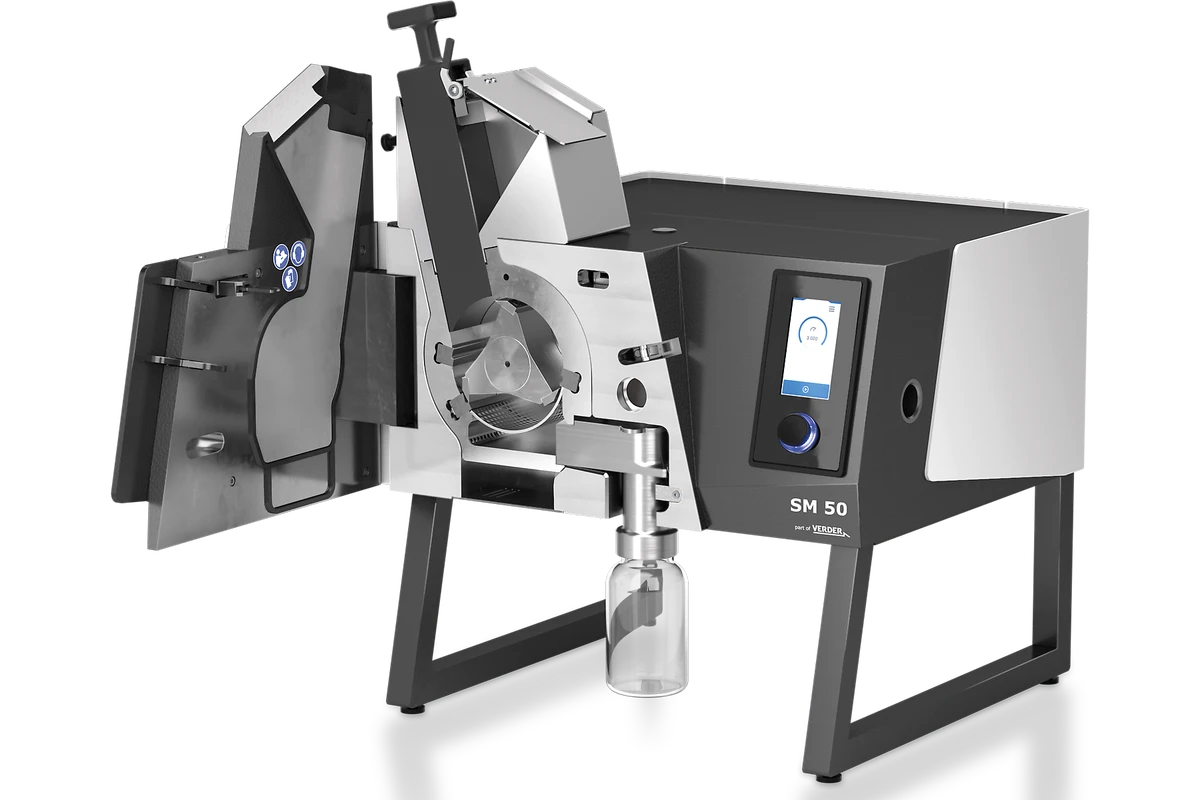
Adjustable speed and a removable grinding chamber for frequent cleaning and sample recovery.
Product details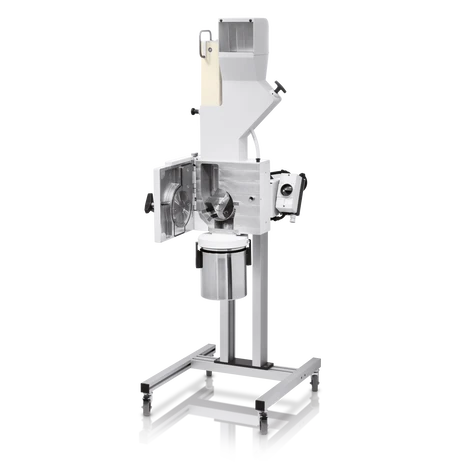
Straightforward fixed-speed cutting for routine laboratory preparation, with a 1.5 kW drive and interchangeable tools.
Product details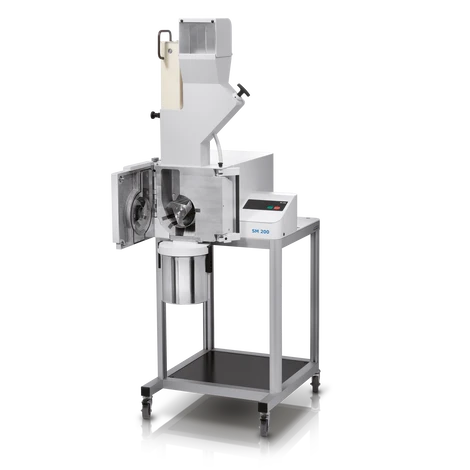
Versatile fixed-speed cutting with a 2.2 kW drive, double-acting cutting bars and optional cyclone collection.
Product details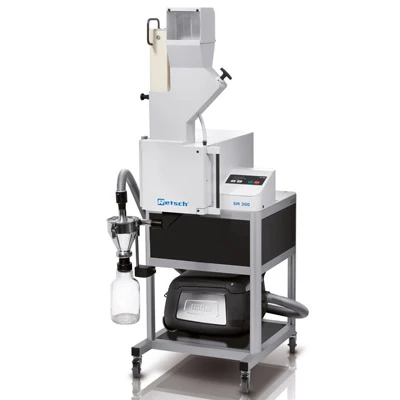
High-torque cutting with adjustable speed for demanding samples and flexible collection configurations.
Product details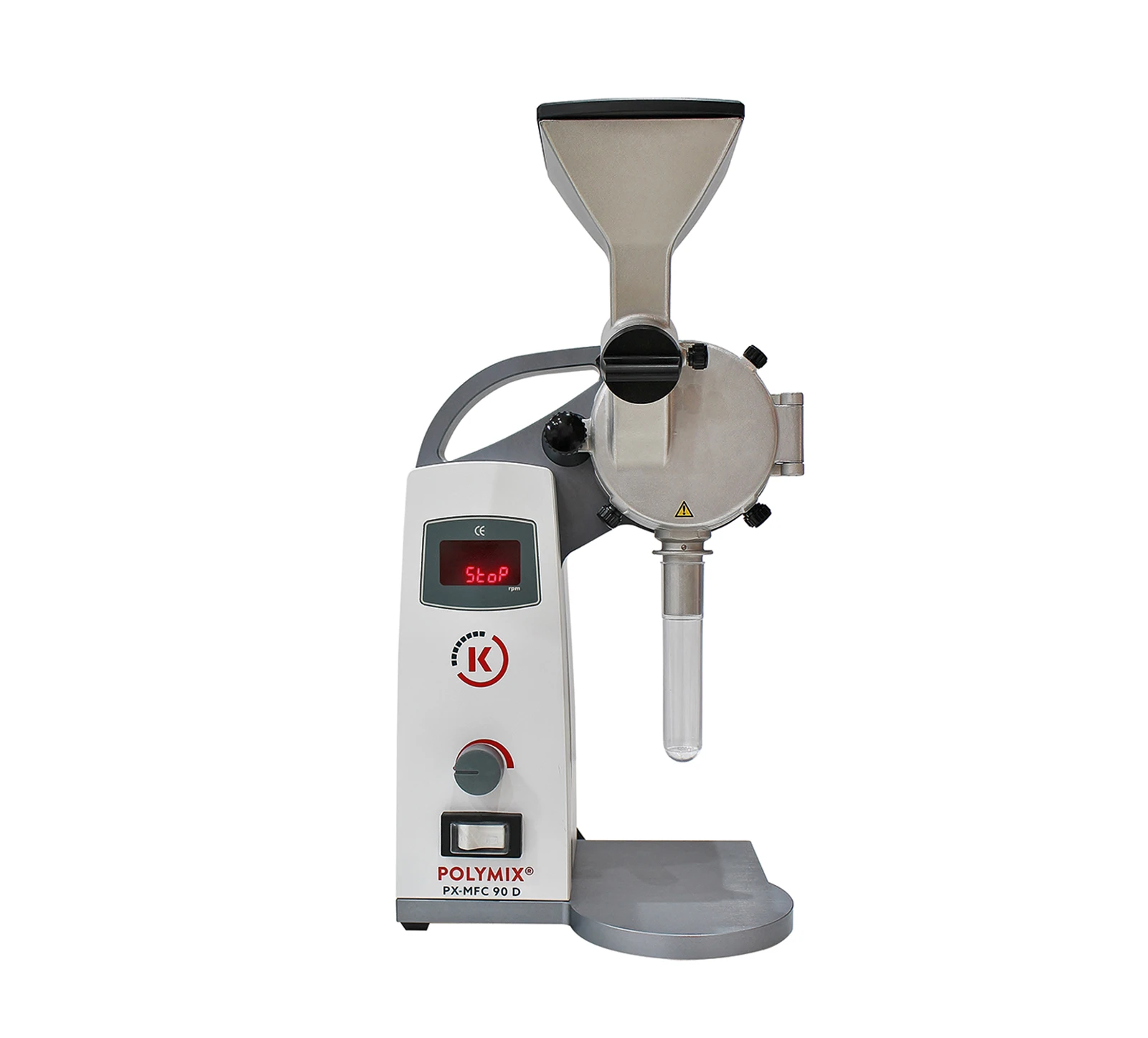
Compact dry-sample preparation with interchangeable blade and hammer attachments, variable speed, ten sieve sizes and tube collection.
Product detailsFROM SAMPLE TO METHOD
Share the material, feed dimensions, desired output, sample quantity and temperature or contamination limits.