
Cutting mills are suitable for the grinding of soft, medium-hard, tough, elastic, fibrous, and heterogeneous mixes of products. Thanks to the powerful 3 kW drive with high torque and RES technology, the Cutting Mill SM 300 excels especially in the tough jobs where other cutting mills fail. This mill allows for perfect adaptation to application requirements by variable speed from 100 to 3,000 min-1. A range of bottom sieves with aperture sizes from 0.25 – 20 mm is available, ensuring a defined final fineness.
CUTTING MILLS
SM 300.
Cutting Mill.
Cutting mills are suitable for the grinding of soft, medium-hard, tough, elastic, fibrous, and heterogeneous mixes of products. Thanks to the powerful 3 kW drive with high torque and RES technology, the Cutting Mill SM 300 excels especially in the tough jobs where other cutting mills fail. This mill allows for perfect adaptation to application requirements by variable speed from 100 to 3,000 min-1.
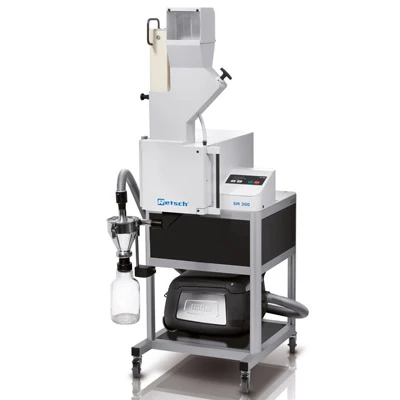
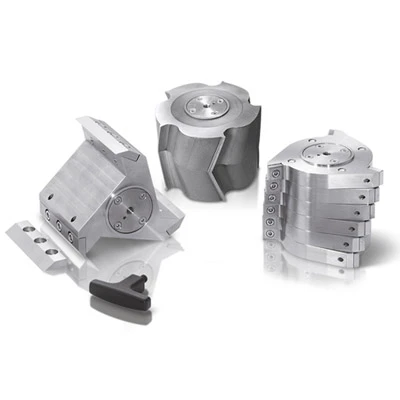
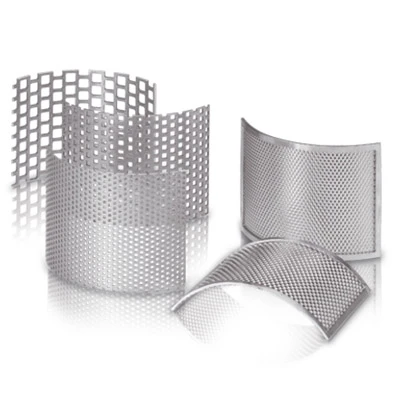
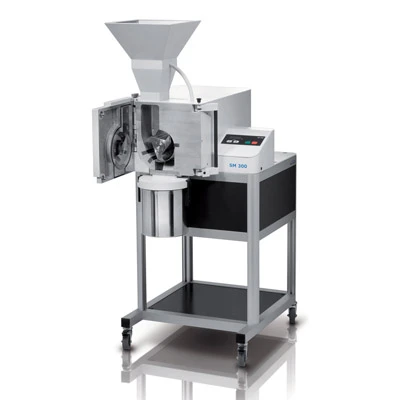
Product and configuration photographs. Select an image to enlarge.
Material feed size< 60 x 80 mm
Final fineness0.25 – 20 mm
Speed at 50 Hz (60 Hz)100 – 3000 min-1
Rotor peripheral speed4.7 – 20.3 m/s
THE PRODUCT IN FOCUS
Model overview
PERFORMANCE & OPERATION
Features. Operation. Handling.
EASY OPERATION AND CLEANING
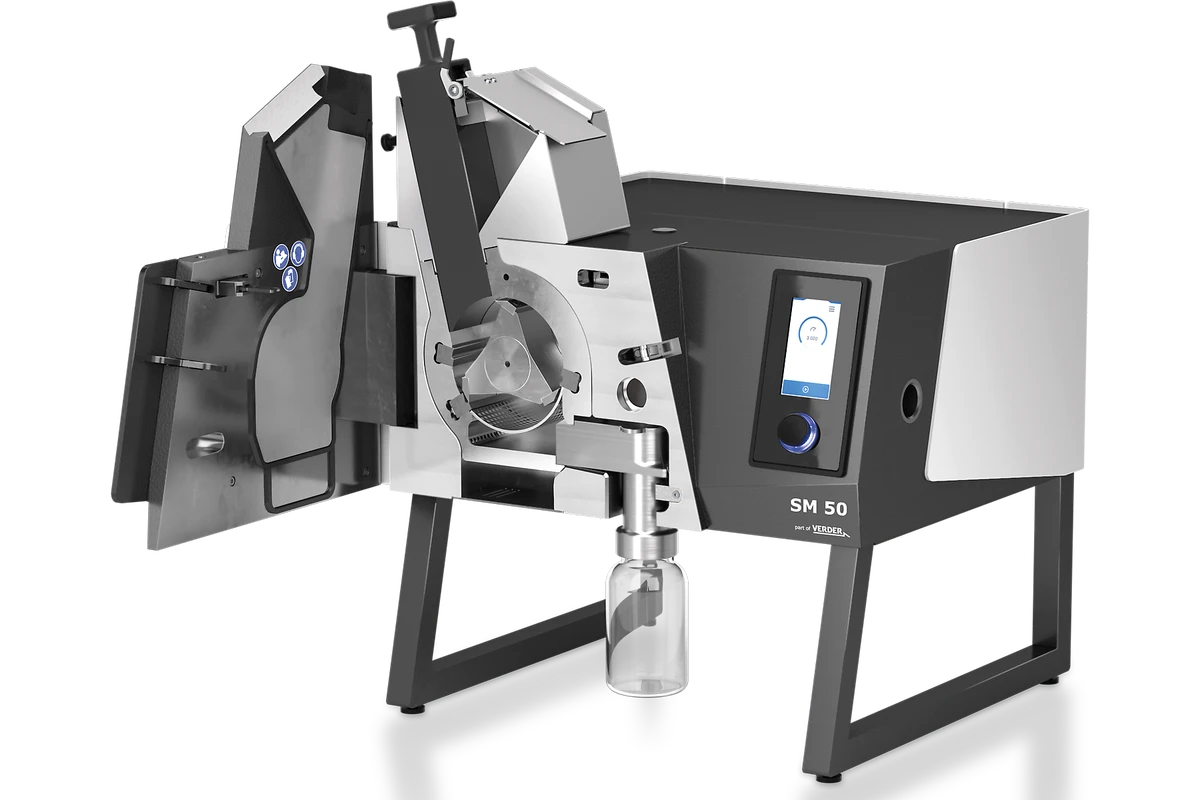
Operation of the SM 300 is exceptionally simple and safe. The push-fit rotor and bottom sieves can be easily removed without tools. A safety switch prevents the mill from being started with the door open. An electronic safety check ensures that the door cannot be opened when the motor is running.
The hopper can be folded back to get full access to the grinding chamber which, in combination with the smooth surfaces, greatly facilitates cleaning the mill. So does the design of the bottom sieves which reduces trapping of sample pieces to a minimum.
SPEED REDUCTION – LESS FINES, LESS TEMPERATURE
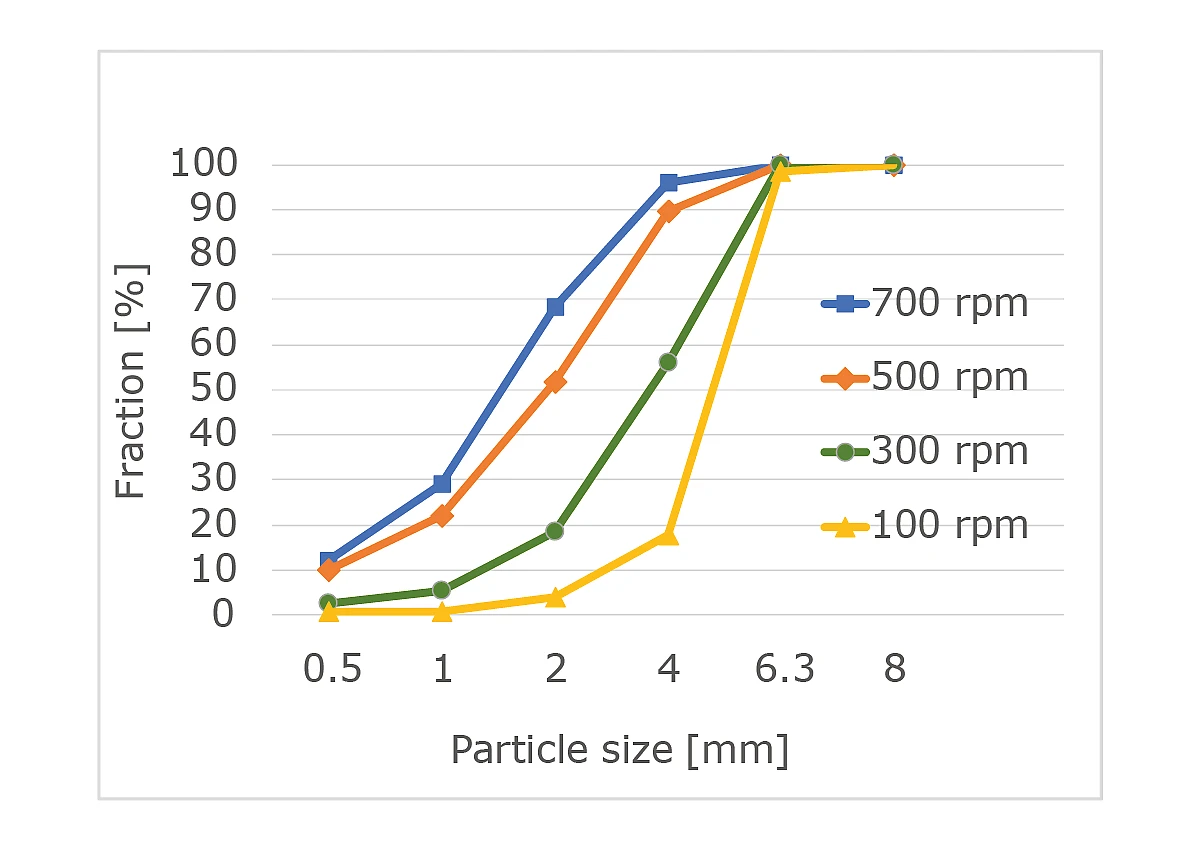
Reduction of the speed leads to a decreased fine fraction of the sample and to more particles within the desired size range. Especially for this type of application, the lowest speed of the SM 300 was reduced to 100 min-1. This is also beneficial for grinding heat-sensitive materials: reduced speed results in less energy input, preventing the sample from getting too warm during the process.
FUNCTIONAL PRINCIPLE
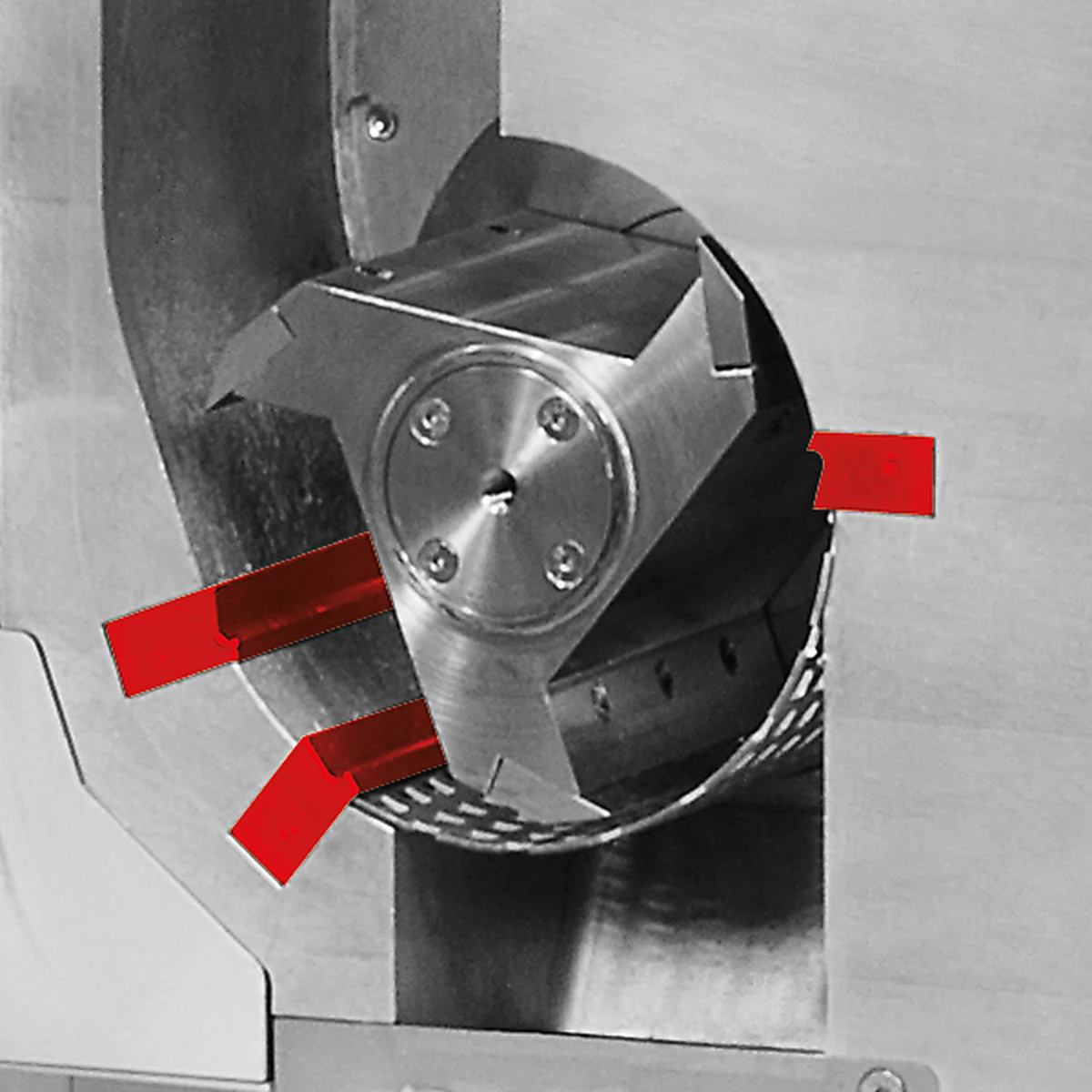
Size reduction in the Cutting Mill SM 300 takes place by cutting and shearing forces. The sample comes into contact with the rotor, and is comminuted between the blades and the stationary double acting cutting bars inserted in the housing.
In the 6-disc rotor, spirally arranged reversible hard metal plates operate by cutting in sequence.
The knives of the parallel section rotor carry out comminution with a powerful cutting action. An additional flywheel mass (RES technology) on the drive shaft produces the exceptional performance of the SM 300. Thanks to the variable speed from 100 to 3,000 min-1, the SM 300 can be easily adapted to different application requirements
APPLICATIONS & METHODS
Build the process around the sample.
OUR MOST POWERFUL CUTTING MILL FOR A WIDE RANGE OF APPLICATIONS
The variable speed allows the perfect cutting parameters to be selected, and the powerful 3 kW motor with RES technology gives the mill maximum pulling power.
- Wood chips: Efficient size reduction of larger sample volumes
- PC boards: Pulverising solid PCBs with the 6-disc rotor for precious metal analysis
- Leather and table tennis balls: Comminution of textiles and rubber using the cyclone for rapid sample discharge from the grinding chamber
- Secondary fuels: Efficient comminution of highly heterogeneous materials for rapid calorific analysis
- Hay: Reproducible size reduction of fibrous, light and voluminous materials
- Injection moulding sprues: Grinding at low speeds to minimise fines (dust) content
- Toys: crushing of tough plastics by embrittling samples with liquid nitrogen
The SM 300 delivers perfect results even for the most demanding grinding tasks!
SUPERIORITY IN DETAIL
Ideal for light & heat-sensitive materials
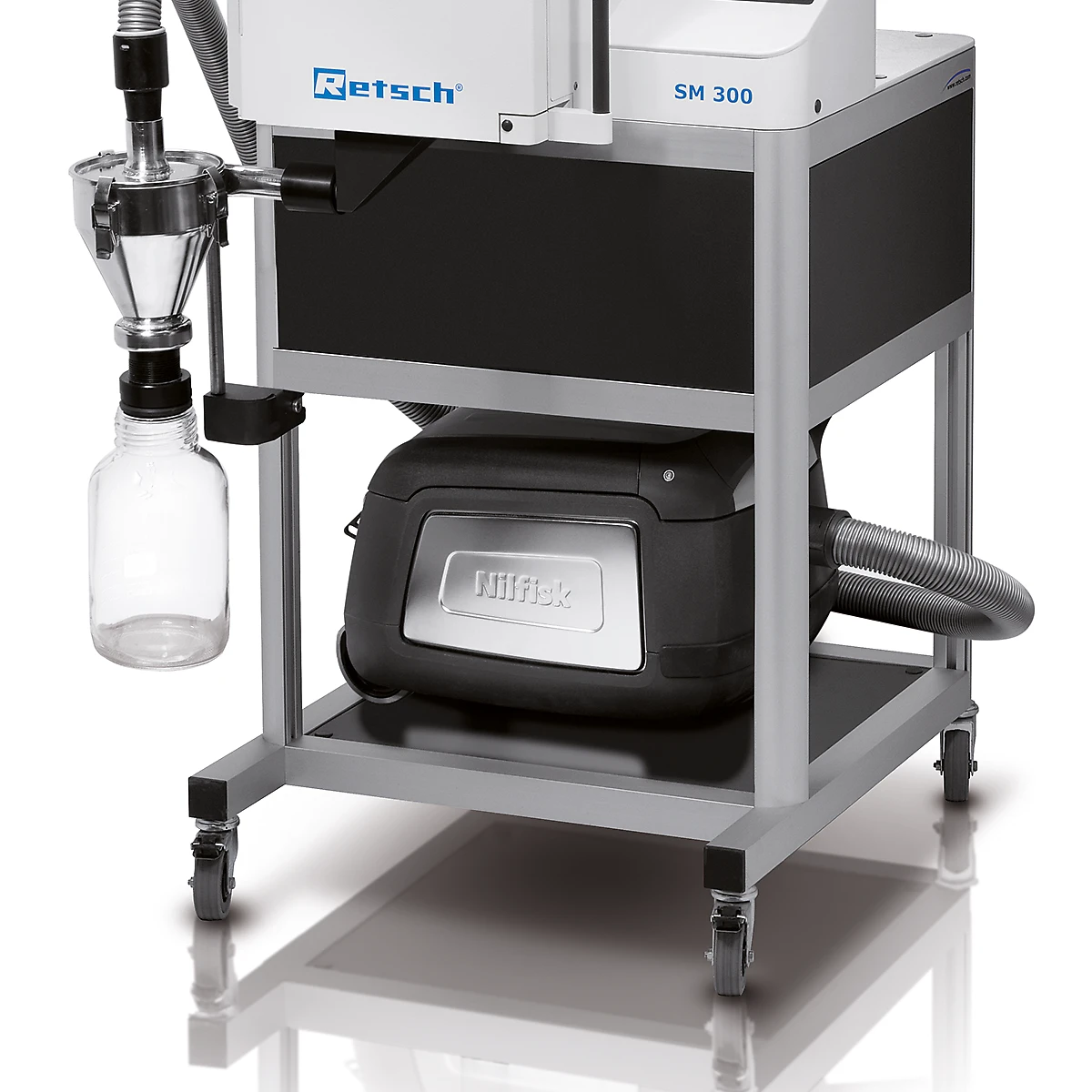
Instead of the gravity outlet, an optionally available cyclone separator can be connected to the SM 300. The use of the cyclone is advantageous, for example, for light and heat-sensitive samples.
- Increased throughput
- Improved sample discharge from the grinding chamber
- Efficient cooling of sample and cutting tools
- Collecting vessels with 0.25 – 0.5 – 1 – 2 – 5 and 30 liters are available for the cyclone unit
The SM 300 is equipped with double acting cutting bars which substantially increase the number and effectiveness of the cutting events. The parallel section rotor, for example, generates 18 cutting events per rotation.
TYPICAL SAMPLE MATERIALS
Cutting mills are suitable for a vast range of applications. Typical materials include PET preforms, aluminium slag, animal feed, bones, cables, cardboard, electronic components, feed pellets, foils, food, leather, lignite, material mixtures, non-ferrous metals, paper, pharmaceutical products, plant materials, plastic toys, plastics, polymers, refuse derived fuels, resins, rubber, spices, straw, textiles, waste, wood, etc.
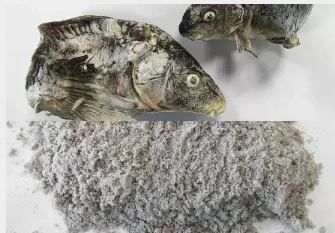
Fish
Wood
Nuts
Secondary Fuels, Biofuels
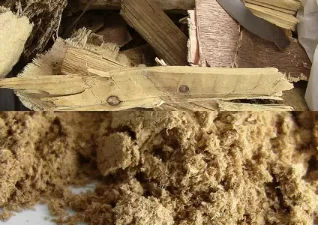
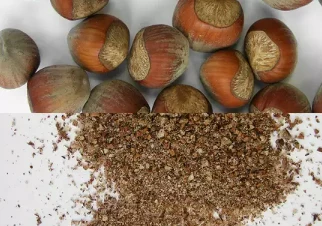

TOOLS & CONFIGURATION
The right tools for the task.
ACCESSORIES FOR SAFE AND EFFECTIVE GRINDING PROCESSES
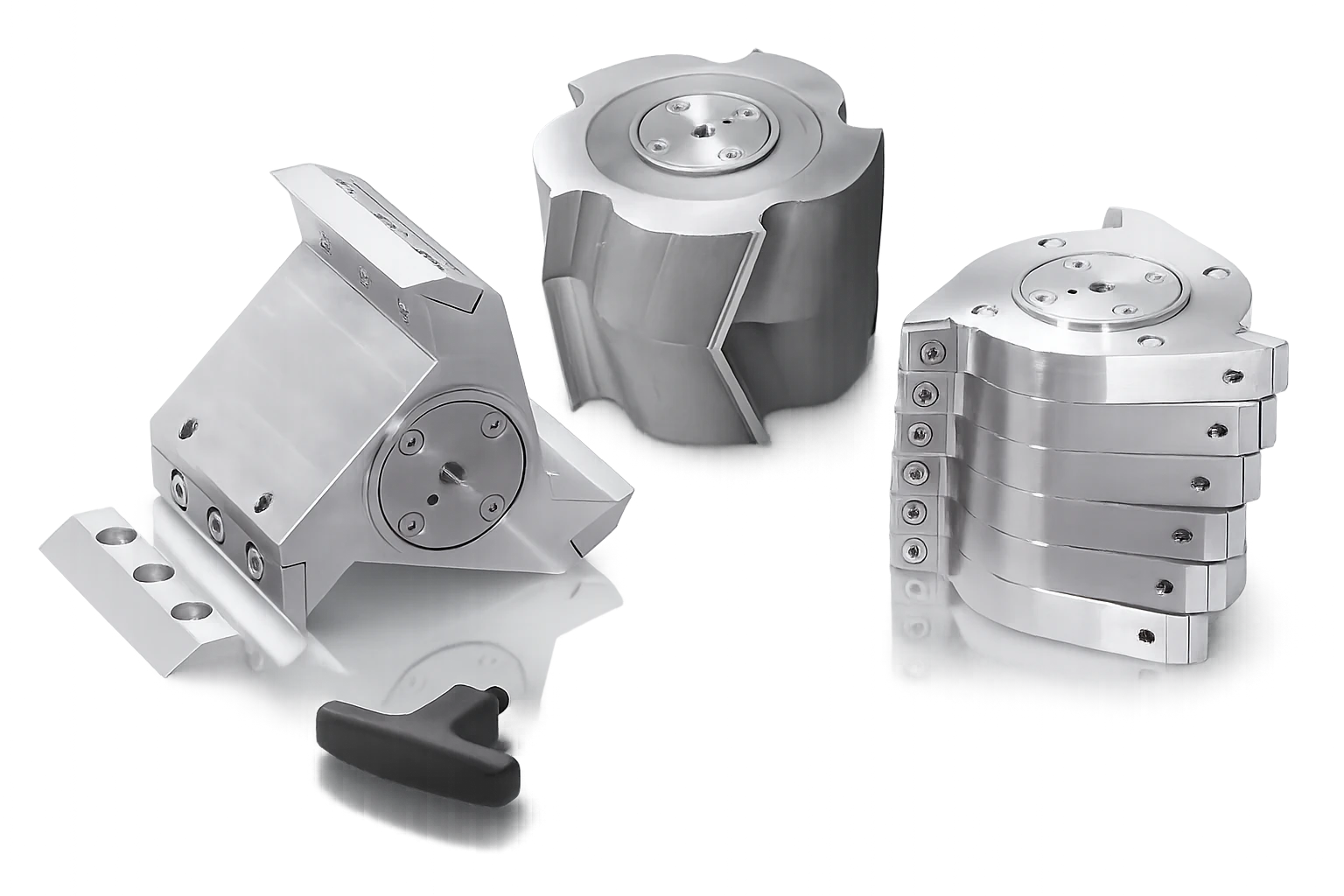
ROTOR TYPES
A parallel section rotor, a 6-disc rotor and a V-rotor are available in stainless or heavy-metal-free steel for optimum adaptation to sample properties.
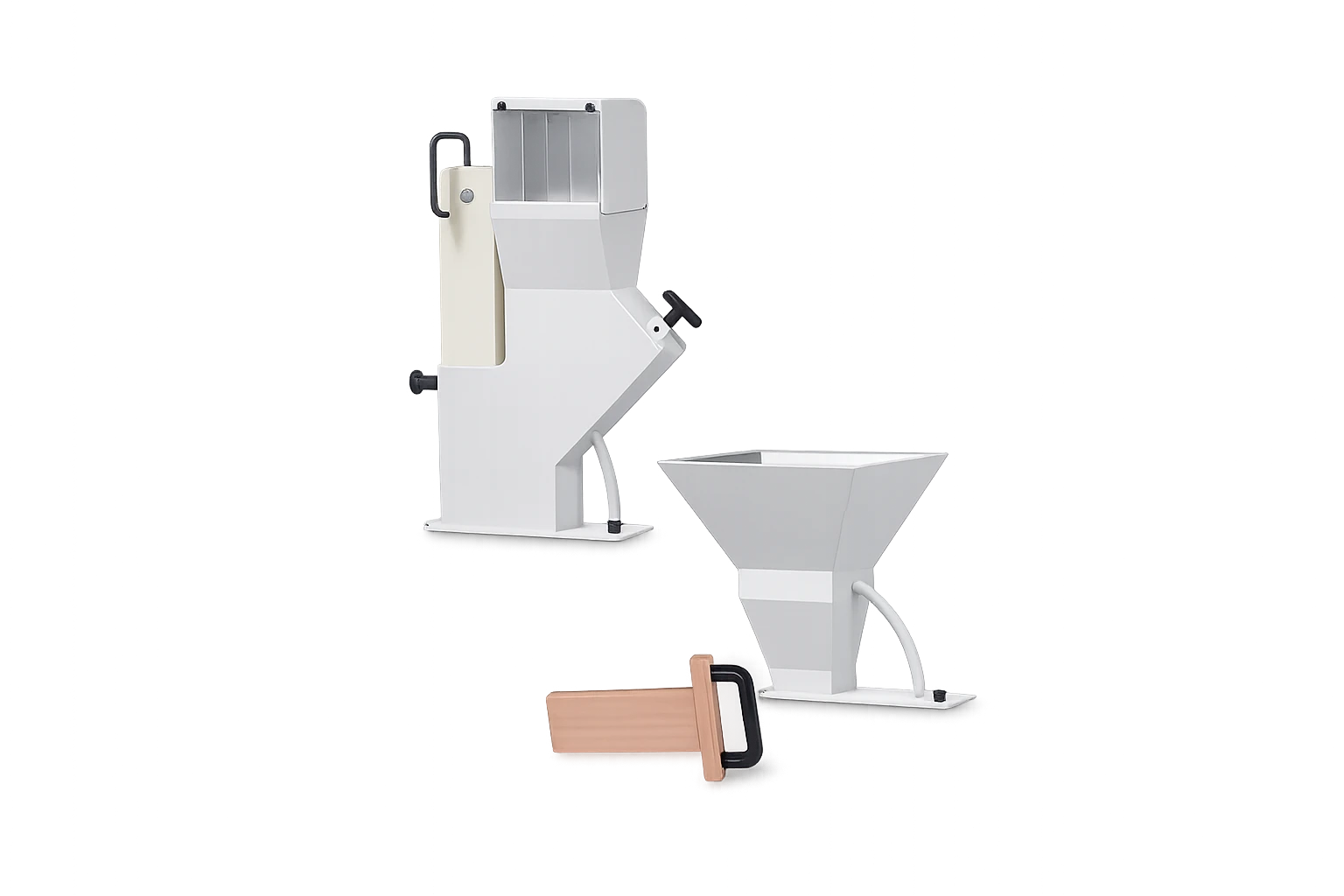
HOPPER TYPES
The SM 300 can be equipped either with the universal hopper, which is suitable for most samples, or the long-stock hopper which is specially designed for long samples.
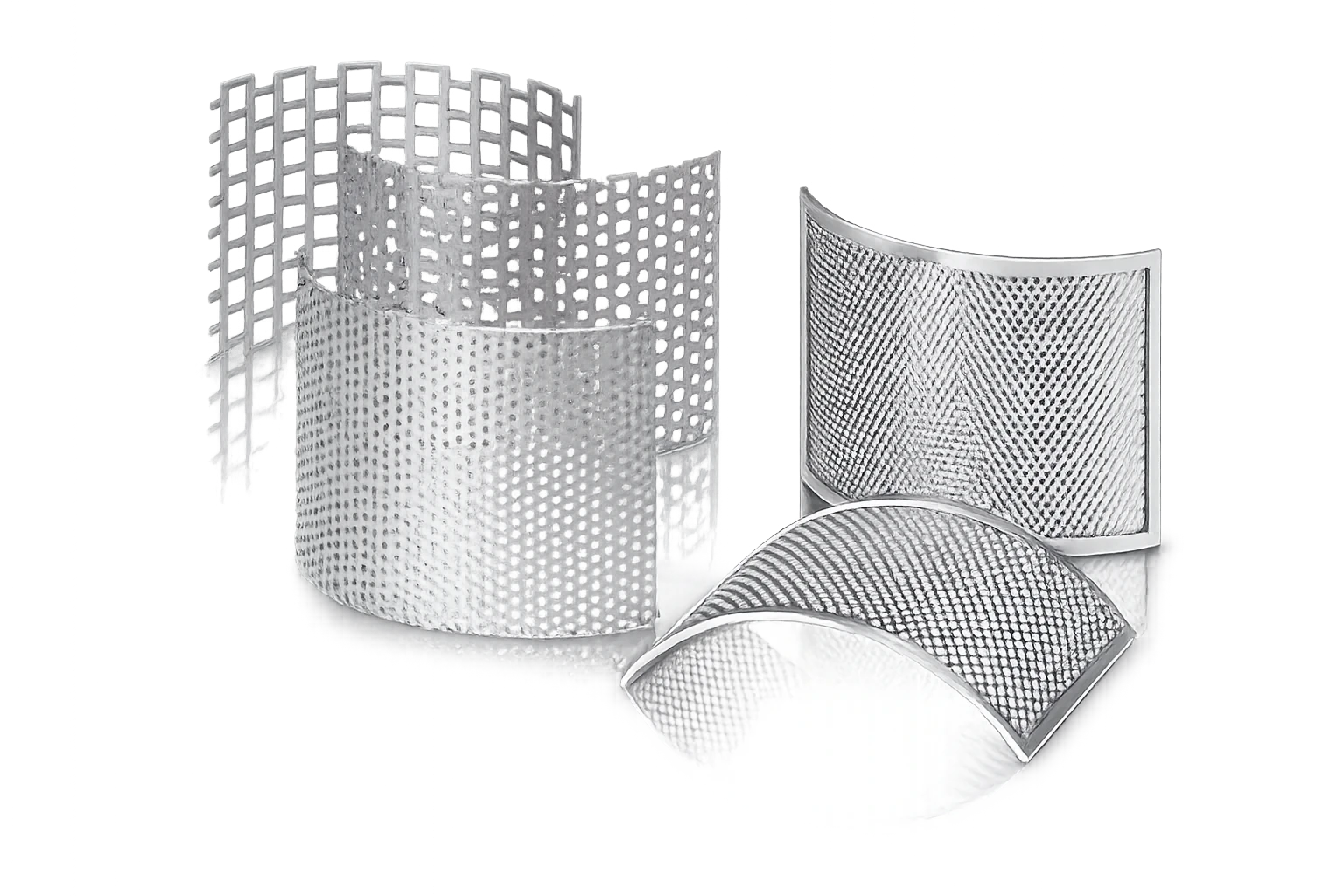
BOTTOM SIEVES
The bottom sieves with trapezoid or square holes are made of stainless steel or heavy-metal-free steel.
TECHNICAL INFORMATION
Specifications & reference data
TECHNICAL DATA
| Applications | size reduction by cutting |
| Field of application | agriculture, biology, chemistry / plastics, engineering / electronics, environment / recycling, food, medicine / pharmaceuticals |
| Feed material | soft, medium-hard, tough, elastic, fibrous |
| Size reduction principle | shearing, cutting |
| Material feed size* | < 60 x 80 mm |
| Final fineness* | 0.25 – 20 mm |
| Speed at 50 Hz (60 Hz) | 100 – 3000 min-1 |
| Rotor peripheral speed | 4.7 – 20.3 m/s |
| Rotor diameter | 129.5 mm |
| Types of rotors | parallel section rotor / 6-disc rotor / V-rotor |
| Types of hoppers | universal, long stock |
| Material of grinding tools | stainless steel, steel for heavy-metal free grinding, tungsten carbide |
| Sieve sizes | trapezoid holes 0.25 / 0.50 / 0.75 / 1.00 / 1.50 mm square holes 2.00 / 4.00 / 6.00 / 8.00 / 10.00 / 20.00 mm |
| Collector systems / capacities | collecting receptacle 5 l / optional: 30 l collecting unit 0.25 / 0.5 l cyclone-suction combination (0.25 l – 30 l) |
| Drive | 3-phase asynchronous motor with frequency converter |
| Drive power | 3 kW with flywheel mass ~ 28.5 kg |
| Electrical supply data | different voltages |
| Power connection | 1-phase |
| Engine brake | yes |
| Protection code | IP 20 |
| W x H x D closed | 576 (1080 opened) x 1677 x 750 mm (with base frame and universal hopper) |
| Net weight | ~ 160 kg |
| Standards | CE |
*depending on feed material and instrument configuration/settings
YOUR MATERIAL. YOUR NEXT STEP.
Put the process
to the material test.
Tell us what you’re processing and what needs to change. We’ll help define the equipment, accessories and a useful trial.
- Material and starting particle size
- Target fineness and required quantity
- Temperature, purity and cleaning requirements