A compact benchtop jaw crusher for laboratory sample preparation, with feed below 40 mm and final fineness below 0.5 mm, depending on the material and settings.
< 40 mm feed · < 0.5 mm published fineness · 3 L / batch capacity

RETSCH JAW CRUSHERS / SIX MODELS
Compare jaw crushers for laboratory samples, pilot workflows and higher-capacity preparation. Explore feed specifications from below 40 mm to below 350 × 170 mm, with model-specific choices for fineness, collection and continuous operation.
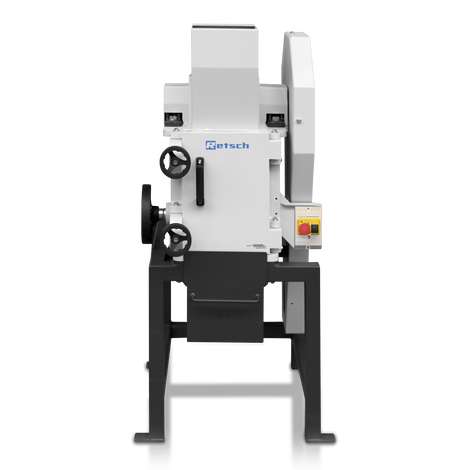
A PRACTICAL SELECTION HELPER
Compare the six jaw crushers by the feed, desired size benchmark and preparation workflow. Check the complete feed geometry and particle-size definition before selecting a model.
A compact benchtop jaw crusher for laboratory sample preparation, with feed below 40 mm and final fineness below 0.5 mm, depending on the material and settings.
< 40 mm feed · < 0.5 mm published fineness · 3 L / batch capacity
A floor-standing crusher for batch preparation and continuous crushing, combining feed below 90 mm, final fineness below 2 mm and throughput up to 300 kg/h under suitable conditions.
< 90 mm feed · < 2 mm published fineness · 300 kg/h reference throughput
Accept feed below 120 × 90 mm with a front-access crushing chamber, a 10 L collector and continuous-operation options. Published throughput is up to 300 kg/h, with final fineness below 2 mm under suitable conditions.
< 120 × 90 mm feed · < 2 mm published fineness · 300 kg/h reference throughput
Process feed below 220 × 90 mm with a front-access floor model. The BB 400 combines throughput up to 400 kg/h with final fineness below 2 mm, depending on the sample and configuration.
< 220 × 90 mm feed · < 2 mm published fineness · 400 kg/h reference throughput
A floor-standing jaw crusher that combines feed below 110 mm with a published final fineness of 90% below 0.5 mm. Throughput can reach 500 kg/h, depending on the material and settings.
< 110 mm feed · 90% < 0.5 mm published fineness · 500 kg/h reference throughput
The highest-throughput model in this six-crusher selection. Accept feed below 350 × 170 mm and discuss throughput up to 3,500 kg/h, with final fineness below 6 mm under suitable conditions.
< 350 × 170 mm feed · < 6 mm published fineness · 3,500 kg/h reference throughput
LABORATORY. PILOT. PRODUCTION.
Choose a useful starting point, then refine the selection around your material.
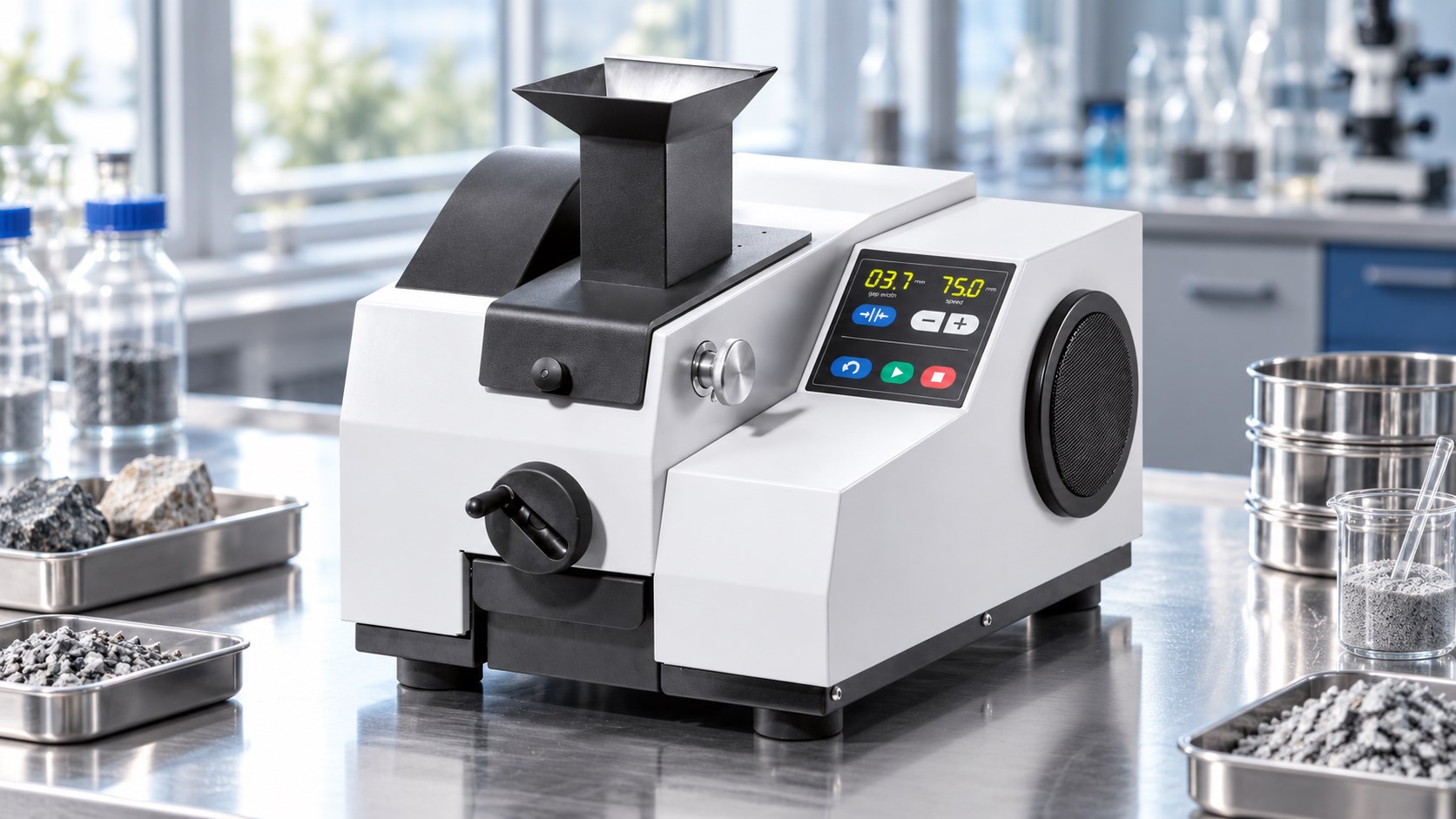
01 / LABORATORY
Benchtop sample preparation with the BB 50.
Explore this scale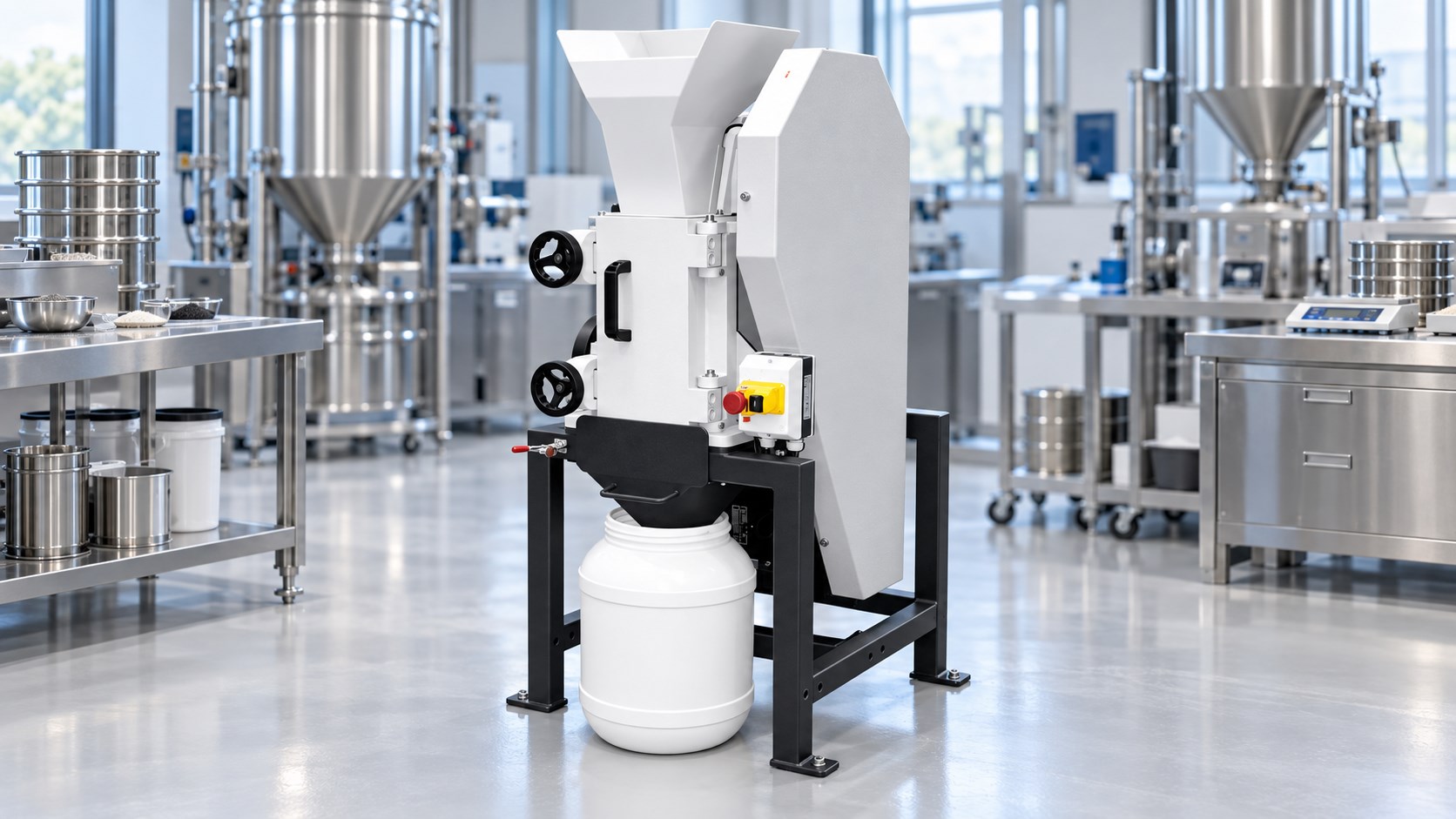
02 / PILOT & PROCESS DEVELOPMENT
BB 200 and BB 250 for batch and continuous preparation.
Explore this scale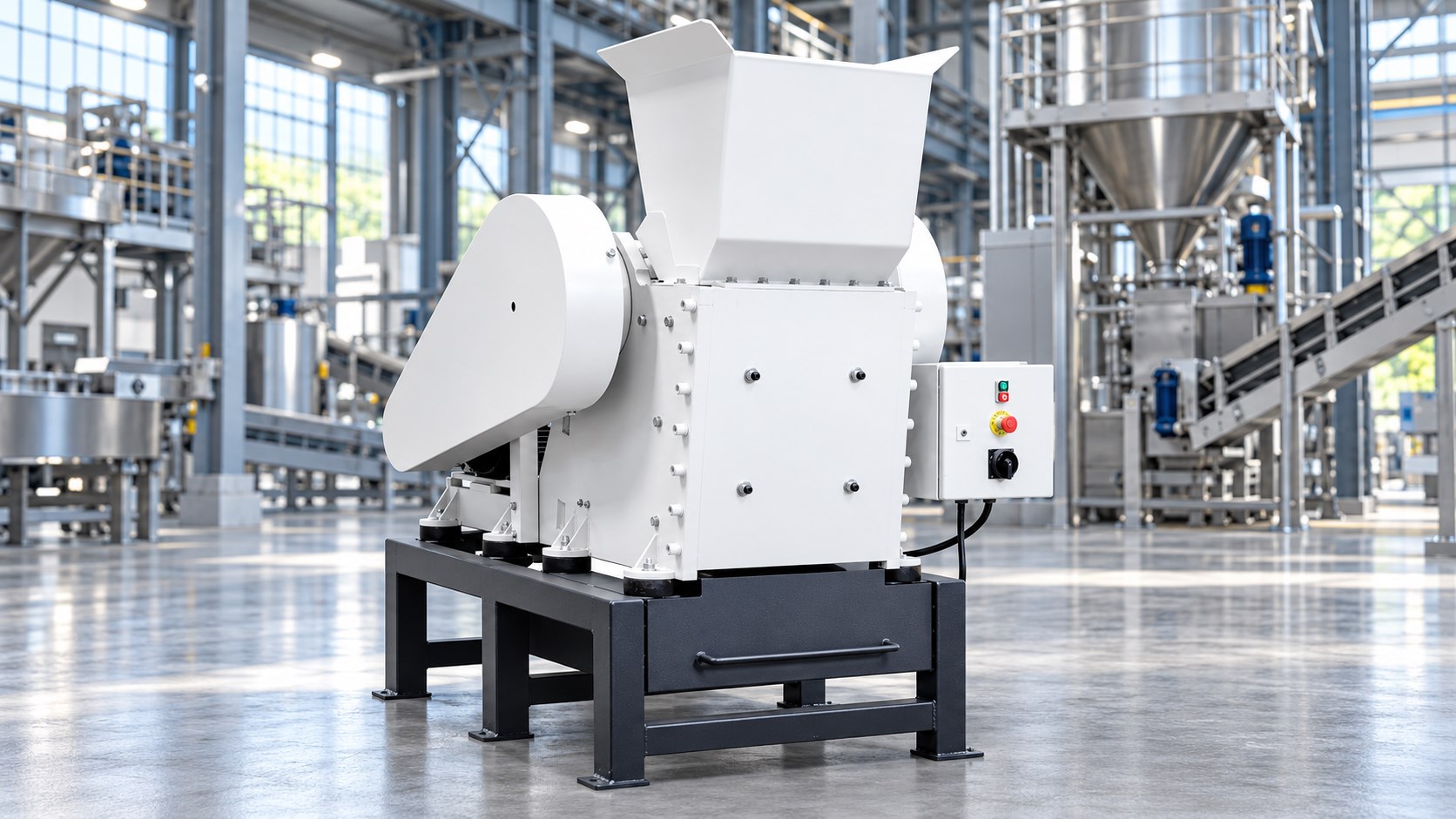
03 / HIGHER-CAPACITY & PROCESS LINES
BB 400, BB 500 and BB 600 for larger workflows and line integration.
Explore this scaleThese scale groupings organize the range by workflow. Applications overlap; feed size, target fineness, batch quantity and throughput determine the appropriate model.
EXPLORE THE RANGE
Compare compact sample preparation, front-access floor models, fine crushing and high-capacity pre-crushing.
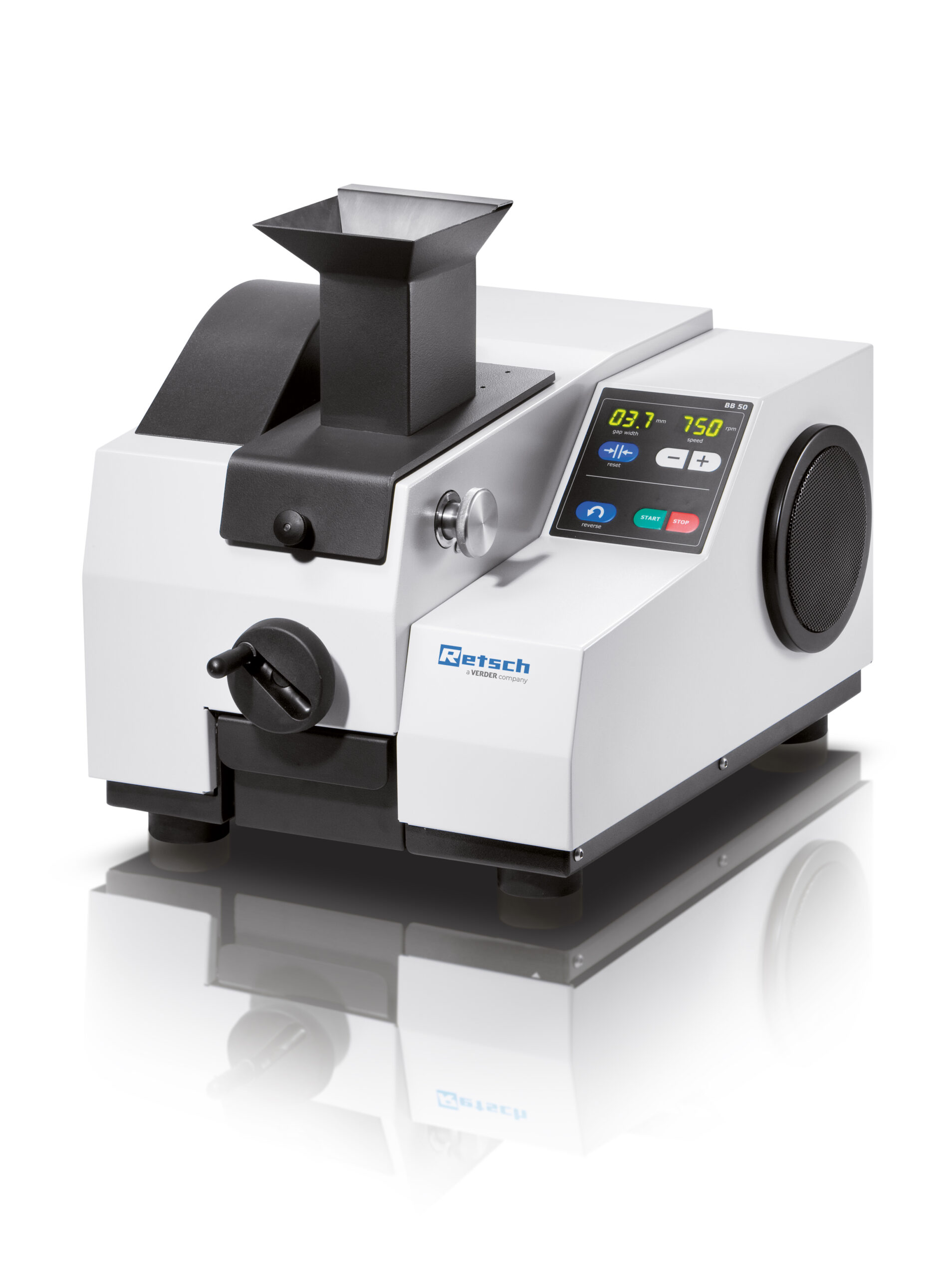
COMPACT BENCHTOP PREPARATION
Benchtop sample preparation
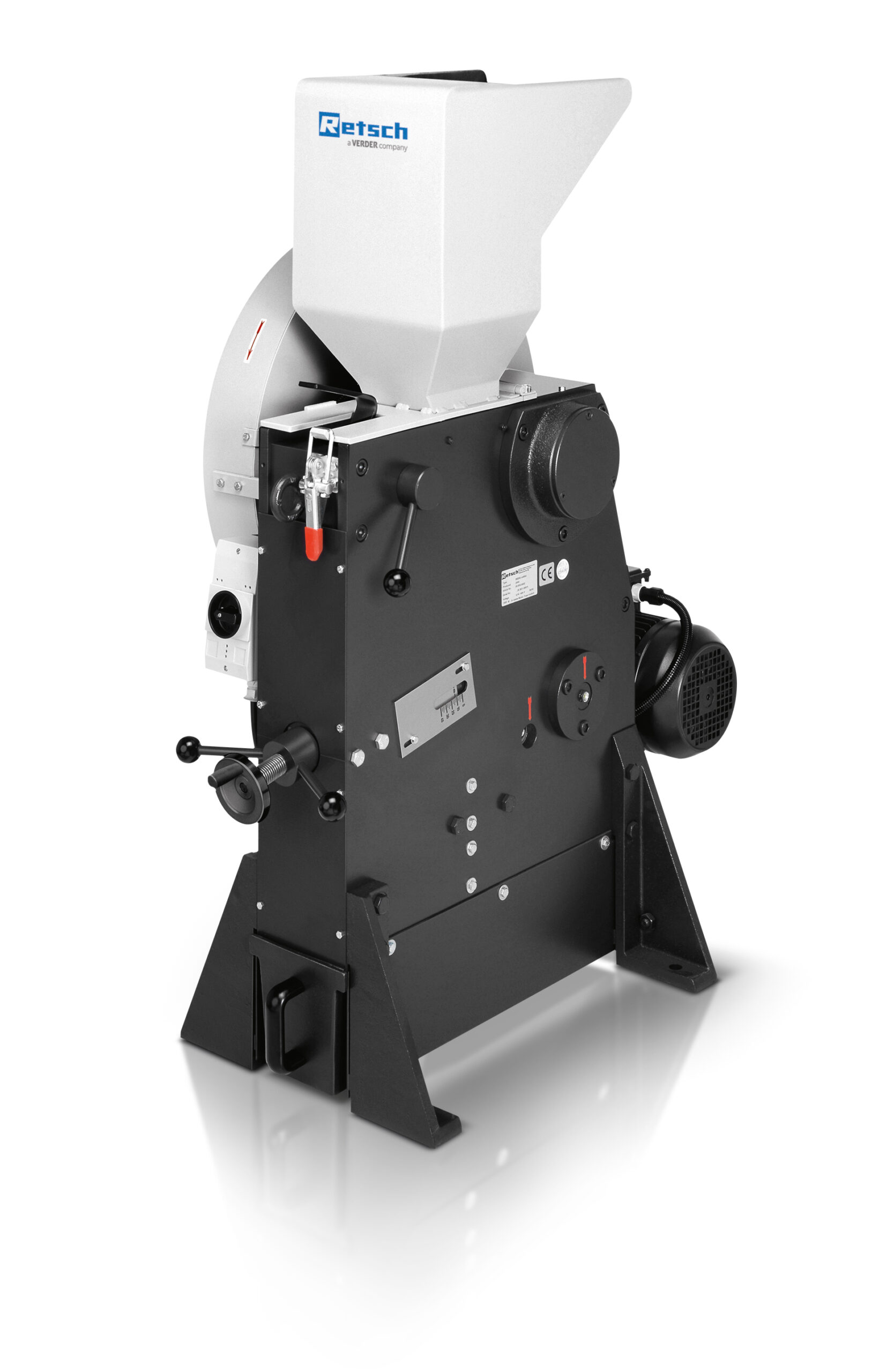
VERSATILE FLOOR MODEL
Versatile batch and continuous work
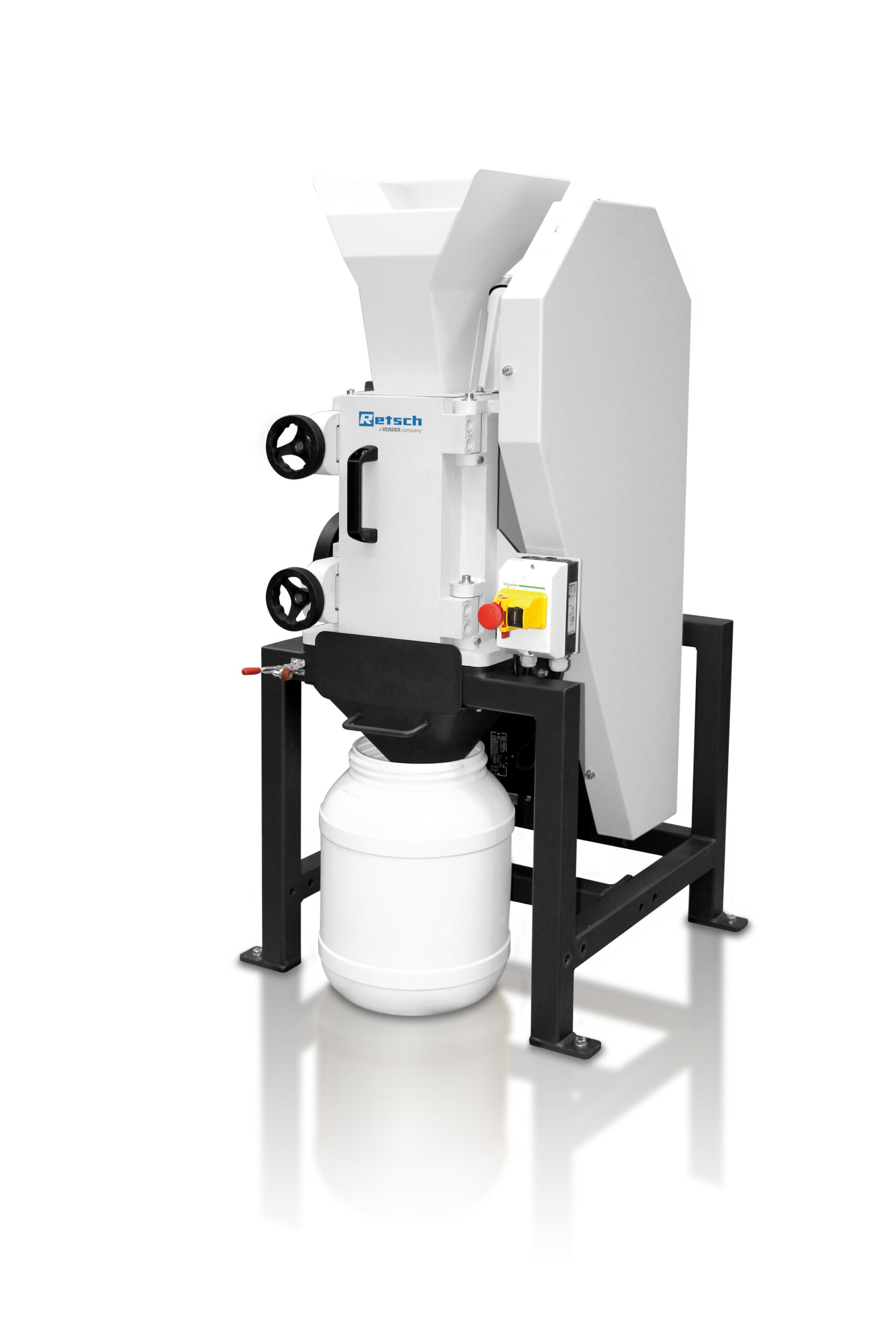
LARGER FEED. FRONT ACCESS.
Larger feed with front access
LARGE FEED. FRONT ACCESS.
Large feed with a fine result
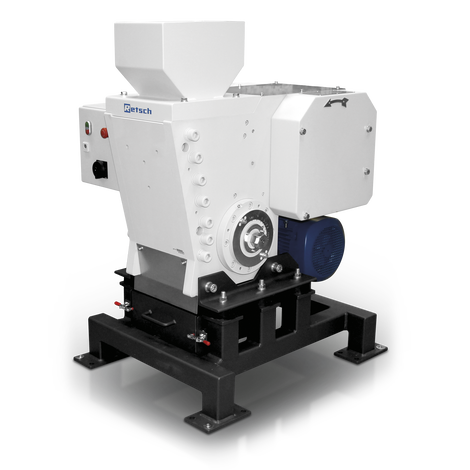
POWER & FINAL FINENESS
Finer output in one working run
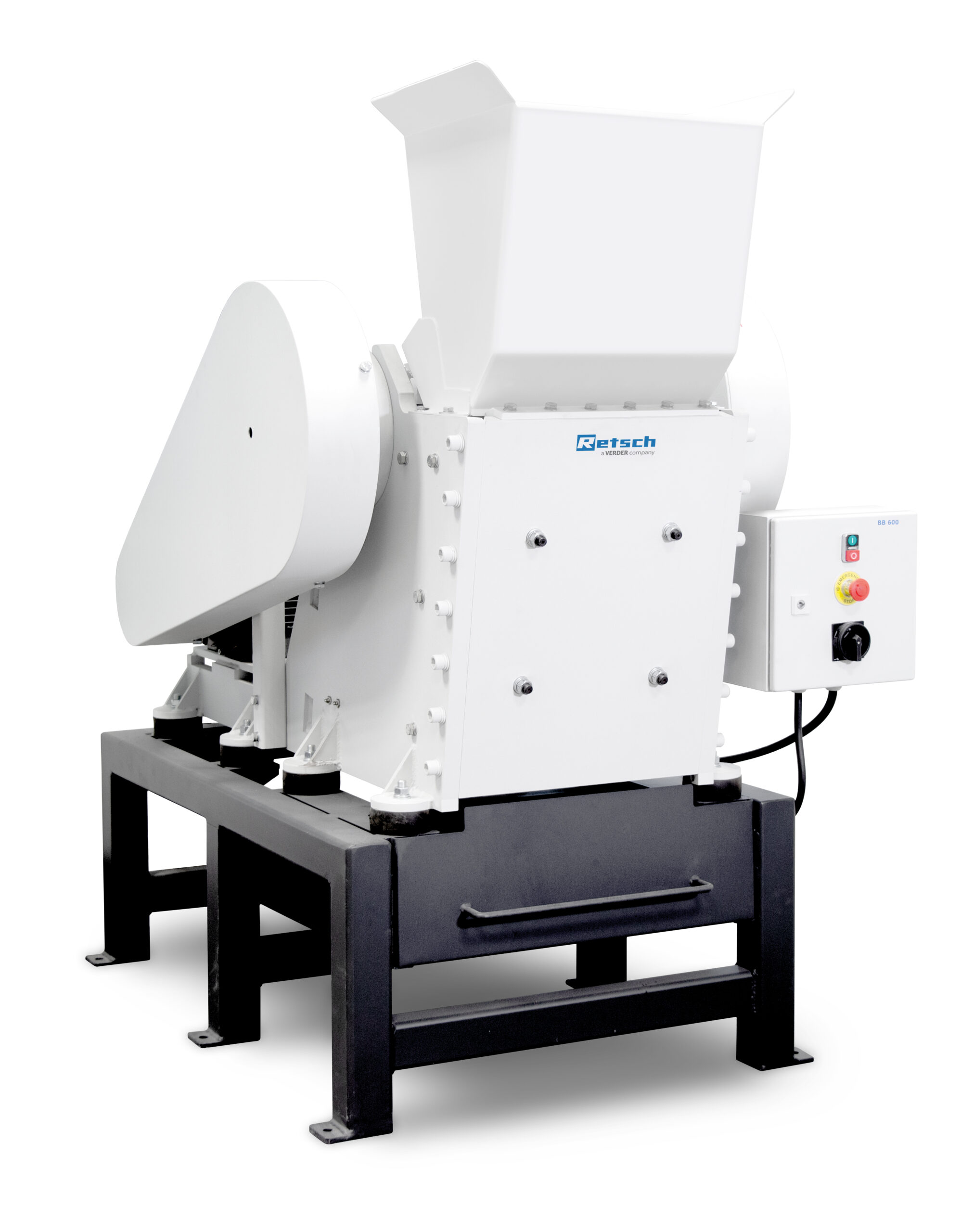
MAXIMUM FEED & THROUGHPUT
Largest feed and highest throughput
Feed size, final fineness and throughput depend on the material, jaw selection, gap setting and configuration. Published capacities are not simultaneous performance guarantees.
AT A GLANCE
The finest output, largest feed and highest throughput belong to different models.
| Model | Feed size* | Final fineness* | Capacity / throughput* | Collector | Gap setting |
|---|---|---|---|---|---|
| BB 50 ↗ | < 40 mm | < 0.5 mm | 3 L / batch | 3 L | 0 – 11 mm in increments 0.1 mm |
| BB 200 ↗ | < 90 mm | < 2 mm | 300 kg/h | 5 L | 0 – 30 mm |
| BB 250 ↗ | < 120 × 90 mm | < 2 mm | 300 kg/h | 10 L | 0 – 30 mm |
| BB 400 ↗ | < 220 × 90 mm | < 2 mm | 400 kg/h | 10 L | 0 – 30 mm |
| BB 500 ↗ | < 110 mm | 90% < 0.5 mm | 500 kg/h | 15 L | 0 – 11 mm |
| BB 600 ↗ | < 350 × 170 mm | < 6 mm | 3,500 kg/h | 30 L | 6 – 60 mm with spacer plates |
*Feed size, final fineness and throughput depend on the material, jaw selection, gap setting and configuration. Published capacities are not simultaneous performance guarantees. BB 50 capacity is stated per batch; other throughput figures are published hourly maxima.
PRESSURE. MOVEMENT. CONTROL.
Material enters through the hopper into a wedge-shaped chamber. One jaw is fixed while the other moves, applying pressure to reduce the sample. Particles pass to the collector when small enough to move through the discharge gap.
Watch the jaw-crushing principleRETSCH animation illustrates the principle using the BB 100.
Check maximum dimensions, hardness, brittleness and the material’s breaking behavior.
Choose a model, jaw material and gap suited to the required result.
Assess the size distribution, recovery, wear and throughput with representative material.
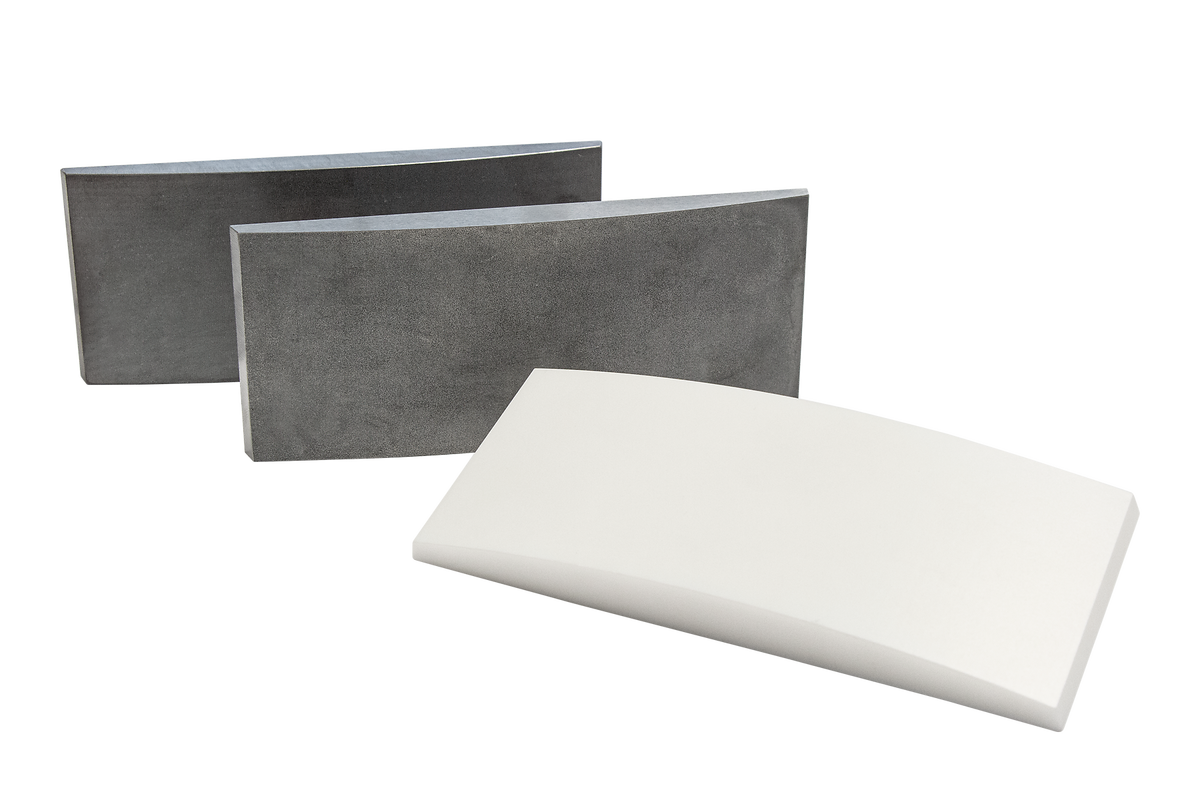
THE MATERIAL MATTERS
Jaw and wear-plate materials affect abrasion, service life and the substances introduced into a sample. Compare the actual materials offered for each model with your analytical requirements.
SELECT A MODEL. PROVE THE RESULT.
Share the starting size, target result, material and required capacity. Discuss feasibility testing, jaw materials and a configuration suited to the workflow.