Designed for wet nano grinding
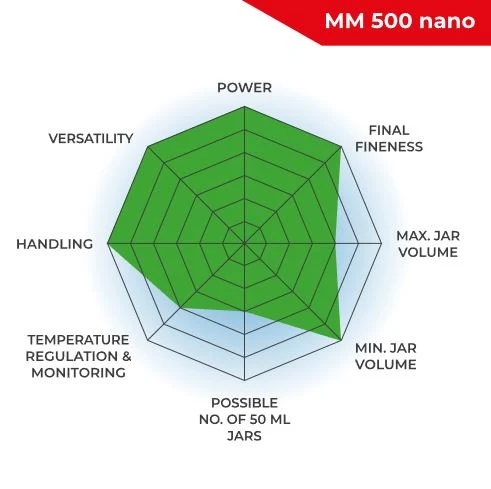
Combine suitable small grinding balls, liquid and high energy input. A validated dispersion method is essential to achieving and measuring the desired distribution.

HIGH ENERGY. FINER POSSIBILITIES.
Use high-energy impact and friction for routine preparation, demanding wet grinding and research. Two large screw-lock jars and up to 35 Hz provide a route toward nanoscale particles when the material and method support it.
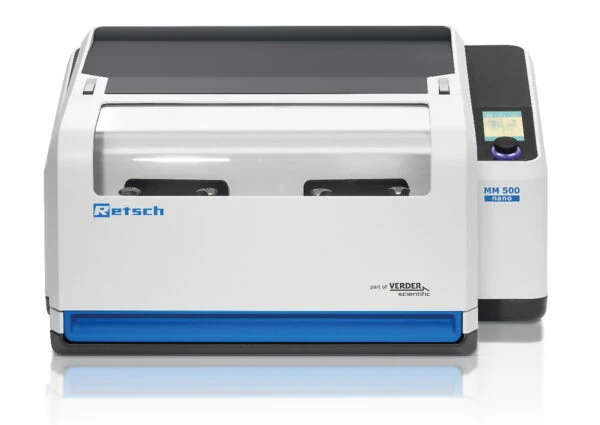
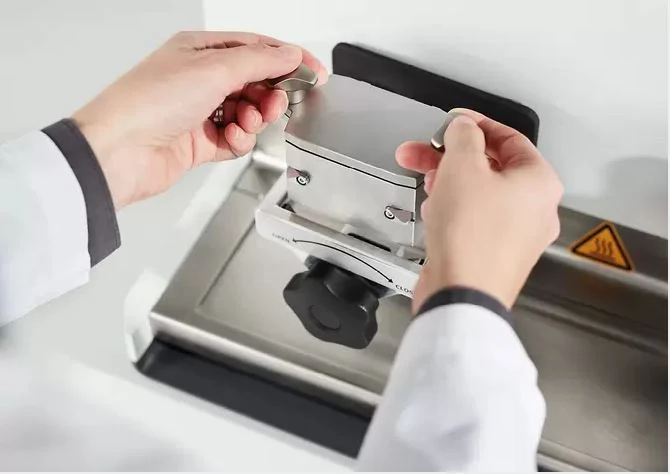
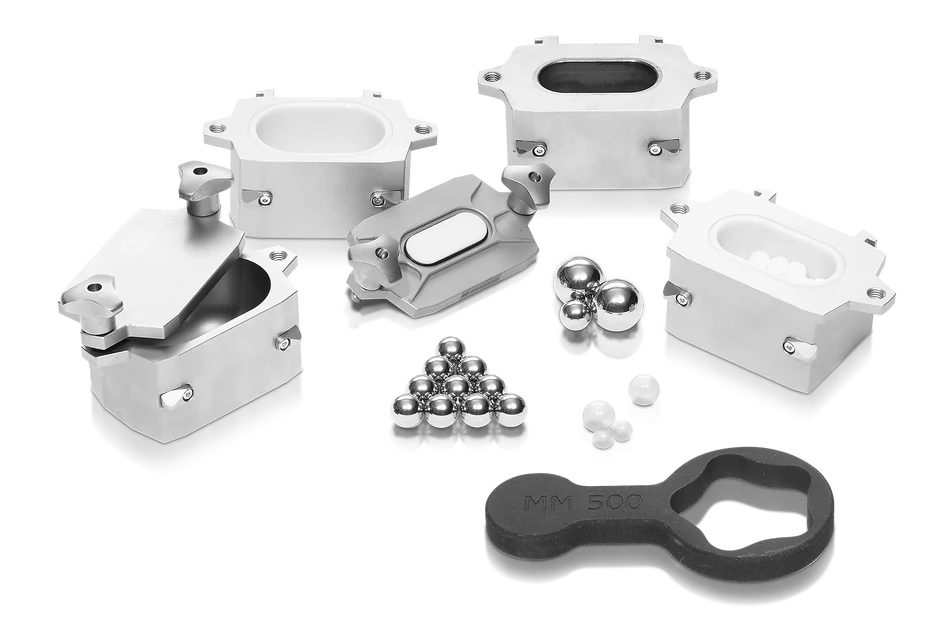
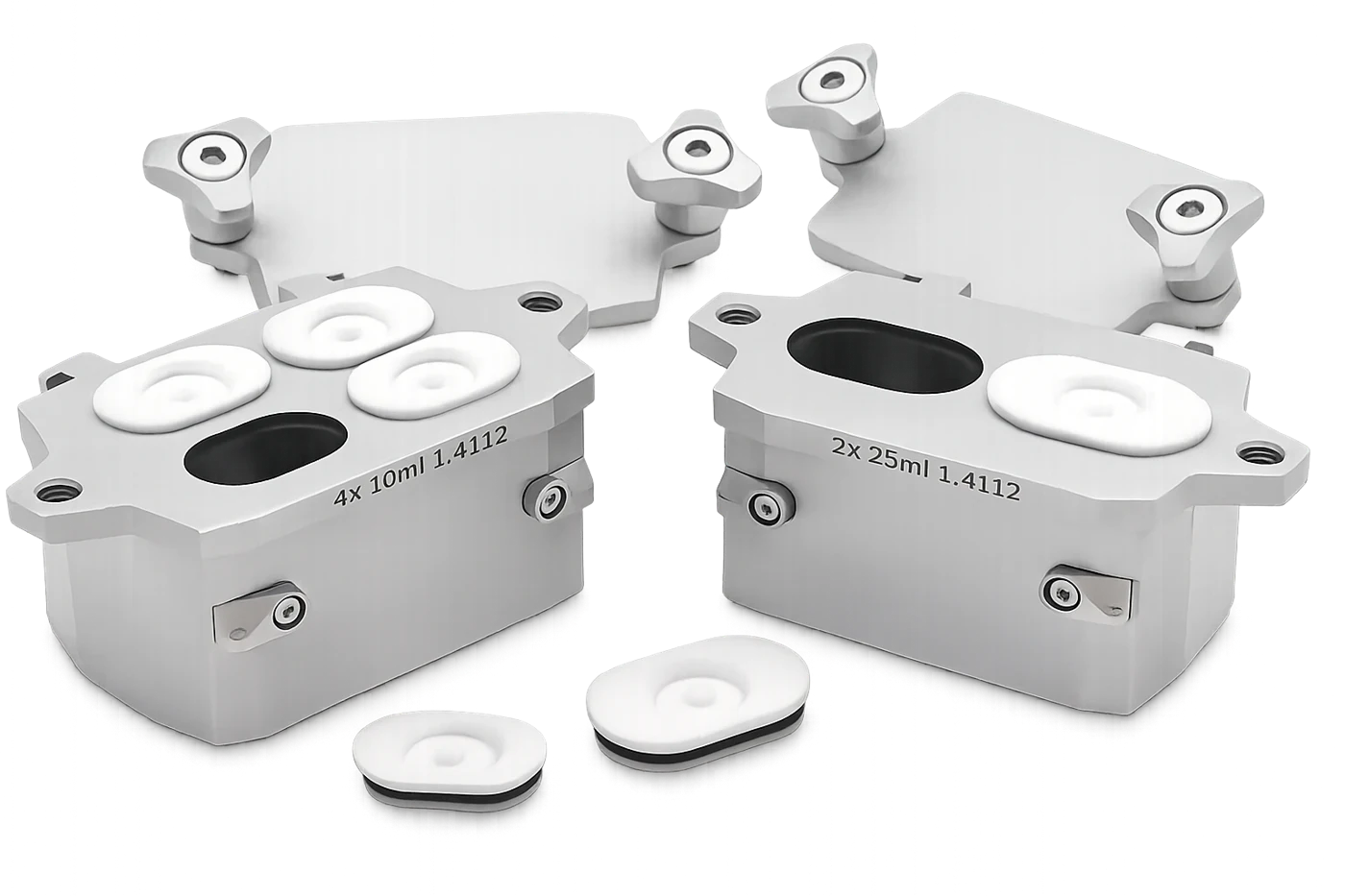
Configuration examples. Accessories may be optional.
THE MODEL IN FOCUS
Combine suitable small grinding balls, liquid and high energy input. A validated dispersion method is essential to achieving and measuring the desired distribution.
Two stations accommodate jars up to 125 ml nominal volume, with useful sample quantities up to 45 ml per station.
Explore high-impact preparation, high-friction grinding, mechanical alloying and mechanochemistry with programmable cycles.
HOW IT WORKS
Grinding jars oscillate in a horizontal position. The balls’ inertia drives them into the sample at the rounded jar ends. Impact and friction reduce the material while the motion mixes it.
Match ball size, number, jar material, filling level, frequency and time to the sample. Use smaller beads for compatible bead-beating methods; use a validated liquid and dispersion method for wet grinding.
Feed size, final fineness and useful sample quantity depend on the material, tools and operating conditions. Jar volume is not the sample filling volume. The finest result and largest feed or batch are not simultaneous guarantees.
METHOD & CONFIGURATION
Larger balls emphasize impact; multiple smaller balls increase friction and mixing. Fine wet grinding adds liquid and a suitable dispersing strategy. Achieving about 0.1 µm requires an appropriate sample, grinding medium and sufficient process time; it is not the result of every short preparation cycle.
BUILD THE RIGHT SETUP
Select jars, balls and supporting accessories around your material and analysis. Confirm the complete configuration and what is included in the quotation.
Choose jar volume and tool material for hardness, wear and chemical compatibility. Options include hardened steel, stainless steel, tungsten carbide and zirconium oxide.
Optional small-cavity formats support parallel experiments with limited amounts of material. Confirm the compatible jar, sample quantity and loading method.
Ask about aeration lids for a controlled jar atmosphere and GrindControl for temperature and pressure measurement inside the jar. These are optional accessories.
MATERIALS & APPLICATIONS
TECHNICAL DATA
| Grinding stations | 2 |
|---|---|
| Maximum feed size* | ≤ 10 mm |
| Final fineness* | ~ 0.1 µm |
| Useful sample quantity* | 2 × 45 ml |
| Nominal jar volume | 10–125 ml |
| Vibrational frequency | 3–35 Hz |
| Temperature approach | Manual pre-cooling; no integrated thermal plates |
| Feed material | hard, medium-hard, soft, brittle, elastic, fibrous |
|---|---|
| Size reduction principle | impact, friction |
| Material feed size* | <= 10 mm |
| Final fineness* | ~ 0.1 µm |
| Batch size / feed quantity* | max. 2 x 45 ml |
| No. of grinding stations | 2 |
| Vibrational frequency | 3 – 35 Hz (180 – 2100 min-1) |
| Typical mean grinding time | 30 s – 2 min |
| Dry grinding | yes |
| Wet grinding | yes |
| Cryogenic grinding | yes |
| Cell disruption with reaction vials | no |
| Type of grinding jars | screw-lock jar with integrated safety closure devices, multi cavity jar, adapter for safe-lock reaction vials |
| Material of grinding tools | hardened steel, stainless steel, tungsten carbide, zirconium oxide |
| Grinding jar sizes | 10 ml / 25 ml / 50 ml / 80 ml / 125 ml |
| Setting of grinding time | digital, 10 s – 8 h |
| Total grinding time | 99 h |
| Storable SOPs | 12 |
| Number of storable cycle programs | 4 (with 99 repeats) |
| Electrical supply data | 100-120 V, 50/60 Hz; 200-230 V, 50/60Hz |
| Power connection | 1-phase |
| Protection code | IP 30 |
| Power consumption | 750 W |
| W x H x D closed | 690 x 375 x 585 mm |
| Net weight | ~ 60 kg |
*Feed size, final fineness and useful sample quantity depend on the material, tools and operating conditions. Jar volume is not the sample filling volume. The finest result and largest feed or batch are not simultaneous guarantees.
EXPLORE THE FAMILY
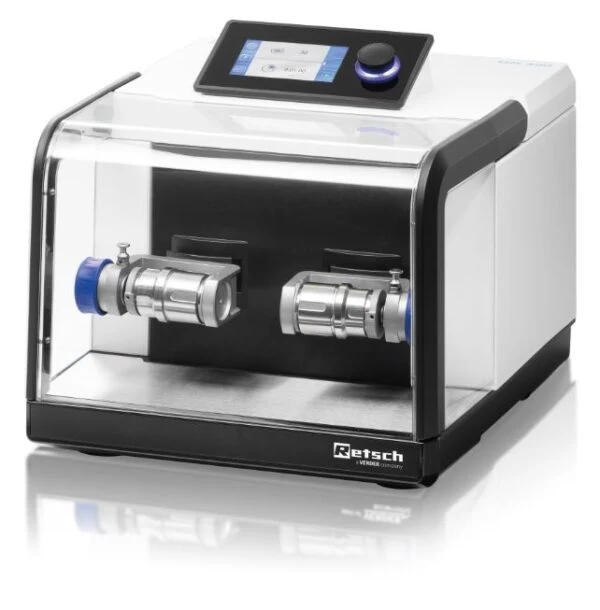
Routine preparation & flexible small samples
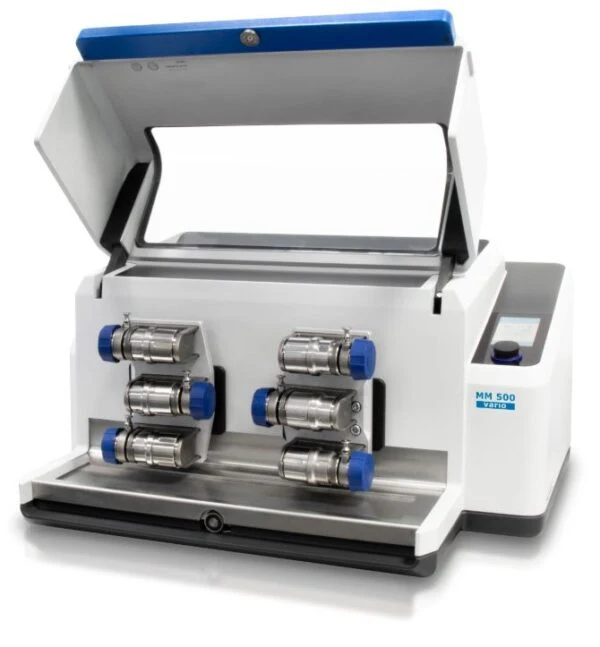
Parallel batches & biological sample throughput
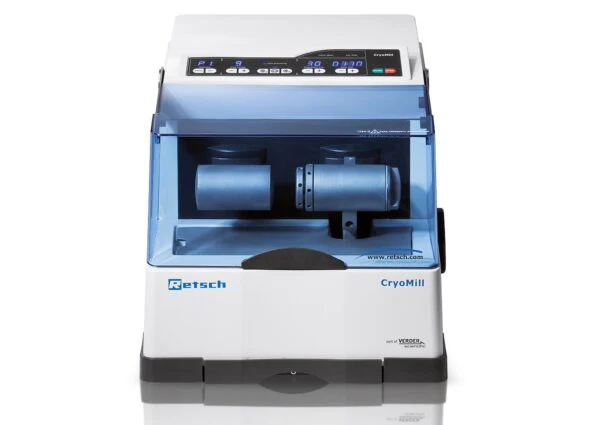
Automatic cooling. More useful sample preparation.
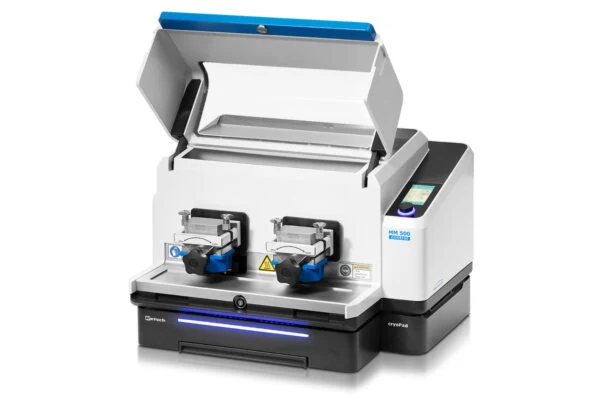
Monitored heating, cooling & temperature-sensitive methods
YOUR MATERIAL. YOUR NEXT STEP.
Tell us what you’re processing and what needs to change. We’ll help define the equipment, accessories and a useful trial.